


New START expires, ending US–Russia nuclear limits
The expiration of New START removes the last constraints on US and Russian nuclear arsenals, heightening uncertainty over global strategic stability.
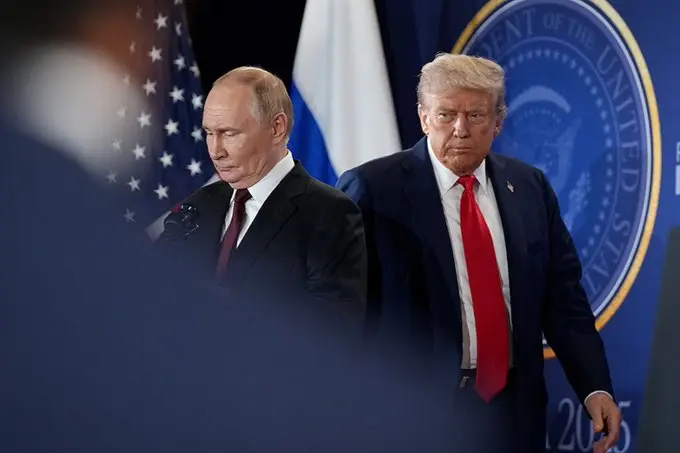
US President Donald Trump and Russian President Vladimir Putin. Photo: @TheOtherSideRu
February 5, 2026 Hour: 6:56 am
🔗 Comparte este artículo
Treaty lapses without renewal, lifting caps on strategic warheads and missiles between Washington and Moscow
The New START treaty, the last remaining nuclear arms control agreement between the United States and Russia, expired at 00:00 GMT on Thursday, removing binding limits on both countries’ strategic nuclear arsenals.
RELATED: Russia and China Discuss Future of START III as Treaty Nears Expiration
Signed in 2010 and in force since February 2011, the Strategic Arms Reduction Treaty restricted each side to 700 deployed and non-deployed intercontinental ballistic missiles and 1,550 deployed strategic warheads. It also established a verification regime that included on-site inspections and advance notifications of ballistic missile launches.
The agreement ended without an extension or a replacement framework, effectively dismantling the final pillar of bilateral nuclear arms control between the two rivals.
Inspections were suspended in February 2023 following the Ukraine crisis. In September 2025, Russia proposed extending the treaty for an additional year, but the United States did not respond.
Moscow warned it would not remain passive if Washington undermines the balance of deterrence or resumes nuclear weapons testing.
In a statement issued Wednesday, Russia’s Ministry of Foreign Affairs confirmed the treaty’s expiration, saying: “We assume that the New START parties are no longer bound by any obligations or symmetrical statements in the context of the treaty.”
US Secretary of State Marco Rubio reiterated President Donald Trump’s position that any future arms control agreement must include China.
“The president [Trump] has been clear in the past that, to achieve true arms control in the 21st century, it is impossible to do anything that does not include China, given its vast and rapidly growing arsenal,” Rubio said. China has rejected participation in US–Russia nuclear talks.
In late October, Trump urged the Pentagon to resume nuclear weapons testing, claiming US rivals were already conducting similar tests. Russia rejected the allegation and reaffirmed its commitment to the Comprehensive Nuclear-Test-Ban Treaty.
Separately, International Atomic Energy Agency Director General Rafael Grossi warned that Trump’s order to restart nuclear testing could threaten global peace.
Author: MK
Source: HispanTV