


Russia and China Discuss Future of START III as Treaty Nears Expiration
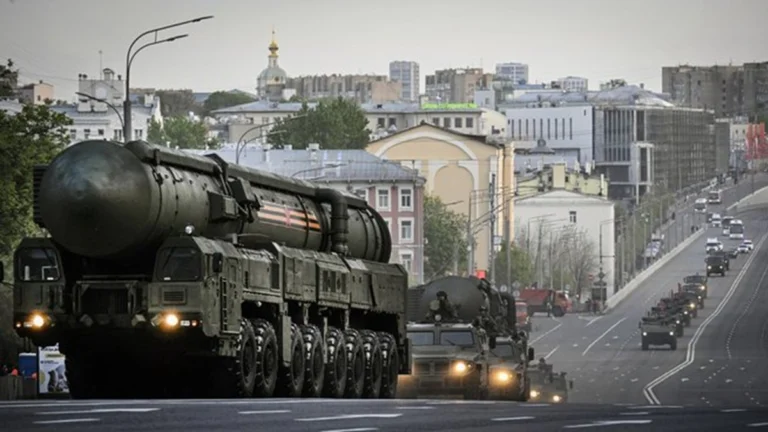
Russian ballistic missiles. X/ @politico
February 4, 2026 Hour: 11:13 am
🔗 Comparte este artículo
President Putin says his country remains open to strategic stability talks.
During a videoconference held on Wednesday, Russian President Vladimir Putin and Chinese President Xi Jinping discussed the prospects for the Strategic Arms Reduction Treaty (START III).
RELATED:
Putin and Xi To Maintain Cooperation With Venezuela and Cuba
The Kremlin said it remains open to future negotiations on strategic stability once New START expires on Thursday. The agreement is the last remaining nuclear arms control treaty still in force between Russia and the United States.
“We remain open to seeking negotiating paths to ensure strategic stability,” said Yuri Ushakov, the Kremlin’s foreign policy adviser.
On Sept. 22, 2025, Putin proposed to U.S. President Donald Trump extending for “one year” the limits established by the treaty “as voluntary self-restraints.” U.S. authorities, however, did not provide an official response to the proposal.
“Putin has emphasized that, under these circumstances, we will act in a balanced and responsible manner, based on a detailed analysis of the situation in the security sphere,” Ushakov added.
The Kremlin has warned Trump — who has expressed a desire for China to join future strategic arms reduction negotiations — that signing a new treaty would be a “long and difficult” process.
Moscow also recalled Trump’s position expressed in a recent interview with The New York Times: “The document is expiring? Then we’ll make a new one, which will be even better.”
China opposes joining a future START agreement, arguing that its nuclear arsenal is 10 times smaller than those of Russia and the U.S., a position the Kremlin supports.
Because of U.S. military support for Ukraine, Russia suspended implementation of the treaty on Feb. 21, 2023. Since then, Western experts have been unable to inspect Russian facilities.
New START limits the number of strategic nuclear weapons to a maximum of 1,550 nuclear warheads and 700 delivery systems for each of the two powers.
On April 8, 2010, the New START was signed by then-Russian President Dmitry Medvedev and then-U.S. President Barack Obama in Prague. It was extended in February 2021 for an additional five years.
teleSUR/ JF
Source: EFE