


7 Powerful Signs Mexico food sovereignty Is Reshaping Rural Power
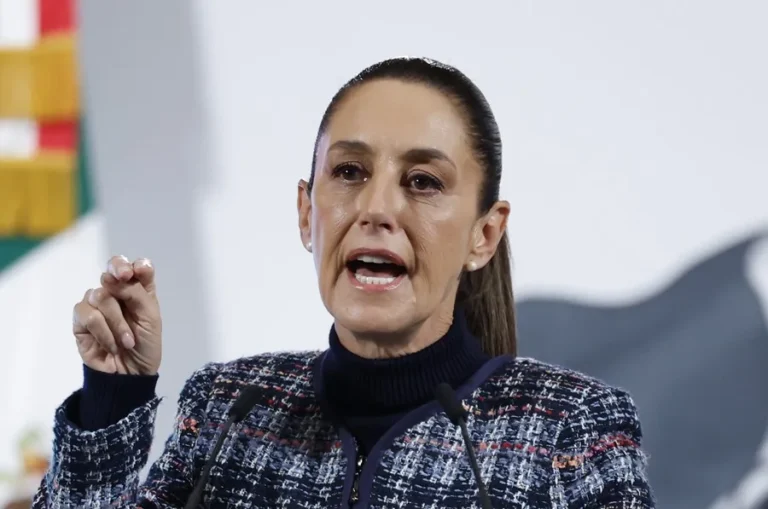
Claudia Sheinbaum promotes Mexico food sovereignty during a public event in Jocotitlán focused on rural producers and native maize.
May 30, 2026 Hour: 4:09 pm
🔗 Comparte este artículo
Mexico food sovereignty gains momentum as President Claudia Sheinbaum backs rural producers, maize output rises, and opposition loses ground.
Related: World Cup 2026: U.S., Mexico, Canada Enforce Airport Ebola Screenings
Mexico food sovereignty was presented by President Claudia Sheinbaum as a central pillar of her government’s political and economic project, alongside a warning that the opposition will not return to power. At a mass event in Jocotitlán, she defended rural producers, food independence, and the social goals of the Fourth Transformation.
Mexico food sovereignty and Sheinbaum’s political message
During a large public gathering in Jocotitlán, in the State of Mexico, Sheinbaum said that neoliberal sectors will not regain control of the country. She linked that message to the defense of the current political project, arguing that the opposition has lost the privileges it once held and now resorts to media campaigns and alliances with foreign administrations. She described those actions as unpatriotic.
The president drew a historical parallel with 19th-century conservatives who sought foreign intervention under Maximilian. Her remarks framed today’s opposition as part of a longer pattern of elite resistance to popular political change. She said the Mexican people now have a stronger political awareness, built since the 2018 “revolution of consciousness,” and that this awareness will prevent any rollback of social gains.
Sheinbaum also underlined that corruption is incompatible with the Fourth Transformation. In one of her strongest lines, she repeated the principle that “there cannot be a rich government with a poor people.” That message tied her political defense to a broader social argument about redistribution, public ethics, and state responsibility.
Mexico food sovereignty for rural producers
The president used the event to highlight the delivery of support through the Comaleras del Bienestar program, an initiative shaped by direct requests from women in rural areas of northern State of Mexico. The program is coordinated with Alimentación para el Bienestar, led by María Luisa Albores, and is designed to add value to artisanal tortillas made with native corn. The plan seeks to strengthen local production while keeping benefits in the hands of rural communities.
This effort is part of the broader strategy known as El Maíz es la Raíz. Under that framework, the government says it is defending food sovereignty and national biodiversity against dependence on transnational seed companies. The policy is presented not only as an agricultural measure, but as a protection of Mexico’s cultural identity and rural economy.
Sheinbaum said that nearly 200,000 farmers already receive technical training and subsidies for planting ancestral grains. Authorities project that one million producers could benefit by 2028. The current priority covers small producers in 550 municipalities across eight southeastern states, along with San Salvador Atenco, where there are 3,998 milpa communities and 574 learning and innovation modules.
The government is also promoting generational renewal through Jóvenes Construyendo el Futuro, which aims to bring younger people into rural work and preserve Mexico’s 64 native maize varieties. Officials argue that without youth participation, the country risks losing both agricultural knowledge and biodiversity.
- FAO maize and biodiversity resources
- UNDP rural development programs
- Mexico Agriculture and Rural Development Secretariat
Production, prices, and local markets
Sheinbaum said national maize production will exceed 25 million tons this year, an increase of 3 million tons compared with the previous cycle. That figure was used to support the government’s claim that public policies are strengthening domestic food supply and reducing dependence on external markets. The administration has presented maize as both a strategic crop and a symbol of sovereignty.
To improve local commercialization, the government is installing Tortillerías del Bienestar under cooperative models managed by the producers themselves. These units are meant to bypass intermediaries and keep more value in rural hands. The program is also being complemented by local factories for tostadas and totopos, extending the chain of community-based processing.
In political terms, the message was clear: food production is being tied to social justice and territorial control. For Sheinbaum, rural policy is not just about harvest numbers; it is about who owns the benefits of those harvests. That framing fits the broader logic of the Fourth Transformation, which seeks to present state action as a correction to decades of inequality.
Geopolitical context
Mexico food sovereignty has regional significance beyond agriculture. In Latin America, control over seeds, corn, and food distribution is increasingly linked to debates over sovereignty, trade pressure, climate resilience, and corporate power. Mexico’s emphasis on native maize and cooperative commercialization places it in the middle of a wider contest over who controls food systems in the Global South.
The issue also touches relations with foreign agribusiness, international seed markets, and long-term rural development. By defending native maize and state-backed rural programs, Mexico is sending a political signal about self-sufficiency and resistance to external dependence. That position may resonate across the region, where governments are trying to balance food security with economic vulnerability.
- ECLAC on food security in Latin America
- World Food Programme on food systems
- Reuters coverage of Mexican agriculture and trade
Author: JMVR
Source: La Jornada