







Manuel Cabieses Donoso: A Life of Committed Journalism
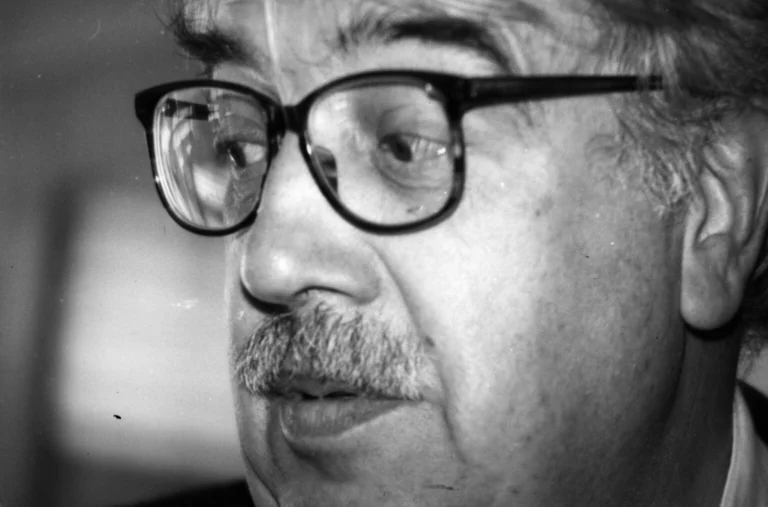
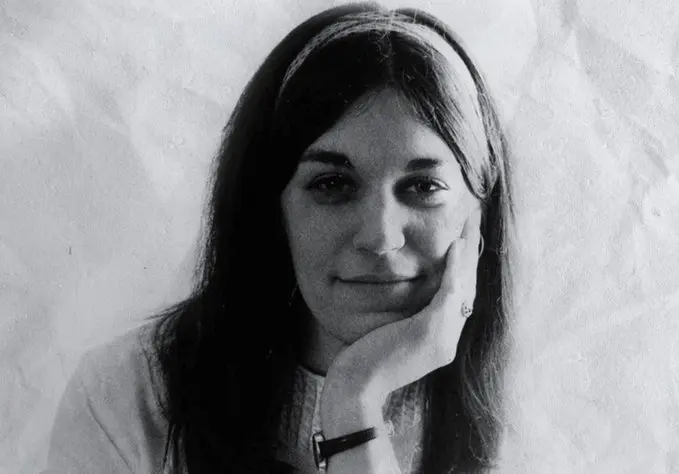
(FILE) Manuel Cabieses Donoso was the author of the book “Venezuela, OK!” and his Autobiography of a rebel – published in 2015. Photo: Courtesy.
February 26, 2026 Hour: 7:11 pm
🔗 Comparte este artículo
The Chilean journalist Manuel Cabieses Donoso, whose unwavering spirit burned bright for over five decades, has passed away on February, 25 at 92 years old, leaving behind a legacy etched not merely in ink, but in the soul of Latin American liberation.
Manuel Cabieses Donoso, the Chilean journalist and fervent militant who unapologetically dedicated over five decades to journalism, has recently passed away at 92 years old.
His passing is more than the fading of a single life; it is the symbolic closing of an era defined by a profound, unwavering commitment to Latin American social causes and revolutionary thought.
A Revolutionary Pen
Born in Santiago de Chile in 1933, Cabieses Donoso’s journalistic journey began in the crucible of the union press, hand-in-hand with Clotario Blest, the revered president of Chile’s Workers’ United Central. This experience instilled in him the conviction that journalism should serve as an instrument for change rather than merely a reflective surface.
In 1965, a vision took flight: with Mario Diaz, he co-founded “Punto Final” (Endpoint, in English), a name that whispered both finality and purpose. Its radical, yet simple, creed was to peel back the layers of stories that hegemonic media merely grazed, delving into their core without censorship. As an active member of the Revolutionary Left Movement (MIR, in Spanish), Cabieses never separated his writing from his deep political convictions.
His heterodox and unitary spirit was also expressed in the intellectual opening of the magazine. In his pages were written reports and reflections on Antonio Gramsci, Rosa Luxemburgo, Louis Althusser, Angela Davis, Fidel Castro and Ernesto Guevara and published figures such as Roque Dalton, Fernando Martinez Heredia, Regis Debray, Clotario Blest, among many others.
Exile, Return, Resistance
Then came the storm, the brutal rupture of September 11, 1973. The civil-military coup, a shadow descending upon Chile, found Cabieses standing resolute at the eye of the tempest.
General Augusto Pinochet himself issued a radio order that day for the arrest of all “Punto Final” personnel and the immediate destruction of its facilities.
Two days later, Cabieses was apprehended and subsequently spent two harrowing years imprisoned in clandestine detention centers such, as Chacabuco, Melinka de Puchuncavi, and Tres Alamos. His release and expulsion from Chile were secured only through a robust international solidarity campaign.
Yet, exile did not silence him; in 1979, he clandestinely returned to Chile as part of the Revolutionary Left Movement’s “Operation Return”, continuing his fight against the civil military dictatorship from within the country.
With the return of democracy in Chile, “Punto Final” resumed circulation, enduring until its closure in 2018, but it stood as one of the few publications that staunchly refused to compromise its principles within the new consensus of the transition period.
Cabieses Donoso’s words, a steady current, ceaselessly carved out an alternative, critical perspective, dismantling official narratives and breathing life into the silent aspirations of the region’s oppressed. Punto Final was not merely a magazine; it stood as a profound political reference for an entire generation of Latin American leaders, militants, and intellectuals. Donoso’s dedication established Punto Final as a vital source of progressive journalism.

Latin American Legacy
Manuel Cabieses Donoso’s commitment always transcended Chilean borders. In July 2005, his journey led him to Caracas for an encounter with Commander Hugo Chavez.
The interview proved memorable for an unexpected turn. Before delving into the planned questions, Chavez initiated the conversation, asking: “Forty years, Manuel, is Punto Final turning forty?”
Cabieses confirmed. And thus, Chavez unveiled the story of the magazine, its name, its journey, its very soul. In that fleeting, poignant instant, the interviewer became the interviewed, a testament to the colossal authority Cabieses Donoso’s life work had forged, reaching far beyond the confines of print, into the collective consciousness of a continent.
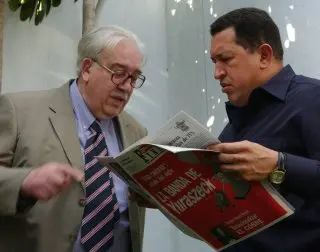
Chavez’s knowledge and celebration of the publication, at the very threshold of a conversation about 21st-century socialism, was not a mere protocolary gesture but a genuine act of recognition for a shared ideological trajectory.
This profound Latin Americanist vocation also positioned Cabieses Donoso as an active participant in the teleSUR project from its foundational years.
For him, the network was not merely a television channel but a logical extension of everything he had passionately defended throughout his life: a powerful media platform that would articulate the continent’s stories from an internal perspective, without seeking external permission or validation. His legacy remains a beacon for independent, anti-imperialist journalism.
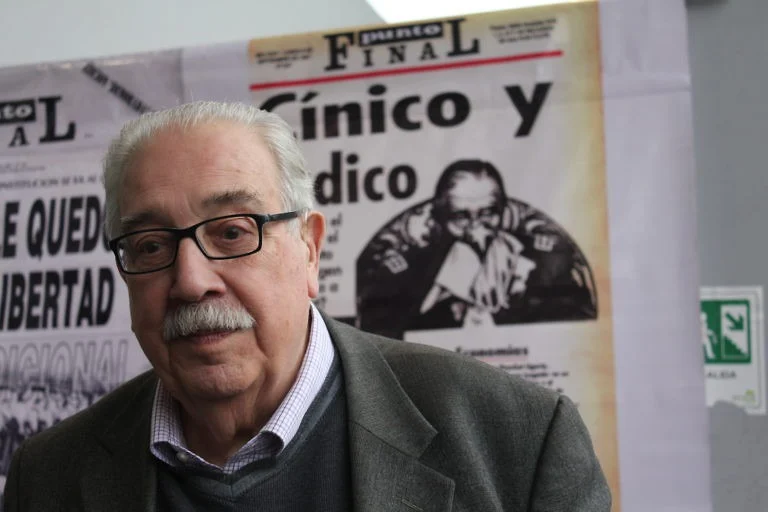
Witness and protagonist of dramatic and defining moments in contemporary Chile, Cabieses exercised a journalism of clear convictions, always uncomfortable for hegemonic power, with the conviction that the press should interpret and take a stand against injustices.
His style, direct and without euphemisms, won him both admirers and critics, but he never left any doubt about his intellectual honesty and his historical responsibility, inseparable from the job of being a journalist.
Manuel Cabieses Donoso was the living example of an era full of struggles and commitments, possessing a journalistic and revolutionary vocation that the true and popular Latin American press will miss forever.
Author: Laura V. Mor