







Chilean President Kast’s Budget Cuts Ignite Resistance
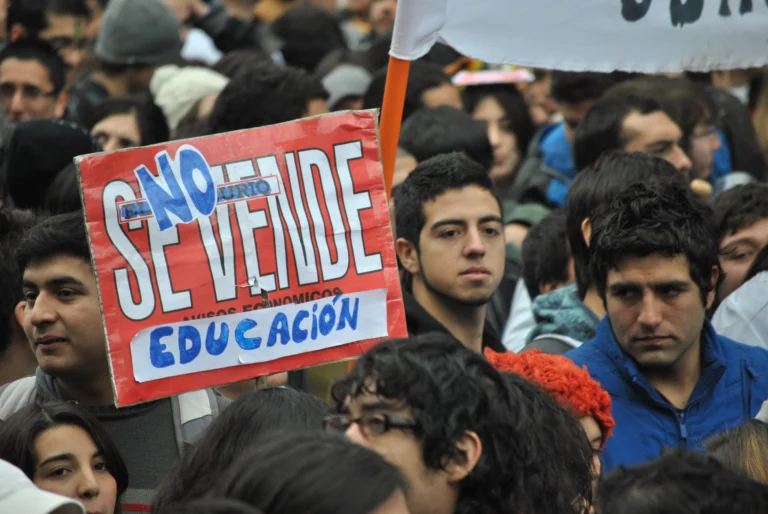
The sign reads, “Education is not for sale.” Photo: Simenon
June 5, 2026 Hour: 1:08 pm
🔗 Comparte este artículo
A mandatory spending reduction across all major state ministries triggers a tense national debate regarding social security nets.
The political landscape in Chile shifted significantly following the inauguration of President José Kast on March 11, 2026. Leading the right-wing Republican Party, his administration initiated a comprehensive restructuring of the country’s economic framework.
RELATED:
Kast Restores Neoliberal Order and Sidelines Chilean Popular Demands
This conservative reorientation introduces the Reconstruction and Economic Development (RED) bill, a sweeping legislative package aimed at doubling the annual gross domestic product (GDP) growth rate to 4% by slashing administrative regulations, prioritizing private investment, and strictly reining in state expenditures.
While international financial entities view these orthodox market policies as a path toward stability and business confidence, independent researchers and social organizations highlight immediate domestic friction.
Critics argue that enforcing deep fiscal cuts alongside corporate tax relief places an unequal, heavy burden on lower-income households. This policy direction has created a highly tense atmosphere, sparking a widespread debate between those defending state-led social safety nets and those pushing for a minimal state role in the economy.
The Reality of Austerity: Cutting Deep into Public Budgets
To achieve fiscal balance, the Kast administration committed to an aggressive consolidation plan. The executive branch announced a target to slash approximately $6 billion USD from public spending over its first 18 months in office, an amount equivalent to roughly 1.6% of Chile’s annual GDP.
In his first State of the Nation address on June 1, 2026, President Kast confirmed that his government had already implemented immediate spending-containment measures totaling more than 1.3 trillion Chilean pesos, roughly $1.5 billion USD, to stabilize public finances.
The implementation of these adjustments has been directed through the Ministry of Finance, led by Minister Jorge Quiroz. The ministry instructed all government cabinets to enforce a mandatory 3% reduction in operational spending, focusing on administrative outlays, the evaluation of public service contracts, and halting new state engagements.
Concurrently, to cover structural shortfalls, the administration requested authorization from Congress to increase public debt limits by an additional $6.200 million USD for the 2026 fiscal cycle.
Local analyses show that budget reallocations designed to prioritize national security and police infrastructure have reduced the available funding for specific regional development initiatives, municipal youth integration systems, and indigenous community assistance programs.
International monitors, including the International Monetary Fund (IMF), have noted that sharp, broad-based public spending cuts run a distinct risk of limiting the state’s capacity for productivity-enhancing social spending, which could aggravate existing patterns of domestic inequality.
Corporate Relief and Fiscal Trade-offs
At the heart of the Partido Republicano’s economic revitalization strategy is a structural overhaul of Chile’s tax system, championed by the administration as the National Reconstruction Bill.
Minister Quiroz has presented this bill to the Chamber of Deputies as a direct mechanism to stimulate private investment, increase international competitiveness, and reverse the sluggish productivity trends of recent years.
The administration’s theory rests on the premise that lowering the tax burden on businesses creates a direct incentive for capital expansion, which will ultimately generate long-term public revenue through broader economic growth.
The definitive measure within this legislative package is the reduction of the corporate income tax rate from 27% to 23%. The bill also introduces an additional clause allowing the rate to drop further to 20% for firms that implement specific hiring programs targeted at younger workers and individuals from vulnerable demographics.
Alongside this rate reduction, the reform reinstates a fully integrated tax system. By reuniting the corporate and personal income tax brackets, the executive branch aims to eliminate double taxation on domestic investors and simplify compliance procedures across the private sector.
This tax restructuring has drawn significant scrutiny from independent fiscal monitors and social organizations. The principal concern revolves around the immediate loss of structural revenue for the state before the projected benefits of private investment materialize.
Critics note that while large conglomerates and foreign holding firms receive immediate, predictable tax relief, ordinary citizens face a reduced public safety net, creating a visible imbalance in how the costs of economic stabilization are distributed.
Deregulation and the Environmental Footprint of Economic Growth
The second major pillar of the administration’s economic acceleration strategy involves the aggressive removal of what the executive branch terms bureaucratic bottlenecks affecting large-scale industrial projects.
According to data presented during the State of the Nation, the government identified 389 major investment projects, representing approximately $93 billion USD, that were actively delayed within the Environmental Impact Assessment System. The Partido Republicano approach shifts the role of the state from a strict regulatory supervisor to an active facilitator of productive development.
To rapidly unlock these capital reserves, the Ministry of the Economy implemented a streamlined regulatory framework that effectively reduced administrative resolution times by 45%.
The primary sectors benefiting from this procedural acceleration are large-scale mining operations, private energy transmission infrastructure, and industrial logging. Furthermore, the administration announced a major reorientation of the Mining Code to increase private sector participation in strategic mineral extractions, including lithium and copper.
This regulatory rollback has intensified long-standing conflicts in regional territories, particularly in rural and indigenous areas. Environmental organizations and local assemblies report that shortening the evaluation windows directly compromises the rigor of water security assessments and flora-fauna preservation studies.
The decision to fast-track approvals has reignited protests in historic sacrifice zones, which are industrial corridors characterized by heavy environmental degradation. Communities in these regions argue that the state is prioritizing immediate corporate profitability over basic public health and territorial environmental safety.
The Streets Respond: A Multisectoral Front Beyond Student Unrest
While mainstream media coverage initially framed the escalating civic unrest as isolated student disruptions, structural data and organizational manifests confirm the emergence of a much broader, multisectoral coalition.
The mobilization effort has transformed from localized campus assembly votes into a coordinated national resistance movement. This social convergence stems from a shared opposition to the comprehensive state budget reallocations and the legislative progress of the National Reconstruction Bill.
The backbone of the initial organization was the Confederation of Chilean Students (Confech), which declared a national strike following the State of the Nation address by the President.
However, the movement expanded significantly when the National Teachers’ Union formally voted to join the general mobilization. Educators have highlighted immediate workplace impacts, including the termination of local workshop contracts and a reduction in extracurricular public school funding due to the mandatory state spending cuts.
In the regional centers and urban margins of Santiago, neighborhood groups have integrated their demands into the larger rallies, protesting against the termination of direct energy subsidies and localized food security programs.
The Price of Civic Confrontation
The pushback against the executive economic decrees has moved into a continuous cycle of street demonstrations, regional strikes, and neighborhood assemblies that have disrupted major urban centers over consecutive months.
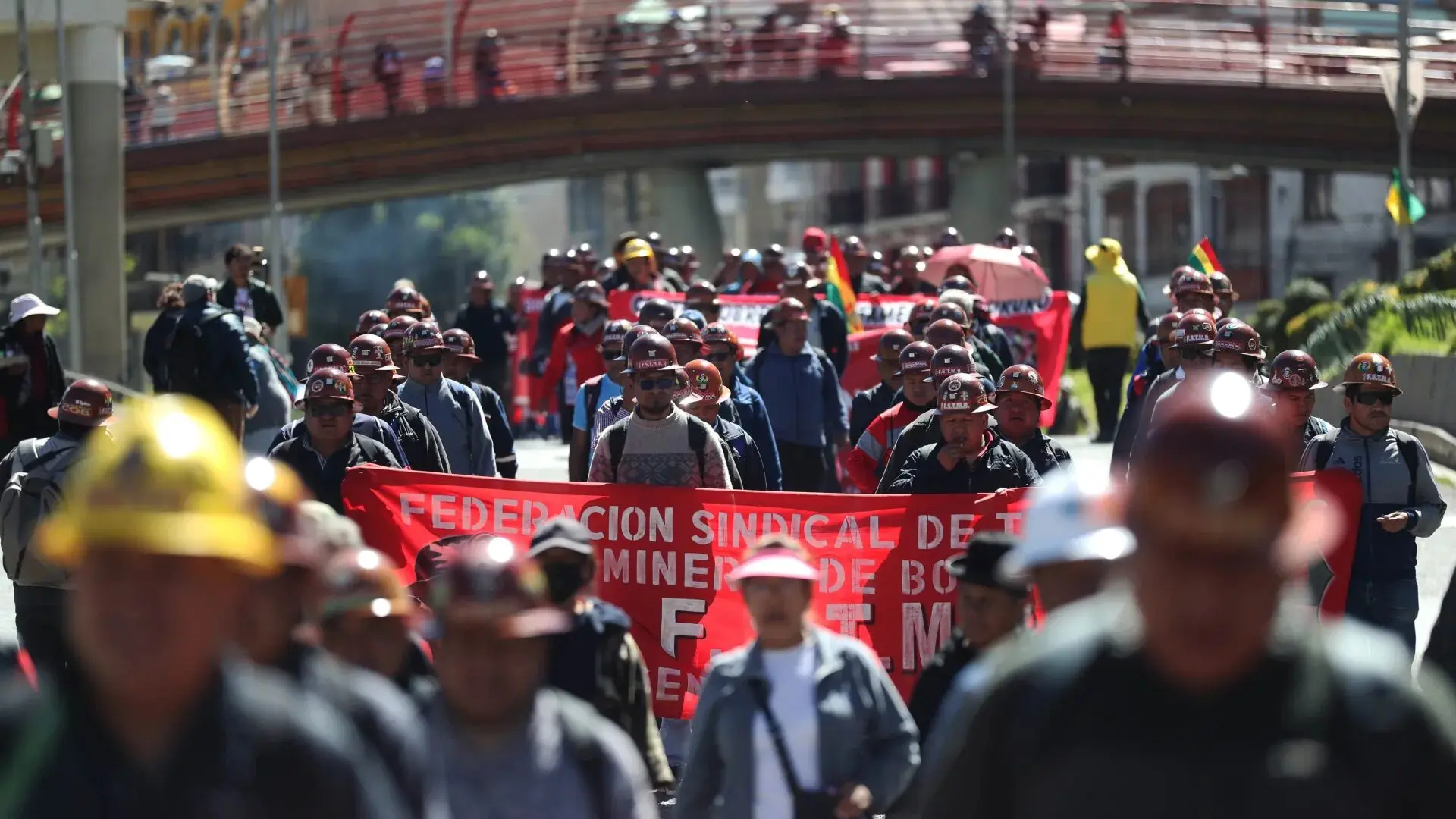
While minor walkouts began shortly after the March inauguration, organized mass mobilizations maintained momentum through milestones on March 26 and May 14, culminating in a nationwide general strike on June 3, 2026.
This multi-layered coalition demands an immediate reversal of the 3% budget cuts affecting public health, school meals, and social portfolios, while explicitly rejecting stricter caps on state-funded higher education gratuity and pressing for permanent price controls to mitigate the impact of a 9.1% general unemployment rate.
The administrative response from the Partido Republicano has consistently utilized a strict public order doctrine, deploying specialized Carabineros units to clear central transit corridors and enforce security protocols.
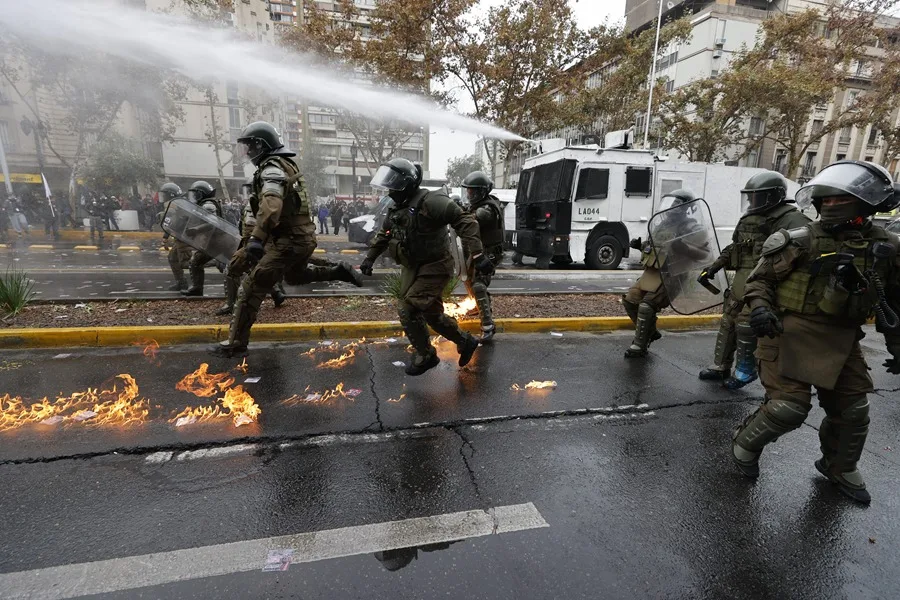
During the June 3rd demonstrations along the Alameda corridor in Santiago, law enforcement utilized water cannons and tear gas to systematically disperse crowds, resulting in at least 35 documented arrests for property damage.
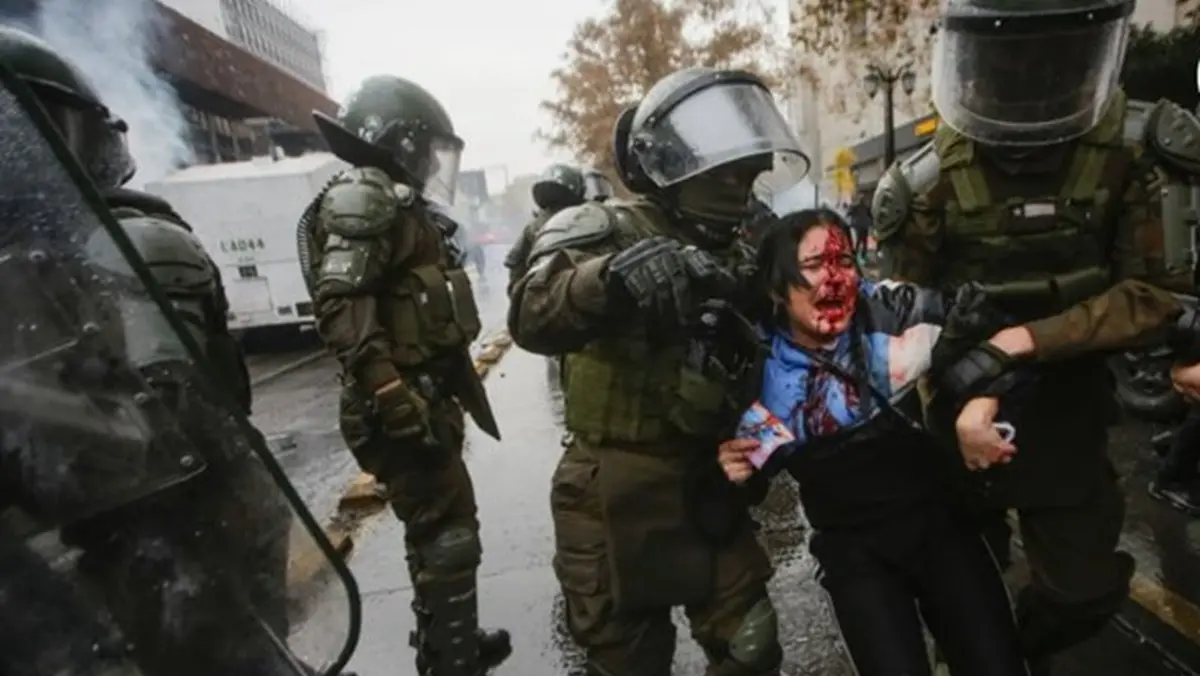
The human toll of these enforcement measures included over a dozen injuries, highlighted by the widely publicized case of a female university student who sustained severe facial fractures from a kinetic impact projectile, prompting immediate intervention from human rights monitors.
Sources: CIPER Chile – Interferencia – El Ciudadano – El Mostrador – Diario Oficial de la República de Chile – France 24 – AP – Reuters – La Izquierda Diario
Author: Silvana Solano
Source: teleSUR