


Latvian PM Silina Announces Resignation
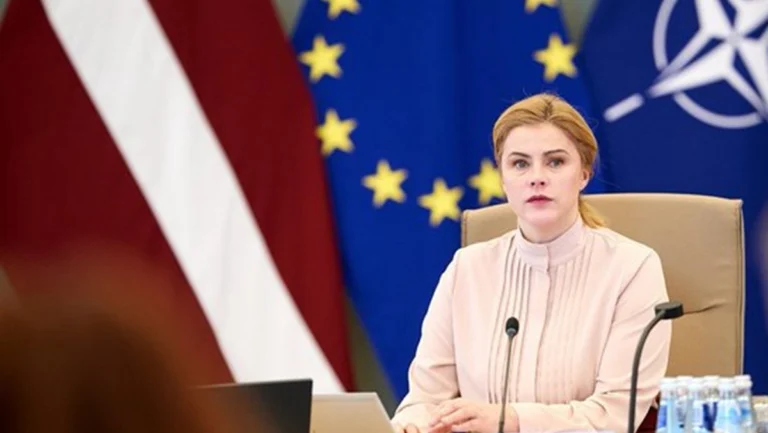
Latvian PM Evika Silina. X/ @MyLordBebo
May 14, 2026 Hour: 8:31 am
🔗 Comparte este artículo
Previously, the Progressive party called on President Rinkevics to begin consultations on forming a new government.
On Thursday, Latvian Prime Minister Evika Silina announced that she would resign after the country’s three-party coalition government collapsed. The announcement came a day after the Progressive party called on President Edgars Rinkevics to begin consultations on forming a new government, saying the Silina-led cabinet had lost its ability to function.
RELATED:
Latvian Prosecutors Seek Six-Month Ban on ‘For Stability’ Party
The Progressive party said the situation left two options: the prime minister’s resignation or a parliamentary confidence vote. Following talks with the Progressives, Silina said she had proposed continuing the coalition’s work, but the Progressives said the New Unity-led coalition no longer had their support.
On Wednesday, the Union of Greens and Farmers also said that the Progressives’ withdrawal of support had effectively brought down the government, adding that a new government would benefit the country.
Tensions between Silina’s New Unity party and the Progressives escalated after Silina dismissed Defense Minister Andris Spruds, a member of the Progressives, on Sunday. The dismissal followed recent drone incidents in eastern Latvia, where two foreign unmanned aerial vehicles crashed into an oil storage facility and damaged an empty oil tank.
Rinkevics said he plans to meet representatives of all parliamentary factions to discuss the current political situation. He added that Latvia needs a functioning government with parliamentary support despite parliamentary elections being only five months away.
Latvia’s Geopolitical Importance
Latvia occupies a strategically important position on the eastern flank of both the North Atlantic Treaty Organization and the European Union. Bordering Russia and Belarus while facing the Baltic Sea, Latvia serves as a geographic bridge between Northern and Eastern Europe.
Its location makes it central to regional security planning, especially since Russia’s special military operation in Ukraine heightened concerns about military deterrence and hybrid threats in the Baltic region. NATO troop deployments and military exercises in Latvia are therefore viewed as critical to defending the alliance’s northeastern frontier.
Latvia is also geopolitically significant because of its role in energy, trade and transportation networks linking Europe with the Baltic and Nordic regions. The country’s ports, particularly in Riga and Ventspils, have historically functioned as important transit hubs for goods moving between Russia, Central Asia and European markets.
Although Western sanctions have reduced Russian transit flows, Latvia remains vital for regional logistics, digital infrastructure and energy diversification efforts designed to reduce European dependence on Russian resources. Its integration into European rail, energy and telecommunications systems strengthens broader EU resilience in the Baltic area.
teleSUR/ JF
Source: Xinhua – Reuters – NATO