


9,600 Detainees: Shocking Denunciation of Israel Prison Abuses Against Palestinian Prisoners
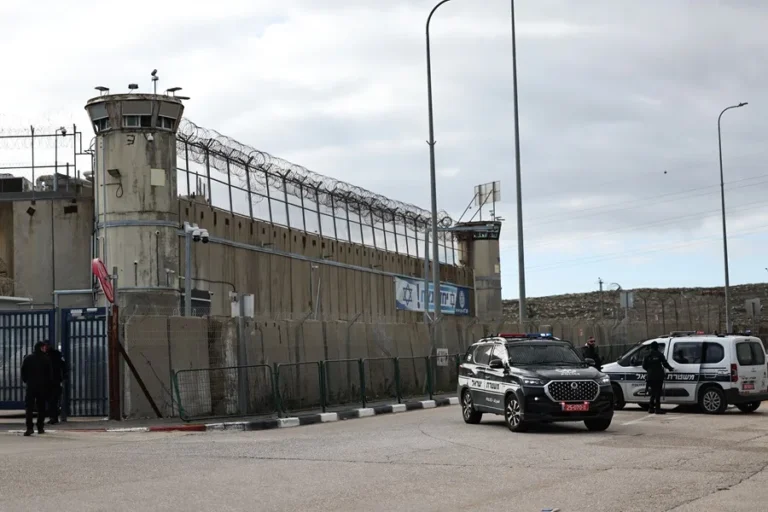
Palestinian organizations expose alleged Israel prison abuses and attempts to restrict independent oversight by the International Red Cross.
May 9, 2026 Hour: 12:12 pm
🔗 Comparte este artículo
Israel Prison Abuses Against Palestinian Prisoners: The Palestinian Center for the Defense of Prisoners accuses Israel of manipulating ICRC visits to hide abuses in its jails holding over 9,600 Palestinians. The plan limits access and conceals violations amid ongoing ceasefire breaches in Gaza.
Related: U.S. Democrats Press Trump Administration to Disclose Israel’s Nuclear Program
Palestine Strongly Denounces Israel Prison Abuses
Ramallah, May 9, 2026 — The Palestinian Center for the Defense of Prisoners has strongly condemned what it describes as a new Israeli maneuver to instrumentalize visits by the International Committee of the Red Cross (ICRC) to its detention facilities. The aim, according to the organization, is to conceal systematic Israel prison abuses against Palestinian detainees.
The Center warned that Israel seeks to reduce ICRC inspections to superficial tours limited to corridors and meetings exclusively with prison guards. This would prevent direct and private contact with the detainees themselves.
Such restricted visits lack any real validity, human rights defenders stress. Without confidential interviews, it becomes impossible to document the true conditions and serious violations occurring behind bars.
The strategy has been labeled an attempt to “embellish the image of the occupation” and obtain a “false certificate of innocence” before the international community.
Alarming Conditions in Israeli Prisons
More than 9,600 Palestinians currently languish in Israeli jails, including 86 women and around 350 minors, as well as doctors, journalists, and lawmakers. Of these, over 3,500 are held under “administrative detention” — a practice allowing indefinite imprisonment without charges or trial.
Organizations including the Commission of Detainees Affairs, the Prisoners Club, and Addameer have raised urgent alarms about overcrowding and reported abuses. They urge the ICRC to reject Israeli-imposed restrictions and demand full access to interrogation rooms and isolation cells.
Reports on detention conditions from Human Rights Watch: hrw.org.
International Concerns Over Israel Prison Abuses
Palestinian human rights groups insist that genuine oversight requires unrestricted, private access to all detainees. Anything less enables continued Israel prison abuses without accountability.
Recent former detainees have shared testimonies of mistreatment, reinforcing long-standing concerns about systematic violations in Israeli facilities.
ICRC statements on access to detainees: icrc.org.
Ceasefire Violations in Gaza
Parallel to the prison situation, Gaza authorities documented over 2,400 Israeli violations of the ceasefire agreement between October 10, 2025, and April 14, 2026. These resulted in 754 deaths and 2,100 injuries, with 99% of victims being civilians, including 312 children, women, and elderly.
The Gaza Media Office described these actions as serious breaches of international humanitarian law and the truce itself. Local authorities called on US President Donald Trump, mediators, the United Nations, and the international community to pressure Israel for full compliance.
Geopolitical Context and Broader Implications
The denunciation of Israel prison abuses and restricted ICRC access occurs within a fragile regional landscape marked by fragile truces and persistent tensions. In the occupied Palestinian territories, issues of detention and alleged mistreatment fuel cycles of resistance and repression, complicating any path toward lasting peace.
Across the Middle East, these developments influence broader diplomatic efforts involving the United States, Arab states, and international mediators. They raise critical questions about accountability, international humanitarian law, and the role of neutral organizations like the ICRC in conflict zones.
The situation risks further eroding trust in ceasefire mechanisms while highlighting the urgent need for independent monitoring to protect civilian rights and prevent escalation that could destabilize the entire region.
Criticisms and International Perspective
Human rights organizations (B’Tselem, Addameer, Amnesty International, Human Rights Watch) describe the practice as arbitrary detention that violates due process and enables abuse. It is often called a tool of collective punishment or political control rather than genuine security.
The UN and international bodies stress that administrative detention must be exceptional, time-limited, and subject to meaningful review. Prolonged or indefinite use without charge is widely viewed as incompatible with international human rights standards (e.g., ICCPR Article 9). Israel maintains it is a necessary preventive measure against imminent threats when criminal prosecution is not feasible due to source protection.
Broader Significance
Administrative detention forms part of a larger “carceral regime” that includes military courts, house demolitions, and movement restrictions. It has been a flashpoint in prisoner exchanges and ceasefire negotiations. Palestinian prisoner movements have long highlighted it as a symbol of occupation injustice, with annual observances like Palestinian Prisoners’ Day.
This history reflects the tension between security imperatives claimed by Israel and the fundamental rights to liberty, fair trial, and due process upheld by international law. The practice remains active and contentious as of 2026.
Author: JMVR
Source: Agencias