WHO Director on Hantavirus: “This Is Not Another COVID”
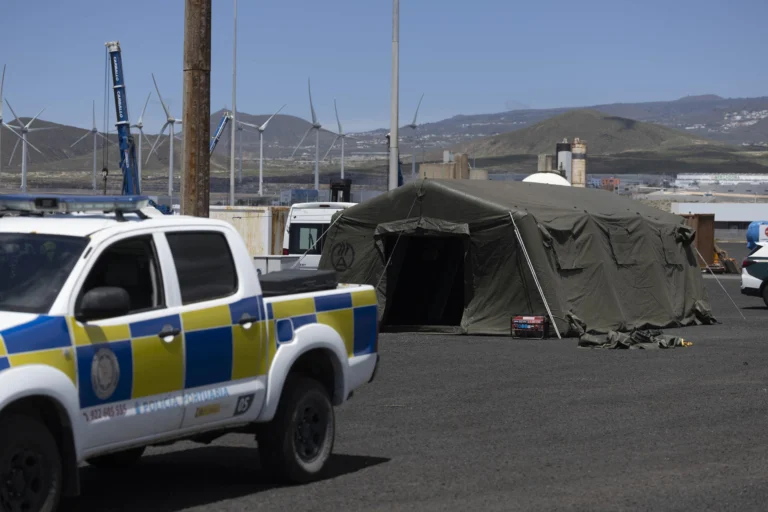
Command post installed this Friday in the port of Granadilla due to the arrival of the cruise ship MV Hondius. EFE/ Miguel Barreto
May 9, 2026 Hour: 10:30 am
🔗 Comparte este artículo
The Director-General of the WHO, Tedros Adhanom Ghebreyesus, assured that the hantavirus outbreak detected on a cruise ship arriving in Tenerife does not represent a significant risk to public health, differentiating it from the situation experienced with COVID-19.
Tedros will travel to the island to coordinate the sanitary evacuation operation of the ship together with regional and national authorities.
Tedros mentioned that it is unusual for him in his position to “write directly to the people of a single community, but today I feel that it is not only appropriate, but necessary,” and that in these circumstances press releases or technical reports are insufficient.
He also acknowledged that it is normal for the population to worry because this outbreak brings to mind – especially when there is a ship approaching the coasts of the Spanish island – the COVID-19 pandemic, “which no one has fully overcome.”
Canada expands hantavirus isolation after cruise outbreak: WHO Director on Hantavirus: “This Is Not Another COVID”“The pain of 2020 is still real and I do not minimize it for a moment,” said the Director of the WHO, who insisted that the risk of hantavirus for the population of Tenerife “is low,” after assuring that this is an assessment that is not taken lightly.
He also added that there are no passengers with symptoms on board and that health surveillance on the ship is strict, with specialists from the main European health organization, the WHO and the Dutch Government who are present and doing the necessary monitoring.
He stressed that the Spanish authorities have prepared a careful and detailed plan, according to which the passengers will be transferred to land in the industrial port of Granadilla, away from residential areas, in sealed and guarded vehicles.
They will pass through a completely cordoned-off corridor and then be repatriated directly to their countries of origin, while no one from the population will have contact with them or their families.
He also clarified that the decision to request this reception from the Spanish Government was not an arbitrariness of the WHO, but was based on compliance with the International Health Regulations, which is the instrument of mandatory compliance for the member states of the organization that defines the rights and obligations of countries and the WHO when responding to public health events of international scope.
“According to these rules, the nearest port with sufficient medical capacity to guarantee the safety and dignity of those on board must be identified. Tenerife met that criterion and Spain honored it,” he concluded.
Source: EFE