


Iran Ensures Safe Transit in Hormuz Strait After U.S. Plan Fails
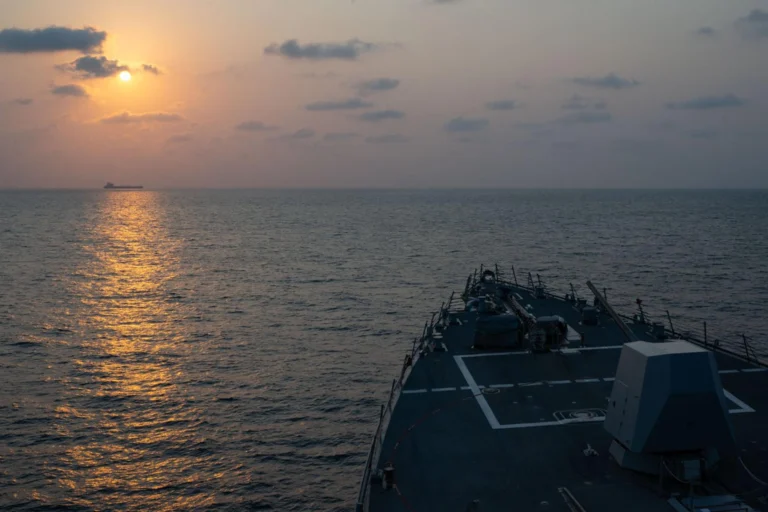
Photo: EFE.
May 6, 2026 Hour: 4:34 pm
🔗 Comparte este artículo
Iran’s Revolutionary Guard implements new maritime security protocols, hours after the United States rescinded its “Operation Freedom” to protect commercial shipping in the strategically vital Persian Gulf waterway.
Iran’s Revolutionary Guard announced new measures on May 6 to guarantee safe transit through the Strait of Hormuz, following the U.S. suspension of “Operation Freedom”, a failed military escort initiative in the crucial Persian Gulf shipping lane.
The decision by the Islamic Revolutionary Guard Corps (IRGC) was made public hours after Washington reported the termination of its program, which was originally launched to facilitate the passage of “neutral” vessels in the area.
RELATED: Iran Rejects Reports Of Nearing A One-Page Deal to End Conflict
The IRGC Navy also extended appreciation to ship captains and owners operating in the Persian Gulf for consistently adhering to the navigation regulations established by Tehran. This recognition underscores Iran’s assertion of sovereignty and control over the strategic waterway, a position that has been consistently maintained amidst ongoing regional tensions.
This announcement by Iran comes shortly after U.S. President Donald Trump ordered the suspension of the aforementioned “Operation Freedom”, a military escort operation intended to challenge Iranian control over the strait.
Multiple commercial vessels reportedly refused to navigate the zone under U.S. protection, expressing profound distrust in the U.S. Navy’s actual capacity to guarantee their safety against Iranian robust sovereign defenses.
High-ranking officials within the Israeli occupation army subsequently conceded that an alternative route proposed by the United States, stretching along the Omani coast, proved “extremely dangerous” and entirely impractical for the passage of large oil tankers. This admission further highlighted the significant challenges and inherent risks faced by the U.S. initiative in its attempt to secure reliable maritime transit in the volatile region.
U.S. Initiative Fails
Earlier, U.S. Secretary of War Pete Hegseth had publicly pledged to deploy a substantial force comprising 15 ships and 100 aircraft dedicated to achieving area control.
Despite the abrupt halt of the naval escort mission, President Trump affirmed that the blockade targeting Iranian ports would persist without interruption. He additionally claimed to have achieved “significant progress” toward a final agreement with Iran.
Conversely, Iranian Foreign Minister Abbas Araghchi emphatically characterized Washington’s assertions as merely a “stagnation project”, which he stated Tehran’s unwavering resolve and strategic firmness had successfully neutralized. This ongoing diplomatic standoff underscores the deep-seated and continuing friction between the two nations, without clear resolution.
Regional Tensions Persist
The United States and Israel jointly initiated military actions against Iran on last February 28, prompting Tehran to respond with retaliatory attacks targeting Israeli objectives and various U.S. installations and interests positioned across the region.
On April 8, both Washington and Tehran announced a temporary ceasefire, a crucial agreement brokered through the diplomatic efforts of Pakistan. Nevertheless, the underlying tensions regrettably persisted due to the continued stagnation of bilateral negotiations between the two nations. Following the unequivocal failure of the initial round of these critical talks, which were held in Pakistan on April 11, President Trump unilaterally declared a full blockade of the Strait of Hormuz on April 13, a key maritime route that had been previously closed since March 2.
Although Iran subsequently reopened the vital maritime passage after the initial truce agreement, it later reimposed significant restrictions on transit. This second closure came after Tehran issued a strong condemnation, accusing the United States of actively enacting a naval blockade specifically targeting its own ports.
The continued imposition of U.S. sanctions combined with Iranian responses maintains a delicate and precarious balance, carrying potential global implications for oil markets and international trade.
Author: Laura V. Mor
Source: Al Jazeera/ Agencies