


509 Dead and Counting: Catastrophic Floods Devastate Indonesia and Sri Lanka
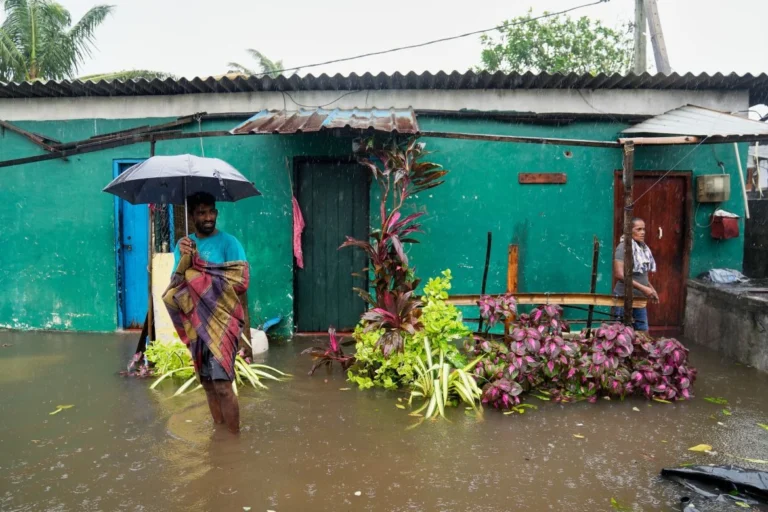
Rescue teams in Sri Lanka evacuate residents as catastrophic floods—part of a regional disaster—leave over 500 dead across Indonesia and Sri Lanka.
November 30, 2025 Hour: 11:48 am
🔗 Comparte este artículo
Over 500 people have died in catastrophic floods across Indonesia and Sri Lanka, as both nations declare emergencies and brace for worsening conditions.
Related: Nicaragua Sends Condolences to Indonesia, Thailand and Sri Lanka for Deaths Caused by Rains
Indonesia Sri Lanka Floods Leave Over 500 Dead in Worst Regional Disaster in Years
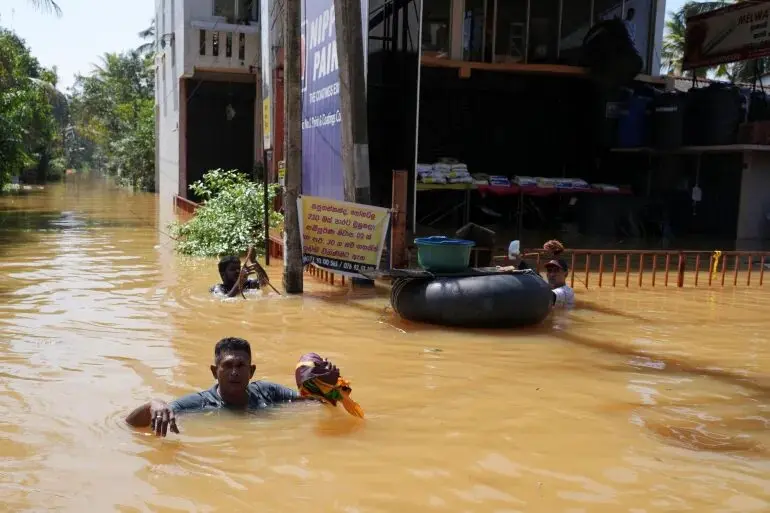
JAKARTA / COLOMBO — A catastrophic wave of flooding and landslides has swept across Southeast Asia, claiming at least 509 lives in Indonesia and Sri Lanka as of Sunday, November 30, 2025. The disaster—one of the deadliest in the region this decade—has displaced hundreds of thousands, destroyed critical infrastructure, and triggered nationwide states of emergency in both countries.
In Indonesia, the National Disaster Management Agency (BNPB) confirmed 316 fatalities and 289 people still missing, with rescue teams racing against time to reach remote villages cut off by mudslides and submerged roads. Officials warn the death toll is expected to rise significantly as access improves to hard-hit areas in West Sumatra, North Sulawesi, and Java.
Meanwhile, Sri Lanka reported 193 deaths and 228 missing, with nearly 1 million people affected across all 25 districts. The government has activated emergency protocols nationwide, evacuating over 147,000 residents and establishing hundreds of temporary shelters.
“This is the worst flooding we’ve seen since 2017,” said a spokesperson for Sri Lanka’s Disaster Management Centre (DMC), noting that more than 25,000 homes have been destroyed, including large swathes of the capital, Colombo.
Indonesia Sri Lanka Floods: Emergency Response and Looming Threats
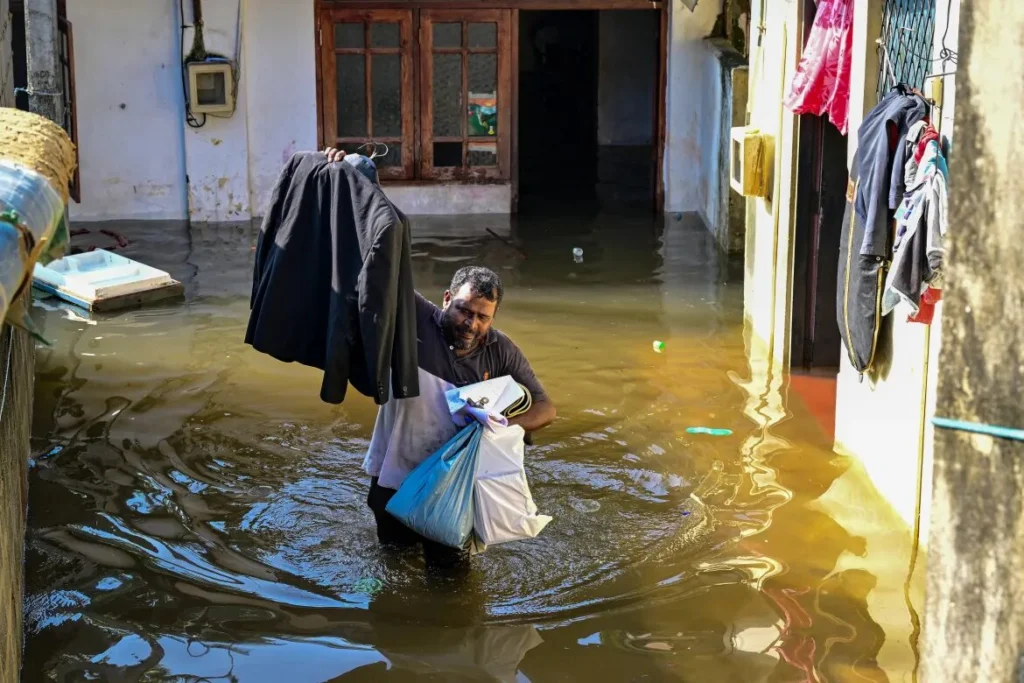
The scale of destruction has overwhelmed local authorities. In Sri Lanka, the Air Force has conducted aerial rescues, pulling 121 stranded citizens from rooftops and isolated communities. With rivers swelling to dangerous levels—particularly in Kalutara, Galle, and Ratnapura districts—the Irrigation Department issued urgent warnings about imminent flash floods and potential dam failures.
Of particular concern is the Mavil Aru reservoir, where rising water levels have prompted mandatory evacuations downstream. “A breach could unleash a second wave of devastation,” engineers cautioned, as rainfall shows no signs of abating.
In Indonesia, the situation remains equally dire. Landslides have buried entire neighborhoods, while floodwaters contaminated by sewage and industrial waste raise the risk of cholera, dengue, and leptospirosis outbreaks. The BNPB has deployed military units, drones, and amphibious vehicles to deliver food, clean water, and medical aid—but many communities remain unreachable.
Monitor real-time flood alerts in Southeast Asia (ReliefWeb – OCHA)
Both governments have appealed for international assistance, with early aid pledges coming from India, China, the United Arab Emirates, and the ASEAN Coordinating Centre for Humanitarian Assistance (AHA Centre). The World Health Organization (WHO) has pre-positioned emergency medical kits, while the Red Cross is scaling up shelter and sanitation support.
Support flood relief efforts in Sri Lanka and Indonesia (International Federation of Red Cross and Red Crescent Societies)
Geopolitical and Climate Context: A Region on the Frontlines of Climate Collapse
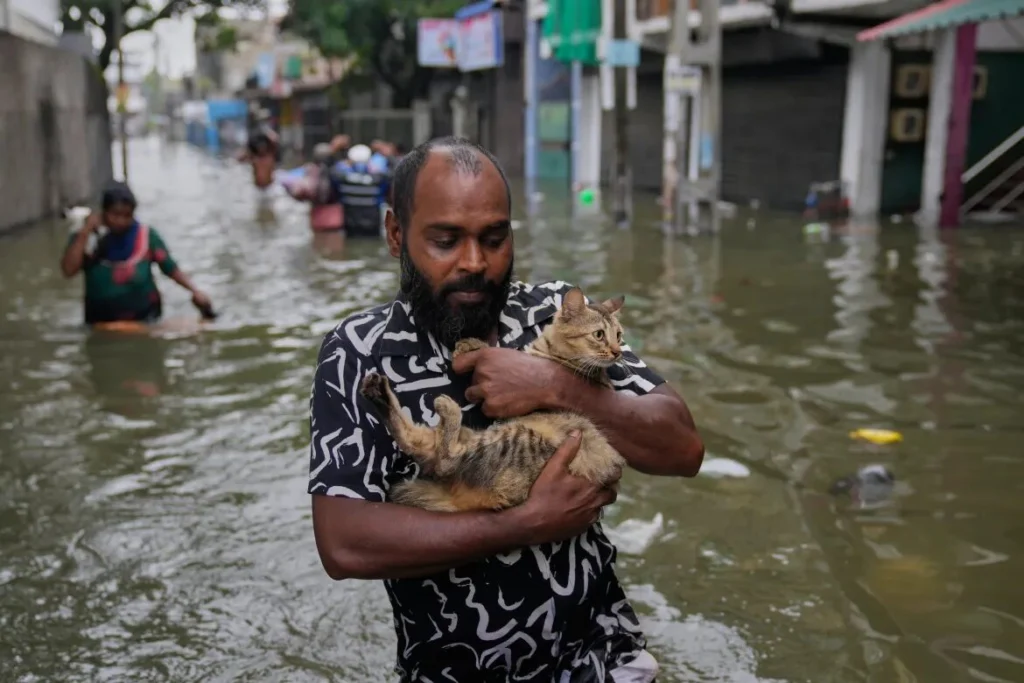
The Indonesia Sri Lanka floods are not isolated tragedies—they are symptoms of a deepening climate emergency in Southeast Asia, a region warming faster than the global average and increasingly vulnerable to extreme weather.
Scientists link the intensity of this year’s monsoon season to rising sea surface temperatures in the Indian Ocean, exacerbated by El Niño conditions and long-term global warming. What were once “once-in-a-generation” floods now occur every 2–3 years, overwhelming drainage systems and early-warning infrastructure.
Critically, both Indonesia and Sri Lanka are low-lying island and coastal nations with dense populations in flood-prone river basins. Decades of deforestation, unregulated urbanization, and wetland destruction have stripped away natural buffers, turning manageable rains into life-threatening deluges.
Globally, the disaster underscores the urgent need for climate justice. While contributing minimally to global emissions, countries like Sri Lanka and Indonesia bear the brunt of a crisis fueled by industrialized nations. The loss of life, livelihoods, and cultural heritage in these floods is a stark reminder that climate adaptation cannot wait.
As UN Secretary-General António Guterres recently warned: “The era of global boiling has arrived—and the Global South is paying the price.”
Author: JMVR
Source: Agencias