







India Unveils Dual Economic Strategy to Tackle 50% U.S. Tariffs
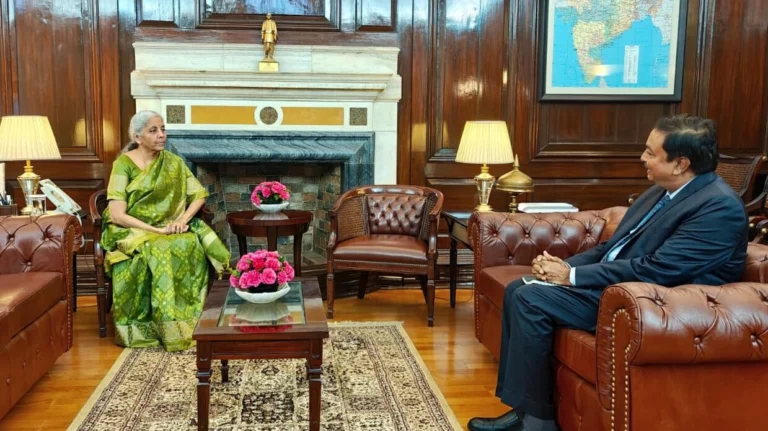
India’s Minister of Finance, Nirmala Sitharaman, and Dr. Rajiv Ranjan, Vice President of the New Development Bank. Photo: X/ @nsitharaman
August 28, 2025 Hour: 3:11 am
🔗 Comparte este artículo
The Indian government has outlined a strategy based on the resilience of its domestic demand, active diversification of its export markets, and the protection of its businesses, in its first economic assessment following the implementation of U.S. tariffs.
RELATED: Russia and India Defend Energy Ties Amid U.S. Tariff War
The Ministry of Finance’s July Monthly Economic Report, released Wednesday, concedes that short-term export prospects face pressure due to tariff-related uncertainty. However, it maintains that a united front between the government and private sector can effectively limit economic disruptions.
At the core of India’s strategy is a push to diversify its global trade relationships. The report points to recently enacted free trade agreements with the UK and the European Free Trade Association, alongside ongoing negotiations with the EU, Peru, and even the U.S., as crucial steps to sustaining export momentum.
On the home front, the report urges a ramp-up in domestic manufacturing capabilities. It argues that larger, financially robust entities should absorb most of the short-term economic strain to allow small and medium enterprises to emerge stronger from the current trade conflict.
Tariffs now apply to roughly $60 billion in Indian exports, after Washington enacted a second 25% duty in response to India’s continued oil trade with Russia. This comes on top of a prior 25% tariff introduced earlier in August amid longstanding trade tensions.
These levies are hitting labor-intensive Indian sectors like textiles and jewelry especially hard, though U.S. authorities have steered clear of targeting pharmaceutical imports—likely to avoid negative impacts on U.S. consumers.
Author: vmmh
Source: EFE