


Global Protests Demand Release of Venezuela’s President Maduro
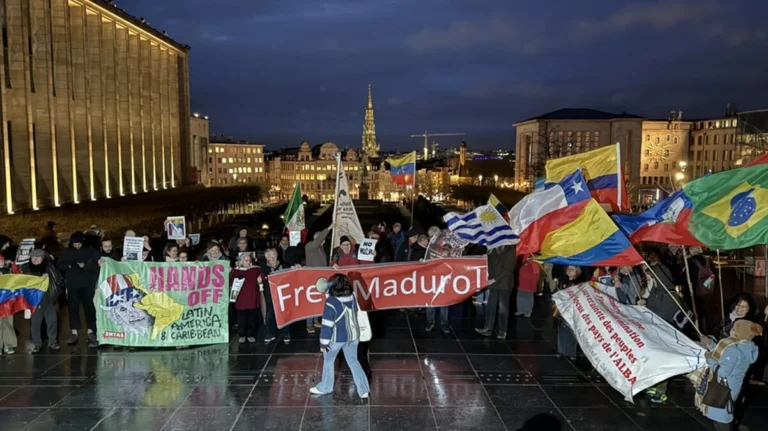
March for the release of Venezuelan President Nicolas Maduro in Brussels, Belgium. Photo: missionven_ue
February 4, 2026 Hour: 8:17 am
🔗 Comparte este artículo
Demonstrations held in 60 cities worldwide call for respect for the Bolivarian nation.
On Tuesday, social movements, political parties and human rights organizations staged the “Bring Them Back” protest in 60 cities around the world, demanding the release of Venezuelan President Nicolas Maduro and First Lady Cilia Flores.
RELATED:
In pictures: Venezuela demand the release of President Nicolás Maduro
They were kidnapped on Jan. 3, when U.S. military forces carried out a military assault on Venezuelan territory that violated the country’s sovereignty and left at least 100 people dead.
Maduro and Flores were later brought before the U.S. Federal Court for the Southern District of New York, where both pleaded not guilty. The Venezuelan head of state then declared himself a “prisoner of war.”
Americas: Mass Mobilizations in Solidarity With Venezuela
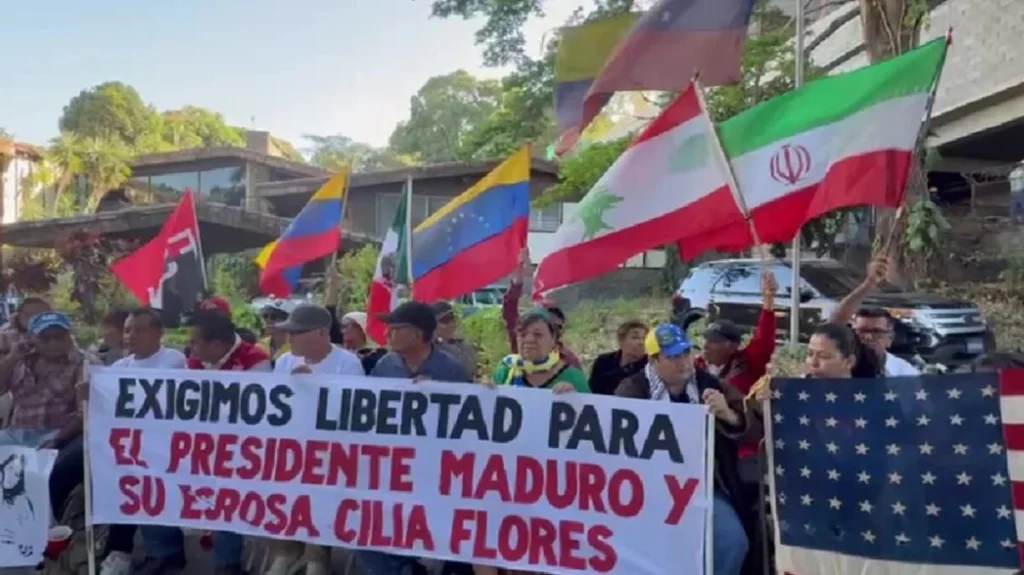
In the United States, the “Hands Off Venezuela” movement led a protest outside New York’s Metropolitan Detention Center, where President Maduro and his wife are being held. At the same time, images denouncing the situation were projected in front of the United Nations headquarters.
In Colombia, sit-ins and marches were held in Bogota, Medellin, Cali, Barranquilla, Cucuta and Cartagena. Social organizations maintained a significant presence outside the U.S. Embassy in Bogota.
In Brazil, the Landless Rural Workers Movement (MST) planted trees at the Cuban Embassy in Brasilia as a symbolic expression of Latin American peoples’ resistance to the U.S. blockade and aggressions.
“The offensive of capital and imperialism against peoples who fight for their sovereignty does not silence us. On the contrary, it strengthens us in collective resistance,” the MST said.
In Mexico, the Anti-Imperialist Front gathered outside the U.S. Embassy, joined by activists and social sectors who demanded respect for Venezuelan sovereignty and condemned the kidnapping of President Maduro and his wife. The mobilization expressed international solidarity with the Bolivarian nation and called for the immediate release of its leaders.
In Uruguay and El Salvador, social organizations held rallies in public squares and outside embassies in support of the Venezuelan people and to denounce U.S. military action.
Africa: Film Screenings and Academic Seminars
In Angola, Kenya, Uganda and Congo, the documentaries “Nicolas, the Origin” and “From Yare to Miraflores” were screened, recounting the life story of the Venezuelan president and his political trajectory within the Bolivarian Revolution.
The University of South Africa organized an academic seminar on the Venezuelan situation, while in Johannesburg the national chapter of the campaign for the release of President Maduro and his wife was launched.
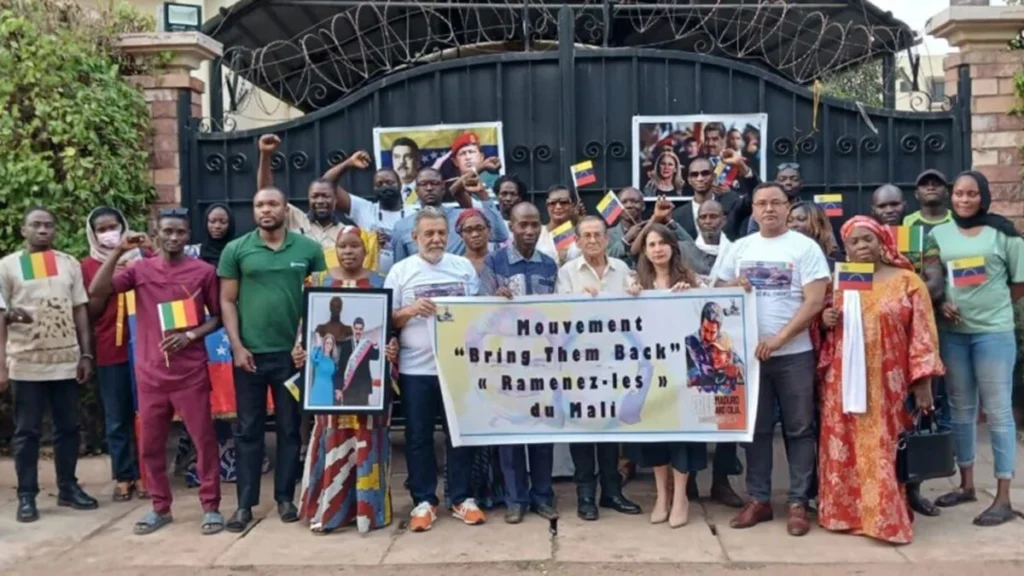
As part of the “Bring Them Back” campaign, social activists and jurists in Mali carried out actions demanding the freedom of President Nicolas Maduro and First Lady Cilia Flores.
In Senegal, the African Patriots of Senegal for Work, Ethics and Fraternity (PASTEF), the Stand Up for the People Party (PTAW), the International Anti-Imperialist, Afro-Descendant and African Cumbe, pan-African organizations and youth movements demanded the immediate release of Maduro and Flores.
Europe: Protests in Capitals and Cultural Events
Public squares in capitals such as Belgium, Germany and Spain were the scene of rallies demanding the return of President Maduro and First Lady Flores to Venezuela and protesting U.S. military aggression against the South American nation.
The Basque Country and Spanish cities including Tenerife, Las Palmas, Vigo and Madrid also hosted demonstrations in support of the Venezuelan leaders.
In the Netherlands, a protest was held outside the U.S. Consulate in Amsterdam. In Austria, the Venezuelan Embassy organized a screening of the documentary “Nicolas, the Origin” together with solidarity groups.
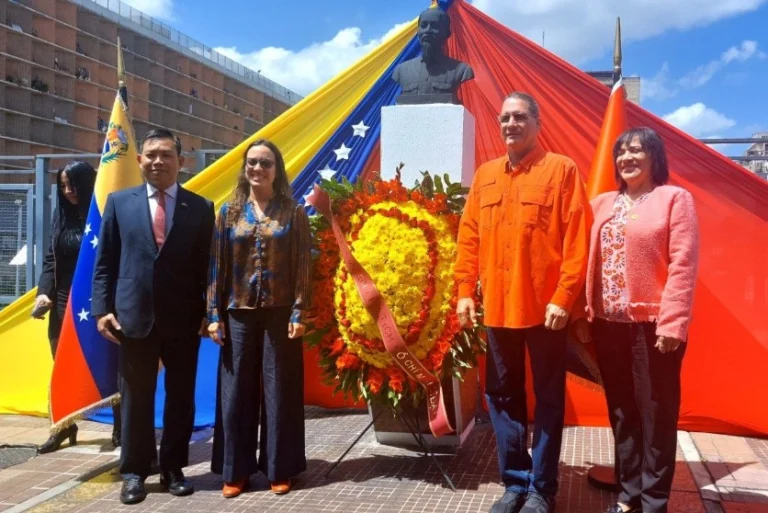
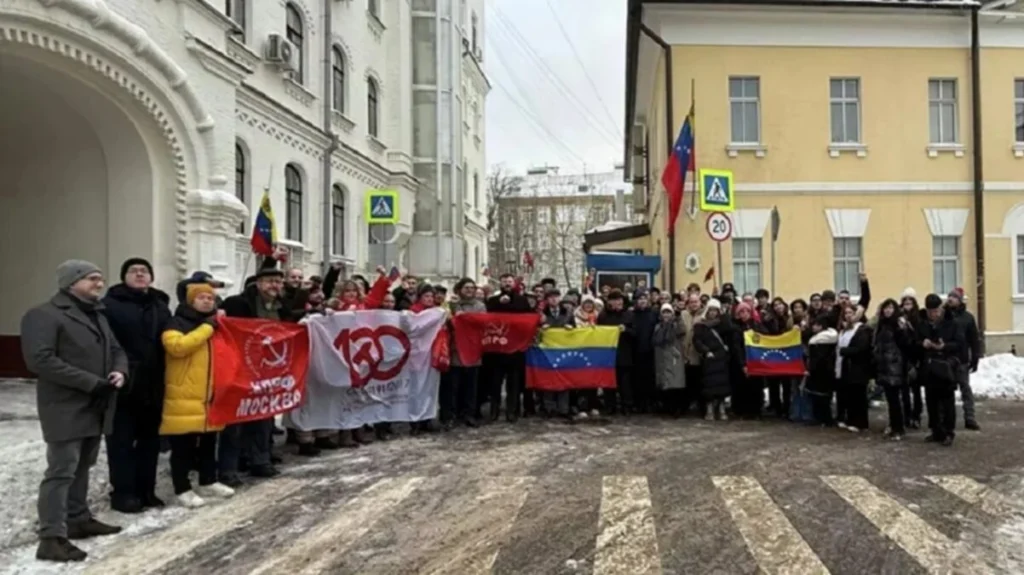
In Moscow, citizens mobilized near the Venezuelan Embassy, condemning the U.S. attack. Venezuelan Ambassador Jesus Salazar thanked Russia for its support and denounced violations of the United Nations Charter. In Minsk, commemorative events were held at Bolivar Square.
In Türkiye, student and youth movements gathered in Ankara. Aslı Sezen Sezgin, of the Türkiye Youth Union, said: “We are with you with all our hearts and demand the immediate freedom of the Venezuelan President and his wife.”
Asia Shows Strategic Alliances With Venezuela
Several mobilizations were also held across Asia in favor of peace in Venezuela and the release of President Maduro. In China and Vietnam, solidarity organizations organized film screenings and diplomatic events in Guangzhou and Hanoi.
In South Korea, the People’s Democracy Party and the Che Guevara Defense Brigade protested outside the U.S. Embassy in Seoul, chanting slogans such as “Free Maduro” and “Down with Imperialism.”
In the Philippines, the forum “Sovereignty Under Siege: A Forum on Venezuela and Our Shared Struggle Against U.S. Imperialism” was held, addressing the impact of U.S. coercive measures and the role of international media.
In Iraq, Lebanon and Saudi Arabia, political movements and intellectuals denounced U.S. military aggression and the abduction of President Maduro and his wife.
So far, the “Bring Them Back” campaign has become a focal point of international coordination through which social activists and human rights defenders denounce Washington’s submission of Maduro and Flores to a rigged trial based on unfounded drug trafficking charges.
These accusations are part of a narrative used by the administration of President Donald Trump to justify aggression against Venezuela, a country rich in energy resources.
teleSUR/ JF
Source: teleSUR