







Gaza Famine Deaths Hit 466 as Hunger Crisis Deepens After 3 Years of Genocide
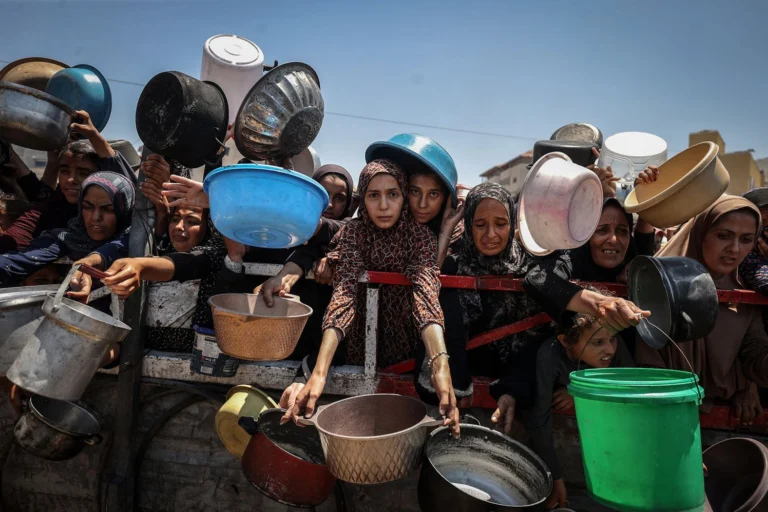
The Palestinian Ministry of Health warned that the humanitarian crisis has reached a critical point in its third year of war. Photo: CNN.
October 16, 2026 Hour: 4:57 pm
🔗 Comparte este artículo
Gaza’s Health Ministry reported Friday that hunger and malnutrition have killed 466 people since 2024, as famine grips the enclave and pushes more than 1.4 million residents toward a critical food crisis.
The Palestinian Health Ministry in Gaza confirmed Friday that malnutrition and hunger rates have reached catastrophic levels across the territory.
The toll stands at 466 starvation deaths since 2024, a figure the ministry released on World Food Day, observed October 16.
RELATED: Gaza Humanitarian Crisis: UN Warns of Explosive Force Equal to 6 Nuclear Bombs
The health authority issued a grim report exposing the consequences of the prolonged siege. Official projections show that more than 1.4 million people, equivalent to 67 percent of the population, will face a critical or worse food crisis by the end of 2026. Famine was formally declared in Gaza governorate in August 2025.
“Malnutrition and famine rates in the Gaza Strip have reached catastrophic levels, seriously affecting children, the elderly and other vulnerable groups,” the Ministry said in its statement.
Children carry a heavy share of the toll. Since 2024, 157 children have died from malnutrition, roughly one third of all starvation deaths. Between 2024 and August 2026, health workers documented 158,001 cases of acute malnutrition in children under five, including 28,716 severe cases that directly threaten life.
The mortality rate among children under five more than doubled, climbing from 13.6 to 33.4 deaths per 1,000 live births between 2022 and 2025. Stunting now affects 12.2 percent of the child population. Officials estimate that another 74,200 children will require specialized treatment through April 2027.
Maternal health has deteriorated sharply as well. Anemia prevalence rose to 61 percent in 2026, compared with 41 percent before the conflict. Nearly 4,000 miscarriages were recorded in the first half of the year, more than triple the previous six months. One in every three pregnancies is now classified as high risk.
Elderly Hardest Hit
Older adults account for the largest share of deaths linked to food shortages. The Gazan Ministry registered 189 fatalities among the elderly, or 40.5 percent of the national total.
The vulnerability among seniors is stark. 11% go entire days without eating anything at all. Forty eight percent deliberately reduce their own portions to feed their families. And 68% have interrupted or cut back on medication doses because of widespread shortages.
Facing this emergency, the Health Ministry recalled that the right to food is fundamental. It urged the United Nations and the international community to establish urgent mechanisms that guarantee the safe, sustainable and unrestricted entry of humanitarian aid, therapeutic supplements and medicines into the enclave.
Three years of war have collapsed the food system. The ministry’s warning lands as winter approaches and as aid deliveries remain insufficient to meet the scale of need across the territory.
The figures mark the deepest point yet in a hunger emergency that has built steadily since the conflict began. A formal famine declaration, once a rare event, now defines daily reality for hundreds of thousands of people trapped in the enclave.
The projected rise in food insecurity through late 2026, combined with 74,200 children awaiting specialized care, points to a crisis that will persist even if aid access improves. The ministry’s appeal to the international community underscores the gap between what is needed and what is actually arriving.