







‘No Meloni Day’ Brings Thousands of Italians Out Onto the Streets
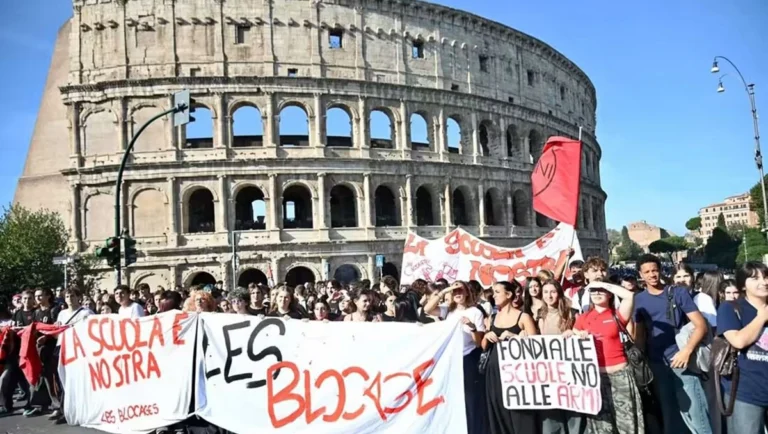
‘No Meloni Day’ protests in Rome, Oct. 16, 2026. X/ @TommasoSpinel
October 16, 2026 Hour: 1:59 pm
🔗 Comparte este artículo
Demonstrations over school funding and discrimination coincide with protests by truckers, farmers and climate activists.
On Friday, thousands of students and teachers took to the streets in several Italian cities to protest the policies of Prime Minister Giorgia Meloni.
RELATED:
Italy’s Giorgia Meloni Trademarks Her Voice Against AI Deepfakes
The protests followed several days marked by a wave of school occupations in Milan, Naples, Turin, Genoa, Bologna and Rome.
The nationwide mobilization, dubbed “No Meloni Day,” combined demands over budget allocations with direct criticism of the Italian government’s environmental policies.
Student groups denounced the progressive deterioration of school infrastructure and called for the €13 billion allocated to military spending to be redirected toward education.
Representatives of the Alternative Student Opposition criticized the rising cost of living and announced a general strike scheduled for Oct. 30.
The text reads, “During a student protest in Turin, a cardboard tank was set on fire. Demonstrators ignited the model using colored smoke flares, chanting “Burn, Burn!” and the slogan “We will not pay for war,” as a form of protest against military spending.
The demonstration was part of the “No Meloni Day”—a day of student mobilization against the government’s educational policies, rising tuition costs, and increased military expenditure.
Similar protests took place across Italy, specifically in Rome, Milan, Florence, Genoa, Venice, Padua, Treviso, and Cagliari. In the capital, organizers estimated the turnout at 20,000 people, while in Turin, more than 2,500 students took to the streets.”
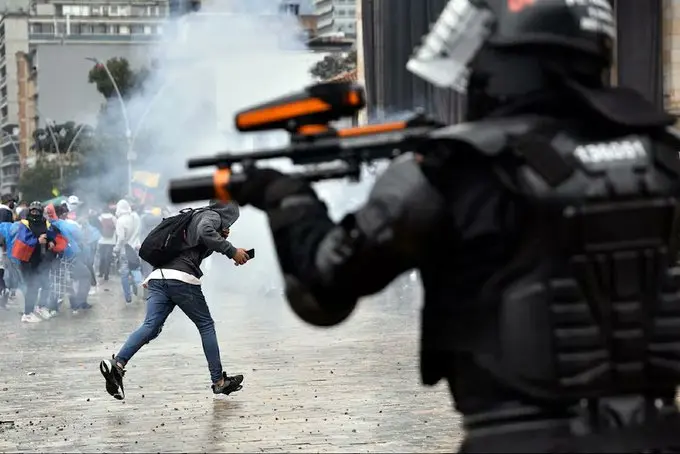
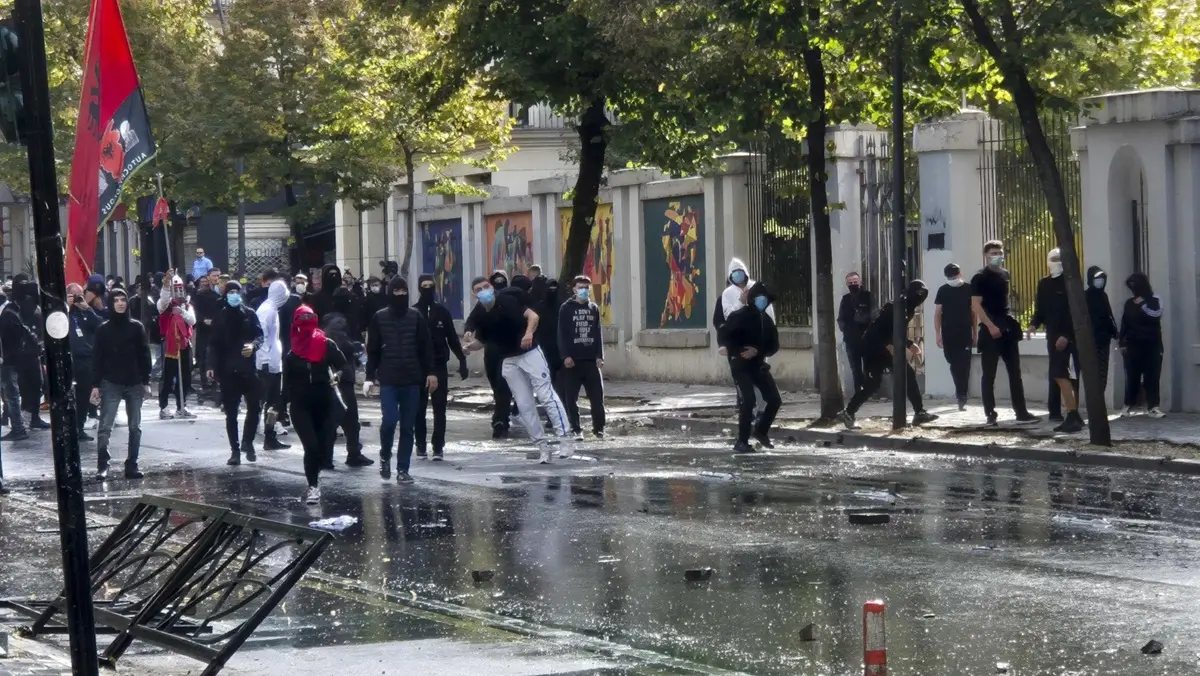
During marches in Rome, tensions escalated when some protesters threw firecrackers and trash containers outside the Education Ministry. Riot police and Carabinieri officers established security cordons and used tear gas to disperse the crowd on Via Marmorata.
“Thousands of students marched from the Colosseum to the Education Ministry. Tensions rose because of a group of masked protesters who threw bottles and improvised explosive devices at law enforcement officers, as well as discharged fire extinguishers,” RaiNews reported.
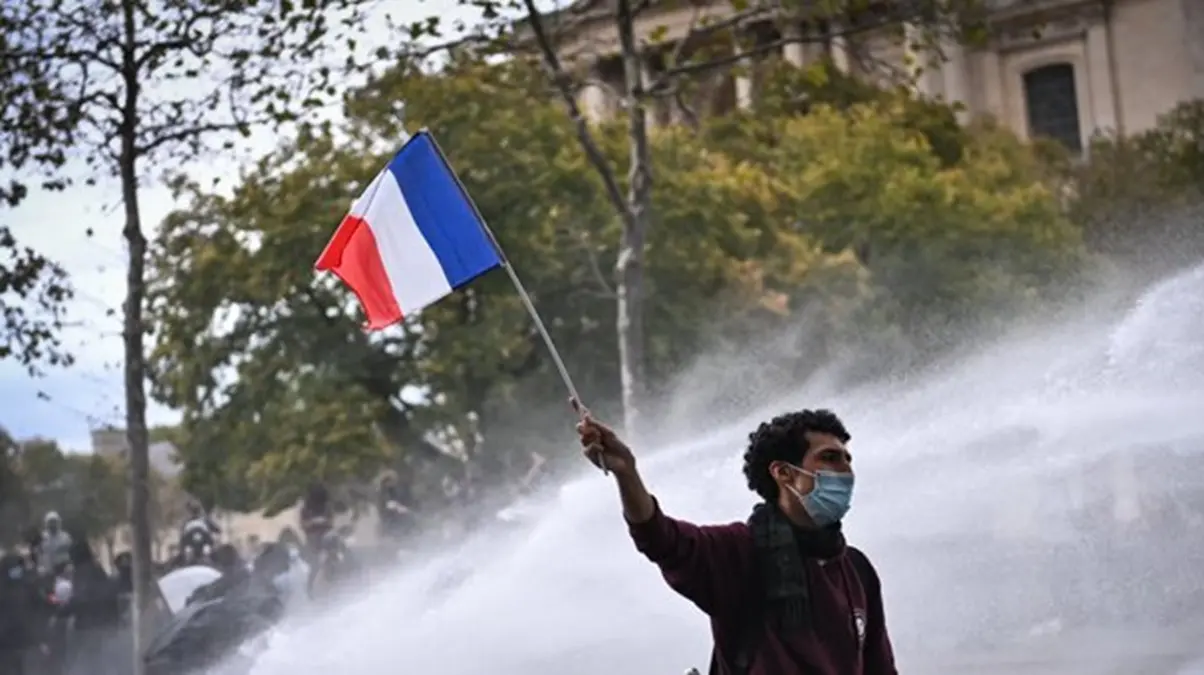
Similar clashes occurred in Turin and Bologna outside the prefecture and the central railway station, where police responded with water cannons. The violence led to confrontations involving blunt objects, the detention of a masked minor and severe disruptions to rail traffic in northern Italy.
Students Reject Discrimination and Racism
Thousands of people marched peacefully in Milan, holding signs and chanting slogans in support of social integration. Youth organizations strongly opposed Meloni’s “Valditara Decree,” which they described as discriminatory and racist.
In effect since June, the decree bans sex and relationship education at the preschool and elementary school levels and requires parental consent to address these topics at other educational levels. It also sets a maximum of 30% for foreign students in each classroom.
“Are these really the problems that need to be solved?” and “Racists out of our schools!” protesters shouted, according to RAI News.
“An entire generation has taken to the streets because it refuses to bow its head — to mind its own business — while others destroy our future,” said Alice, who linked the student movement’s demands to the genocide in Gaza.
“And it all starts right here, in our schools. The pro-Palestinian demonstrations made that clear: Some people have blood on their hands — the blood of genocides taking place around the world — and those same hands are cutting funding for our schools, our lives, and a dignified future in this city.”
“Outside the regional education authority’s headquarters, some participants threw eggs filled with red paint, declaring, ‘This is the blood of Gaza and Palestine,’” RaiNews reported.
Truckers, Farmers and Environmentalists Voice Discontent
On Friday, southern Italy faced a severe fuel shortage in the provinces of Calabria, Basilicata and Apulia because of protests by truckers and farmers. Steelworkers’ blockades at Eni’s Taranto refinery brought gas stations to a standstill, causing long lines and operational difficulties for public transportation.
The transport industry association Conftrasporto reported an increase of more than 50 euro cents per liter in diesel prices and demanded the immediate release of budget funds.
Facing the imminent risk of supply shortages, the Ministry of Infrastructure and Transport called an emergency meeting with industry representatives for Oct. 27.
The student mobilization also coincided with global protests organized by “Fridays for Future” in support of climate action and against fossil fuels.
Italian environmentalists marched to the Environment Ministry in Rome to demand reductions in polluting emissions and action to combat energy poverty across the country.
teleSUR/ JF
Source: RAI – EFE – teleSUR