







FIFA Approves Women’s World Cup for Mexico, U.S., Costa Rica, Jamaica
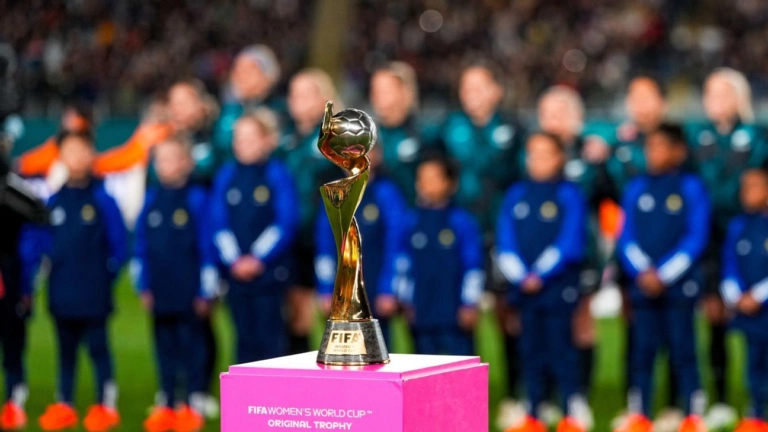
(FILE) The official decision makes Mexican territory host to the main women’s national team tournament for the first time. Photo: ESPN.
November 23, 2026 Hour: 4:57 pm
🔗 Comparte este artículo
FIFA awarded the 2031 Women’s World Cup to a joint bid from Mexico, United States, Costa Rica and Jamaica on Monday, making Mexico a host of the tournament for the first time and expanding the competition to 48 national teams.
The decision came at FIFA’s Extraordinary Congress in Zurich, Switzerland, on November 23. The approved proposal turns Mexican territory into a host of the premier women’s national team tournament for the first time in its history.
The regional project will bring together 48 national teams across 104 matches. That expansion marks a structural leap for the women’s game, which FIFA has now broadened toward a much larger geographic footprint across North America, Central America and the Caribbean.
RELATED: Caracas to Host 2030 Regional Games
The joint bid began its formal process in March 2025 and cleared the infrastructure inspections required by the governing body without facing rival candidacies in the final vote. FIFA‘s official evaluation report gave the proposal a score of 4.4 out of five.
The presentation to affiliated federations included an audiovisual pitch from Mexican forward Charlyn Corral and Mikel Arriola, commissioner of the Mexican Football Federation. Their participation put a leading player and a top administrator side by side before the voters.
Four Mexican Venues
Mexico proposed four stadiums within a technical file that includes 20 venues across the four host countries. The Mexican venues are the Mexico’s City Stadium, known as Banorte, the Guadalajara Stadium, known as Akron, the Monterrey Stadium and the Torreón Stadium, known as TSM Corona.
Three of those facilities have already hosted matches during the 2026 men’s World Cup. That recent experience gives the Mexican bid a track record of managing large-scale tournament logistics under FIFA’s current standards.
FIFA is nonetheless keeping the full list under review. The governing body may reduce the final selection to 16 venues, which means some proposed stadiums could be cut before the tournament opens.
The approval also ratifies the tournament’s expansion under an official slogan: “For now, for the future.” The phrase signals FIFA’s intent to anchor the women’s competition in long-term growth rather than a single edition.
During the same session in Zurich, FIFA confirmed the following edition. The 2035 tournament will be played in the United Kingdom through a joint bid from England, Northern Ireland, Scotland and Wales. The announcement gives the women’s game a decade-long runway of confirmed hosts across two continents.
For Mexico, the designation extends a remarkable run of hosting duty. The country has welcomed men’s World Cup matches in 1970 and 1986, and will do so again in 2026. Now the women’s tournament arrives five years later, cementing Mexico’s place as one of the most experienced hosts in global football.
The economic and sporting implications are considerable. A 48-team women’s World Cup will require a scale of infrastructure, security, and logistics that dwarfs previous editions. The joint format spreads those demands across four nations, but Mexico’s four proposed stadiums sit at the heart of the plan.
What remains unresolved is the final venue list. With 20 proposed stadiums and a possible reduction to 16, cities and federations will compete for confirmation in the months ahead. The work of building the tournament now begins.
Author: Laura V. Mor
Source: FIFA / Agencies