


Ecuadorian Government Intensifies Crackdown on National Strike

Women record police violence in Ecuador, Sept. 23, 2025. X/ @almayadeen_es
September 24, 2025 Hour: 10:24 am
🔗 Comparte este artículo
Reports of abuse and disappearances fuel criticism of the Noboa administration’s security response.
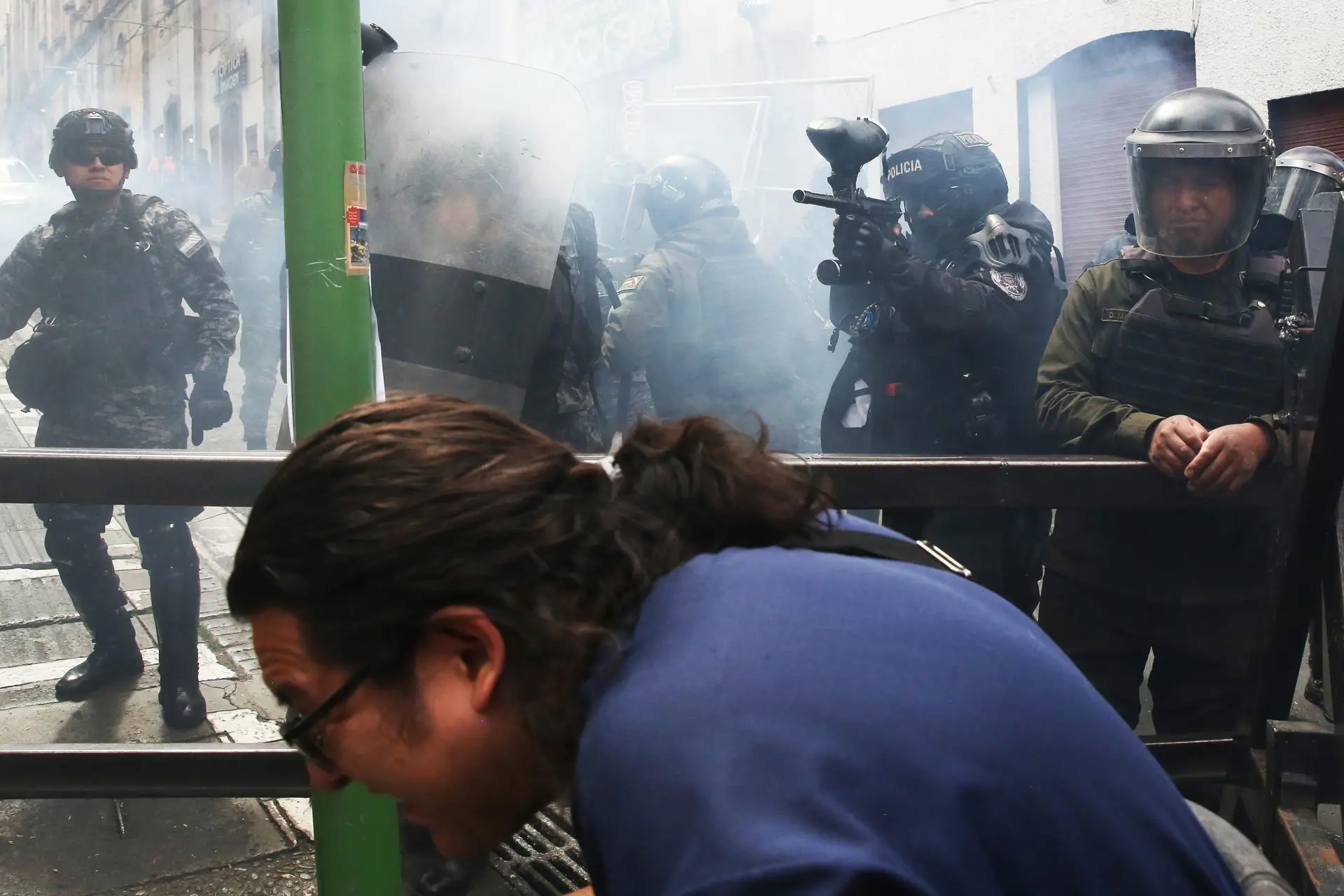
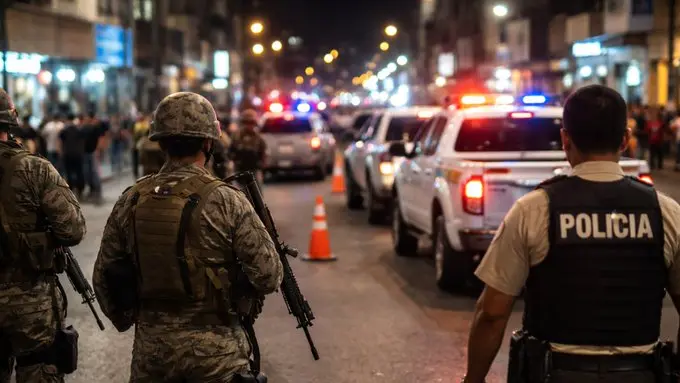
In the past 24 hours, Ecuador’s armed forces and police, acting under the orders of President Daniel Noboa, intensified repression against citizens participating in the national strike. So far, 59 people have been arrested, according to Interior Ministry data.
RELATED:
Ecuador: 47 People Arrested Amid Strike Against Fuel Price Hikes
Convened by the Confederation of Indigenous Nationalities of Ecuador (CONAIE), the massive protests are demanding the reinstatement of the diesel subsidy, solutions to insecurity and unemployment, increased funding for health care, and a reduction in the value-added tax.
In downtown Quito, students and workers marched from the Ecuadorian Social Security Institute to Santo Domingo Square, calling for Noboa’s resignation.
“Repression is flaring up right now in Santo Domingo. Protesters are being pushed back by police. Side streets along Guayaquil Avenue have been completely barricaded with a heavy police presence, limiting the march’s advance,” reported teleSUR correspondent Elena Rodriguez.
In Otavalo, in Imbabura province, police repression escalated amid allegations of abuse by the Intervention and Rescue Group (GIR).
CONAIE reported the arbitrary and violent arrest of Gina Cahuasqui, a woman who was detained after peacefully confronting police about the use of tear gas against residents. CONAIE demanded the immediate release of Cahuasqui, who is being held at the Ibarra Provisional Detention Center, with no information disclosed about the charges against her.
The text reads, “Don’t you realize yet that you live in a semi-dictatorship? What happened to Gina Cahuasqui exposes this without any masks. Yesterday, she was arrested and accused of “terrorism” simply for handing out water and food to protesters. Today, September 23rd, her family reports that she is still missing: the last time she was seen was in police custody, as evidenced by a video. This is not an isolated case. It echoes the worst pages of Latin American history, when military dictatorships called students, union members, or farmers who even spoke out “enemies of the state.” The hallmarks of an authoritarian regime are criminalizing solidarity, disappearing those who are inconvenient, and sowing fear to silence others. That in the 21st century, a government copies our history’s darkest methods is a brutal warning. It’s not just Gina. It reflects what can happen to us all if we accept repression as normal.”
On Tuesday, the Regional Foundation for Human Rights Advice (INREDH) warned of violations of demonstrators’ human rights. On social media, Ecuadorians shared videos of police firing directly at civilians.
Social organizations also reported the disappearance of Roberto Cacoango, a 32-year-old Indigenous man from the Punuyaro community in Otavalo. Human rights lawyer Sybel Martinez said security cameras recorded his last known presence near Sarance School on Sept. 22. Relatives and friends are demanding immediate information about his whereabouts and condition.
In Otavalo, photographer Ricardo Landeta, a correspondent for China’s Xinhua news agency, was assaulted and stripped of his equipment while covering the protests, according to David de la Paz, Xinhua’s Latin America coordinator.
CONAIE denounced these incidents as part of a government strategy to stifle the national strike, which is gaining momentum across the country.
In the early hours of Wednesday, President Noboa traveled to Imbabura, the province where most road blockades and violent demonstrations have been reported. Analysts say the move is meant to reaffirm the government’s “strength” and symbolically signal that Noboa will not retreat from his policy agenda.
teleSUR/ JF
Sources: EFE – Xinhua – teleSUR – Prensa Latina