







Ecuador is Burning, the People Resist: A Country at a Turning Point of Austerity and Repression
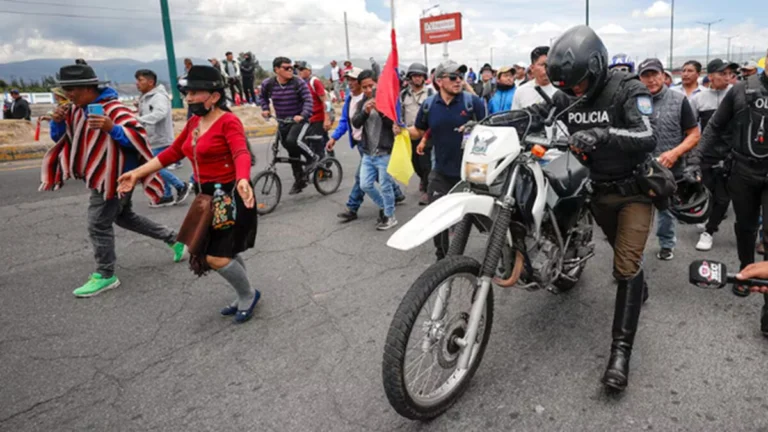
Protests in Ecuador, Sept. 2025. X/ @Expedientes_ec
September 29, 2025 Hour: 10:38 am
🔗 Comparte este artículo
Ecuador finds itself, once again, at the center of a social and political storm. We have once again witnessed a national strike called by the Confederation of Indigenous Nationalities of Ecuador (CONAIE), a popular uprising that has placed Daniel Noboa’s government in its most difficult week.
This article will not limit itself to the headlines, it will deeply analyze the structural causes of this crisis, exposing the struggle of a people resisting the dismantling of social and democratic advances achieved during years of a progressive project.
The crisis currently suffocating the country is not a random event. It is the inevitable expression of a government that, under the cloak of the “war on terrorism” and a “firm hand,” has implemented a neoliberal agenda that squarely hits the most vulnerable sectors.
The protests, far from being an act of destabilization, are the legitimate defense of a people who refuse to let the bill for the crisis be paid by the same people as always.
The Trigger of Outrage: Diesel as a Weapon of Austerity
The trigger for this new wave of indignation was the elimination of the diesel subsidy, a measure that Noboa imposed abruptly and without consultation.
The price per gallon skyrocketed by 55%, rising from $1.80 to $2.80 overnight. The government’s justification, that it aims to combat smuggling and direct the $1.1 billion in savings to social programs, collapses under its own weight.
This is a measure imposed by the International Monetary Fund (IMF), one of the conditions for disbursing a $1.2 billion loan, destined to swell the coffers of external debt rather than benefit the Ecuadorian people.
The impact of this decision has been devastating. Diesel is the fuel that drives the people’s economy: it transports cargo, people on buses, and tractors in the agricultural sector.
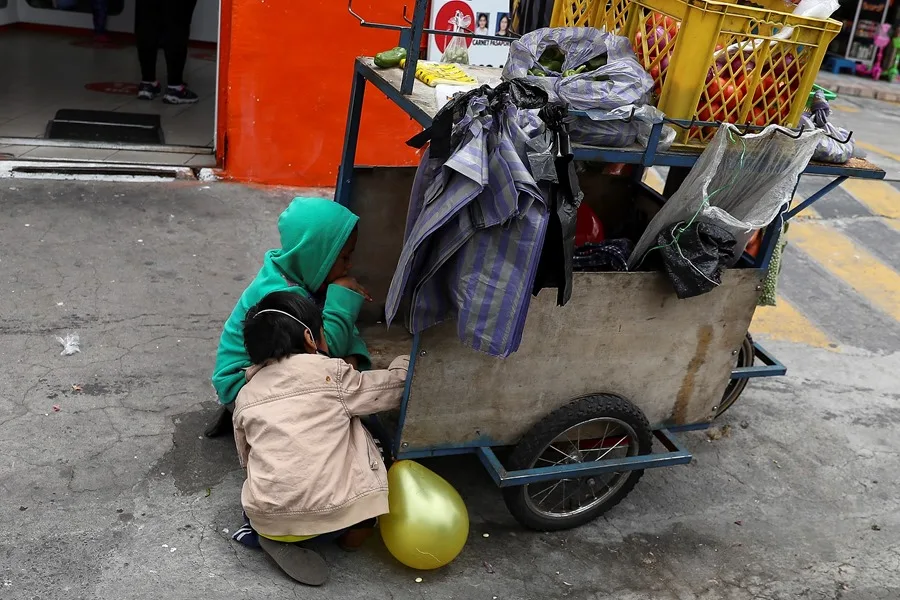
The increase in its price causes a domino effect that makes basic food basket products and public transportation more expensive, pushing thousands of families into poverty.
This is not an isolated measure. It is the repetition of a story Ecuador already knows. Previous governments, like those of Lenín Moreno in 2019 and Guillermo Lasso in 2022, attempted the same, only to be confronted by massive uprisings.
This is the third time the Ecuadorian people have taken to the streets to defend their right not to be sacrificed on the altar of neoliberalism.
Authoritarianism as a Response: Criminalization and Repression of Dissent
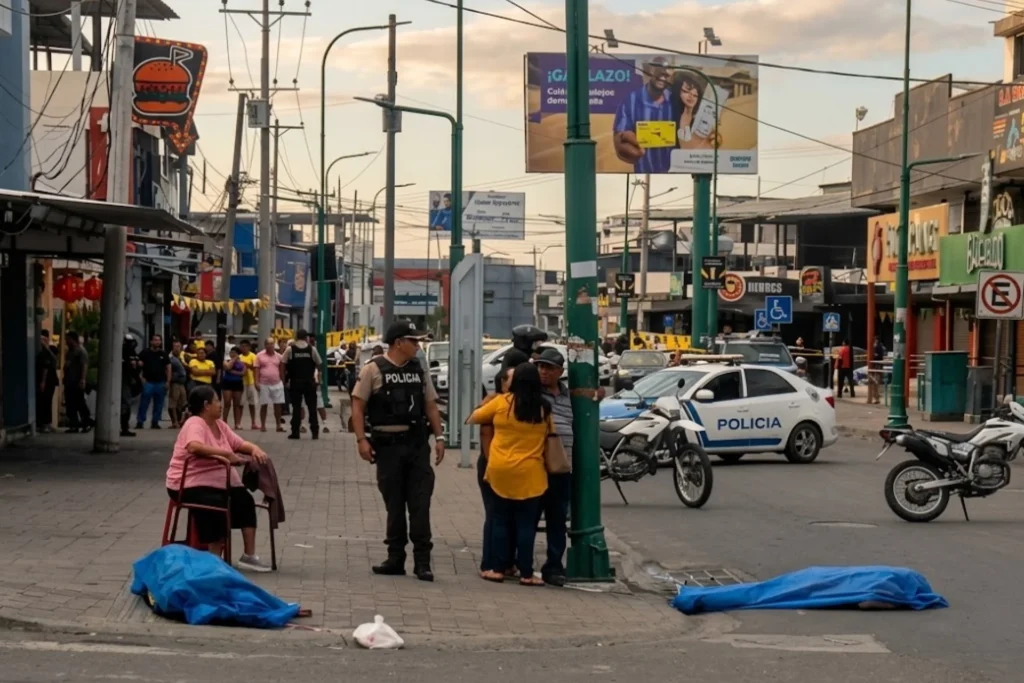
Faced with popular mobilization, the response of the Noboa government has been one of repression and criminalization.
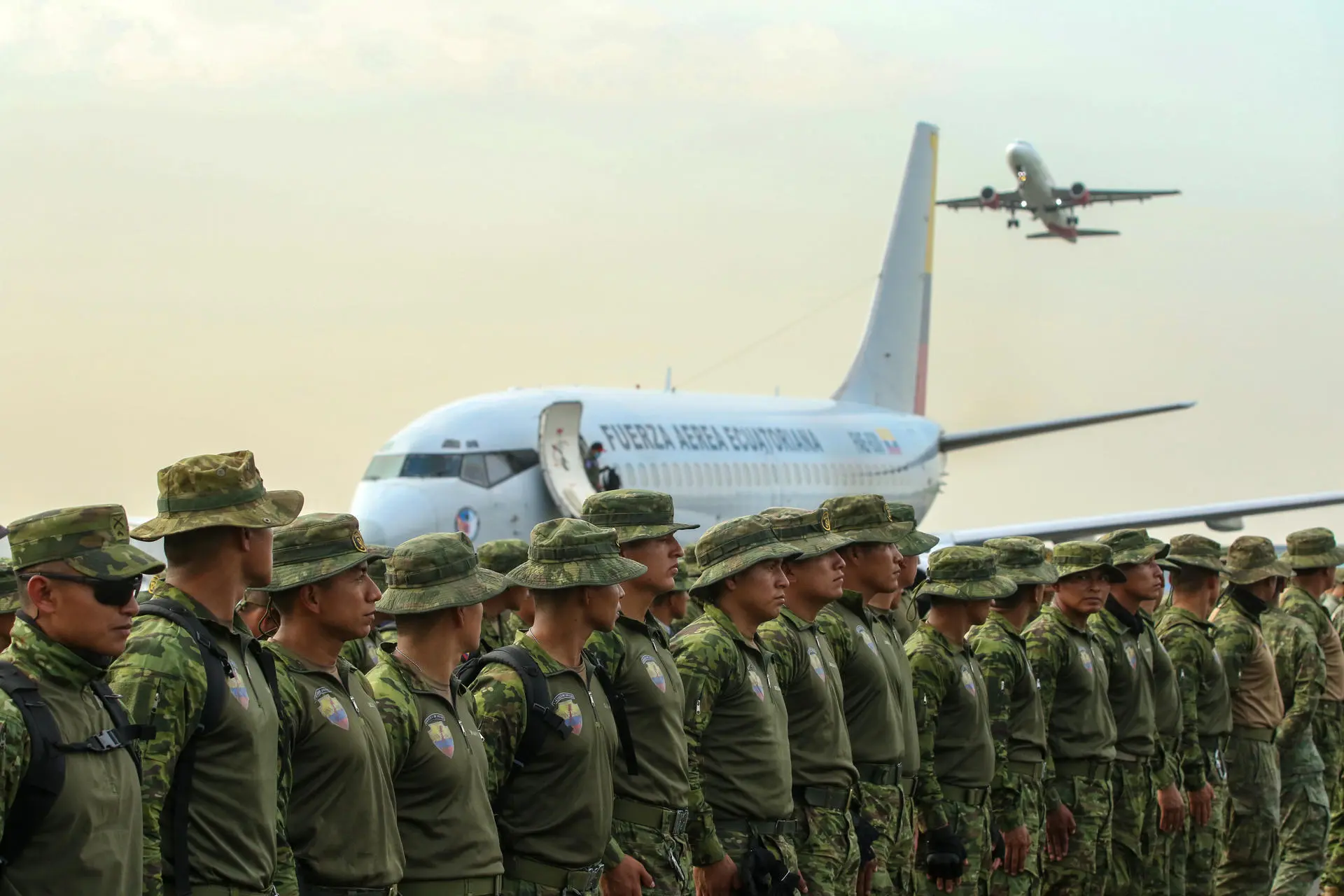
The president has declared states of exception, suspending rights and granting the military and police a blank check to act.
The repression has been brutal, with more than 400 people detained for crimes such as “attempted paralysis of a public service,” a clear attempt to intimidate social leaders and criminalize protest.
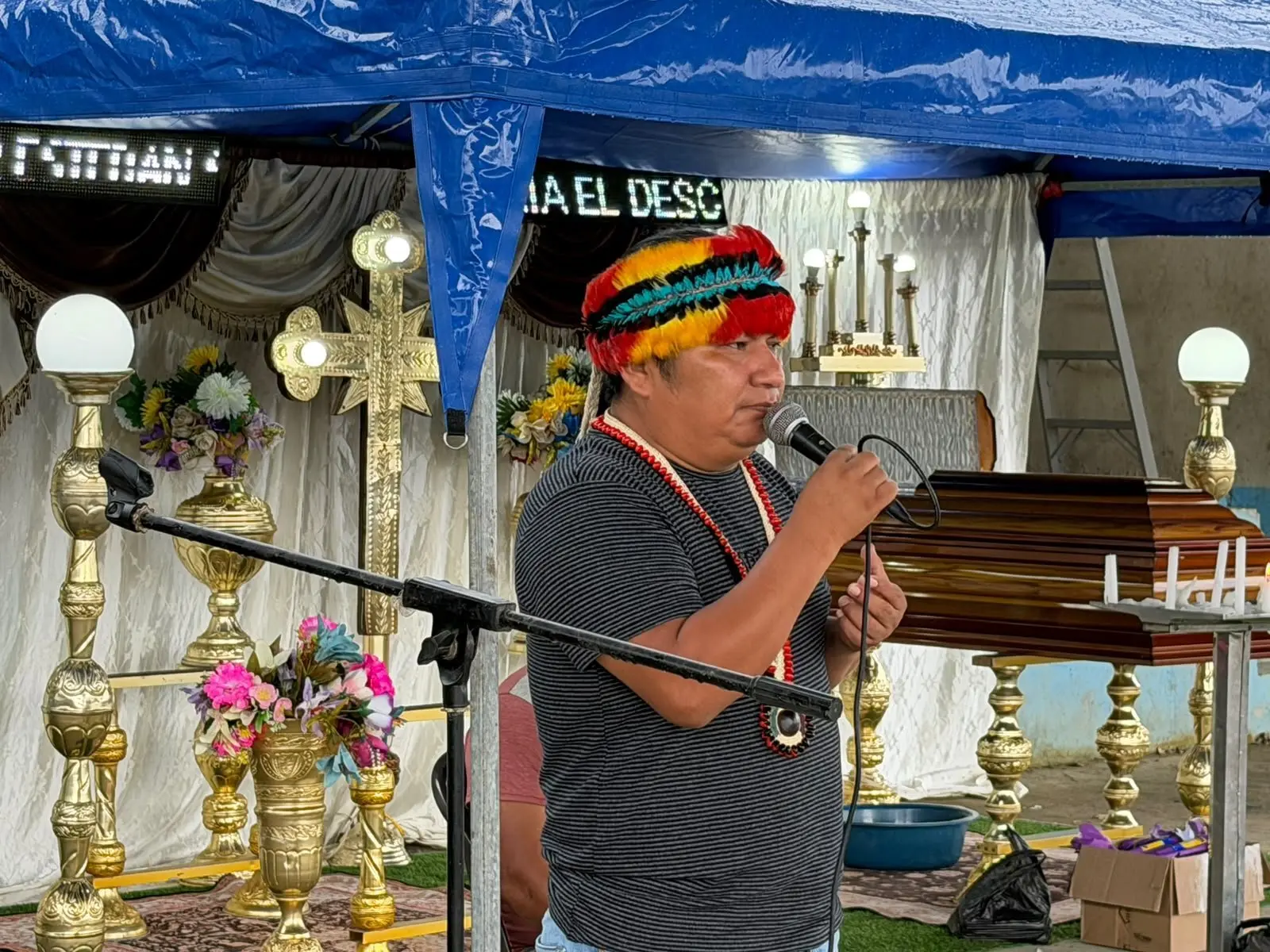
The most critical point of this escalation was the death of Efraín Fuárez, a 46-year-old indigenous community member and father of two, who became the first fatal victim of the protests.
While the Armed Forces claim they were ambushed, CONAIE has reported that Fuárez died from shots fired by military personnel repressing a demonstration.
A video, which went viral on social media, shows the moment a military armored vehicle runs over and kicks Fuárez and the person trying to help him.
This event, which CONAIE describes as a “bloody hunt,” is irrefutable proof of the violence with which the Noboa government is acting to stifle dissent.
The United Nations rapporteur, Gina Romero, has had to intervene, reminding the government that protesting is a fundamental right that should not cost lives.
The Constitution in the Crosshairs: The Offensive Against the Progressive Legacy
But Noboa’s plan goes beyond a simple economic adjustment. Its true objective is to dismantle the foundations of the progressive project that forged the 2008 Constitution.
The proposal to convene a Constituent Assembly, which the Constitutional Court has already approved to be voted on in a referendum on November 16, is a direct threat to one of the most advanced constitutions in the region, which guarantees social, labor, and environmental rights.
The government seeks to establish a “neoliberal Constitution” that would allow it to privatize public services, reduce the role of the State, and, ultimately, erase the legacy of the “Citizens’ Revolution.”
Doubts about the transparency of this process are evident. With a distribution of seats that favors the largest provinces, there are fears of an “express constituent assembly” that evades citizen participation and serves only to legitimize an economic and political model that the people have already rejected in the streets.
The Role of Information and the Resistance in the Streets
In this context of tension, the role of the media has been questionable. Most Ecuadorian media have acted as spokespeople for the government, minimizing the scale of the protests, justifying the repression, and blaming “Correísmo” for orchestrating the chaos.
However, international and alternative media have played a crucial role in making visible what the official press ignores.
The resistance, however, is being fought in the streets. CONAIE, with its vast experience in popular organization, has managed to mobilize thousands of indigenous people, peasants, and workers.
The protests, with roadblocks and peaceful demonstrations, have managed to disrupt the country’s normality, demonstrating that the strength of the organized people is the only force capable of confronting repression and austerity.
The Dispute for the Nation’s Future
The protests of September 2025 are not a simple outburst of violence. They are irrefutable proof that a crucial battle for the nation’s future is being fought in Ecuador.
On one side, a government that prioritizes the dictates of the IMF and external debt over the well-being of its people. On the other, a people who, led by their social organizations, defend the achievements of the progressive decade and refuse to go backwards.
Ecuador’s recent history teaches us that popular struggle is the only way to stop authoritarianism and austerity.
The national strike has shown that the flame of resistance remains lit. The challenge now is to maintain the unity of progressive forces and civil society to defend democracy, rights, and the future of a nation that does not surrender.
Author: Silvana Solano
Source: TeleSur