


December 3: Rethinking Disability Through Culture and Inequality in Latin America
The International Day of Persons with Disabilities highlights the need to confront structural barriers in Latin America and the Caribbean, where unequal access to cultural life continues to shape exclusion.
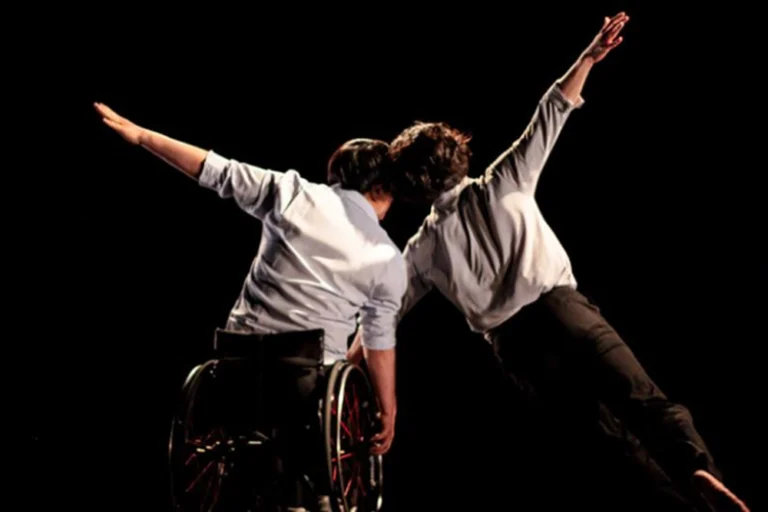
Cultural access and representation at the center of the International Day of Persons with Disabilities. Photo: lsf.kr
December 3, 2025 Hour: 5:47 am
🔗 Comparte este artículo
The International Day of Persons with Disabilities, established by the UN on December 3, aims to promote rights and highlight ongoing inequalities. Across Latin America and the Caribbean—where more than 85 million people live with disabilities—the date carries a cultural significance that goes beyond commemoration. It prompts a deeper look at how the region represents, includes, and often excludes people with disabilities in its cultural spaces, and what structural barriers still limit full participation.
The designation of December 3 dates back to 1992, when the UN General Assembly adopted Resolution A/RES/47/3. It marked the culmination of over a decade of global work that began with the 1981 International Year of Disabled Persons and continued through the Decade of Disabled Persons (1983–1992). During this period, the UN advanced a shift from charity-based approaches toward a rights-based framework anchored in equality and non-discrimination.
This shift reshaped language as well. Moving from terms like “the disabled” to “persons with disabilities” reflected a broader conceptual change that places the individual—rather than the impairment—at the center. The 2006 Convention on the Rights of Persons with Disabilities reinforced this perspective by setting out concrete state obligations on accessibility, autonomy, non-discrimination and full participation in social, political and cultural life.
Culture remains a crucial dimension because it shapes meaning, belonging and how societies understand difference. Yet across much of the Global South, cultural accessibility remains uneven. In Latin America and the Caribbean, longstanding inequalities limit access to museums, theaters, libraries, festivals, community centers and artistic programming. Barriers are not only physical; they are also economic, technological and symbolic.
These challenges mirror broader regional disparities. By 2020, an estimated 85 million people with disabilities—around 14.7 percent of the population—faced poverty rates significantly higher than regional averages. One in five households living in extreme poverty includes a person with disabilities, and 15 percent of children with disabilities remain out of school. Labor exclusion is also pronounced: half of all heads of household with disabilities are outside the labor market.
The cultural implications of these inequalities are far-reaching. Limited income reduces the ability to access artistic spaces or cultural institutions. Gaps in inclusive education restrict opportunities for future cultural producers and audiences. And low employment participation weakens the representation of people with disabilities within cultural industries, affecting diversity across the sector.
Representation in cultural production also shapes societal attitudes. Media, film, visual arts and literature frequently rely on assistance-based portrayals or narratives of personal “overcoming,” rather than addressing collective rights or structural barriers. December 3 therefore also serves as a reminder that cultural narratives are an essential part of inclusion: without diverse and respectful representation, cultural equality remains incomplete.
The consequences extend beyond the social sphere. Global studies cited by the World Bank estimate that disability exclusion can result in economic losses equivalent to 3–7 percent of GDP. In a region marked by profound inequalities, these figures underscore that inclusion is not only a matter of rights—it is also a development priority.
The International Day of Persons with Disabilities offers a moment to assess progress, acknowledge persistent gaps and recognize the transformative role of culture. In Latin America and the Caribbean—where inequality persists alongside meaningful advances in accessibility and participation—the date reinforces the need for stronger inclusive cultural policies, more accurate representation and broader opportunities for people with disabilities to fully participate in cultural life. Cultural inclusion is not an accessory; it is fundamental to building fairer and more diverse societies.
Author: MK