







Cuba Seeks Food Sovereignty Amid Blockade and Energy Shortages
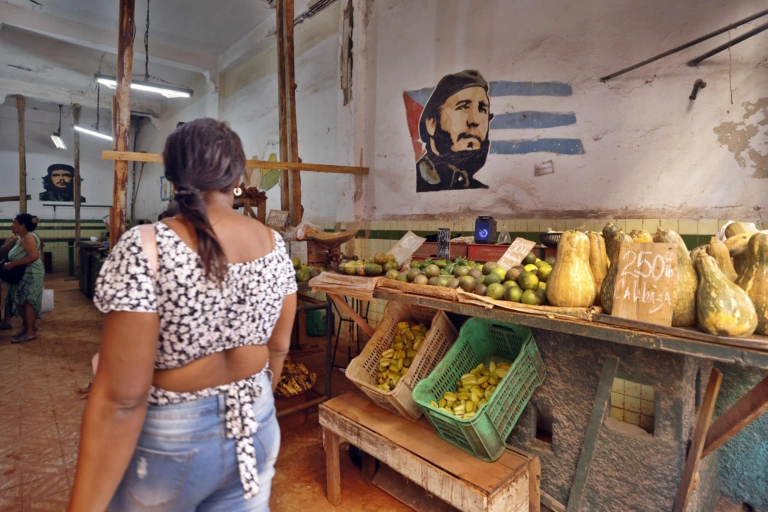
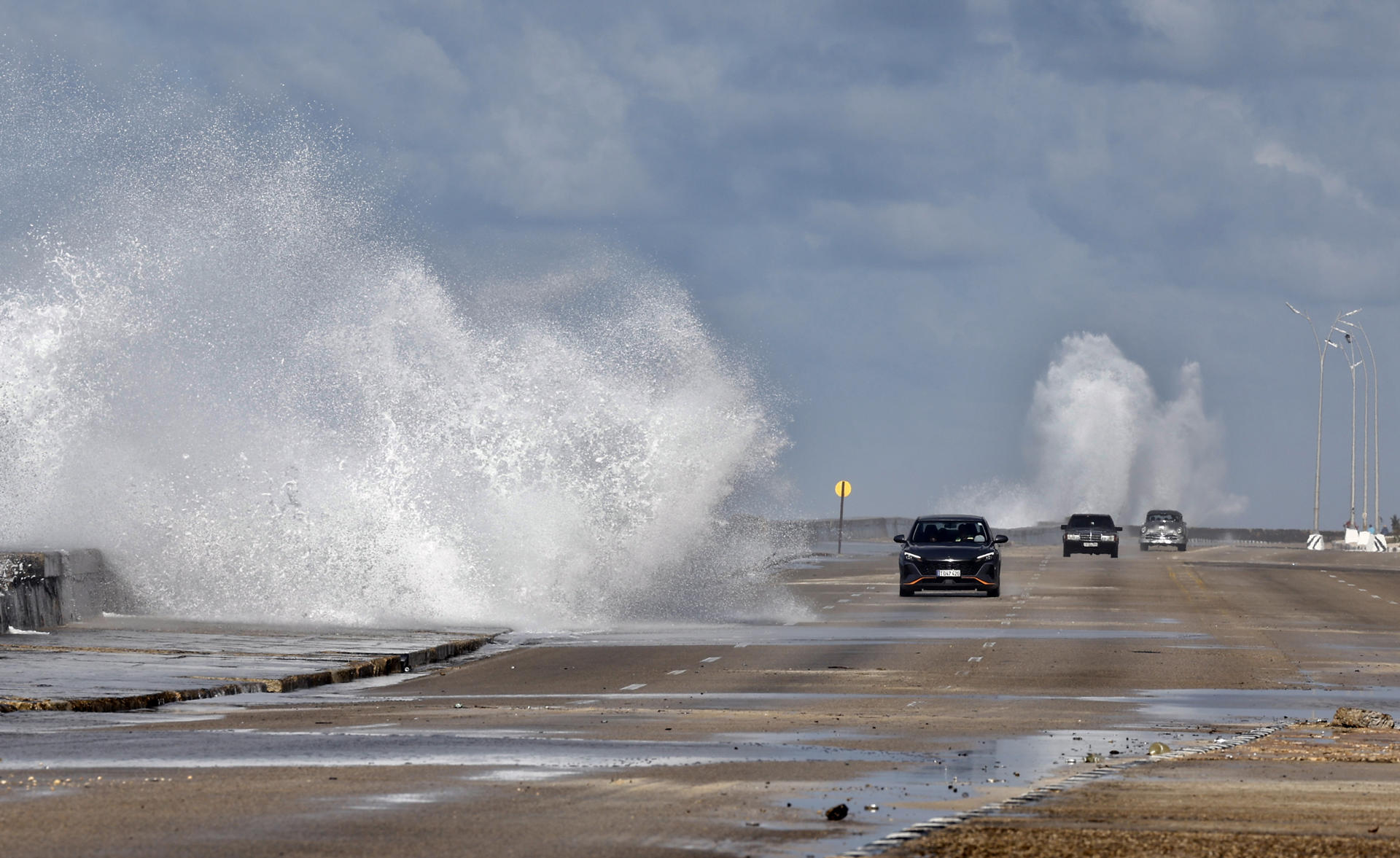
Cuba is not sitting idly by in the face of adversity; it is rethinking its economic model. Photo: EFE.
November 24, 2026 Hour: 3:40 pm
🔗 Comparte este artículo
Cuba is rethinking its economic model. Amid shortages worsened by Washington’s policy of economic strangulation, ensuring food production has become a strategic priority for the island, where supply difficulties affect people’s everyday lives.
Fuel shortages, limited access to raw materials, financial restrictions, and obstacles to international trade are affecting the entire agri-food chain, from agricultural work in the fields to industrial processing and product distribution.
In this context, Cuban producers are seeking alternatives to keep their operations running, make use of available resources, and prevent food from failing to reach the population. They have been forced to reorganize their operations or withdraw certain services, adapting farm activities to limited energy supplies.
RELATED: Decentralization in Cuba: Municipal Autonomy to Revitalize the Economy
For example, at the Venegas Livestock Company in Sancti Spiritus, fuel shortages prevented dairy industry trucks from collecting between 500 and 600 liters of milk daily. Faced with the risk of losing their production, tractor operators turned to animal-drawn carts to transport the milk to an improvised small-scale processing facility, where workers began making cheese by hand.
However, local initiatives and workers’ efforts coexist with structural limitations that undermine their results. Production does not depend solely on the creativity of farmers and livestock producers; transportation, energy, supplies, and the conditions needed to process and market products are also essential.
The country is also vulnerable to climate-related events such as hurricanes, droughts, and out-of-season rainfall.
Cuba’s economic crisis, in a context marked by more than six decades of the U.S. blockade, is deepening the difficulties facing the agri-food sector. According to figures presented by Cuban authorities, Washington’s restrictions caused losses of more than 450 million U.S. dollares in this sector during 2025.
The situation is compounded by the country’s economic contraction. The Economic Commission for Latin America and the Caribbean (ECLAC) projects that Cuba’s Gross Domestic Product (GDP) will shrink by approximately 6.5% in 2026, amid a prolonged recession driven by extraterritorial coercive measures, persistent inflation, declining fiscal revenues, and difficulties accessing foreign currency.
Blockade and Challenges of Ensuring Food Supplies
Restrictions imposed by United States, further intensified in 2026 by the Trump administration’s continued unilateral measures against Cuba, are affecting the country’s food sector. Their impact is reflected in difficulties making international payments, securing supplies, accessing markets, and ensuring maritime transportation of raw materials.
Food Industry Minister Alberto Lopez Diaz explained on the television program Mesa Redonda that these restrictions directly affect the distribution of essential food products. As an example, he mentioned that in May 2026, it was impossible to complete milk deliveries to children across the country due to fuel shortages. The production of baby food also faces logistical difficulties. Cuba must purchase the containers needed for production from China, a process that can take up to three months.
The importation of wheat flour also faces obstacles. The Minister explained that a contract for 5,000 tons fell through after pressure was exerted on the supplier and the shipment. He also reported that, out of more than six wheat shipments contracted for that year, only one had arrived, from a contract dating back to 2025.
Financial difficulties are also affecting the purchase of powdered milk. According to Lopez Diaz, Cuba needs 1,500 tons to supply approximately 331,000 children, while another 200,000 should receive fresh milk. However, payments to suppliers have been returned by banks and their branches that refuse to accept transactions originating from Cuba.
The Minister also noted that the country has been unable to distribute cooking oil, chicken, or yogurt through the regulated food rationing system this year, while coffee production has faced limitations due to a lack of raw materials.
Producing With Domestic Resources: Alternatives From the Countryside
In response to these difficulties, various initiatives are seeking to reduce dependence on external supplies and make better use of the resources available within the country.
In Holguín, La Rosa Farm, located in the municipality of Velazco, is an example of sustainable agriculture and energy efficiency. Its closed-loop system transforms waste into biogas for cooking and biofertilizers to improve soil quality. Producer Daniel Pupo told teleSUR that one of the farm’s objectives is to reduce the impact of the U.S. blockade on its operations and strengthen its autonomy.
The initiative is part of the Biomas Cuba project, which promotes the use of biodiesel and biogas in rural communities to generate their own energy resources and develop technological capacities in the agricultural sector.
Other alternatives are being developed in the fishing sector and the food industry. Measures announced by the Ministry of the Food Industry include closed financing schemes that allow certain groups to use their foreign-currency revenues to secure the supplies they need to continue operating.
A 35% bonus was also approved for fishermen primarily engaged in this activity, and more than 12,000 commercial fishing licenses were granted. Additionally, more than 1,600 micro, small, and medium-sized enterprises (Mipymes) have been licensed to produce food.
Economic Reforms to Boost Production
The Cuban government is also promoting changes to the organization of the agricultural sector, with the aim of expanding productive capacity and facilitating the participation of different economic actors. Among the 176 approved economic and social transformations, the measures targeting agriculture include expanding land-use rights, strengthening cooperatives, and facilitating access to financing and supplies.
Orgen Lopez Gonzalez, head of Industry at the Ministry of Agriculture, told teleSUR that the merger of the Ministries of the Food Industry and Agriculture was one of the measures implemented to boost domestic production. This decision makes it possible to take a comprehensive approach to the entire production chain, from harvesting to industrial processing and marketing. “It is not possible to analyze the production of any product in isolation,” he said. “You have to look at the entire process, from harvesting the product to its transformation, industrial processing, and marketing,” he added.
Other new measures include allowing cooperatives to import fuel, export directly, and hold foreign-currency accounts. The government also seeks to promote marketing mechanisms and pricing policies that reflect market conditions. Deputy Agriculture Minister Telce Abdel Gonzalez Morera told teleSUR that these transformations cover areas such as animal and plant genetics, veterinary services, soil management, machinery, irrigation, and financing.
“With these new transformations, we are working in the way the world operates today. First and foremost, they give greater sovereignty to small industries operating at the municipal level. They provide them with greater development opportunities and the authority to import and export,” Lopez Gonzalez added.
The official believes these new powers can also help improve food quality and lower prices. “When I am the one growing the tomatoes, for example, and we process and market them ourselves, the product reaches the population at a lower price. Consumers can be confident about the quality because they know who produced it,” Lopez Gonzalez explained.
Lopez Gonzalez argued that allowing cooperatives to import fuel reduces their dependence on state-run supply systems. “When a small cooperative has the authority to import and export, it no longer depends on the State for fuel. It can import it into the country itself. Moreover, given the energy blockade we are facing, if these transformations had not been implemented, we would be in a much worse situation,” he detailed.
For Gonzalez, updating the economic model was urgent. Otherwise, Cuba could have faced conditions similar to those experienced by the island in the 1990s, following the collapse of the socialist bloc. “I remember that back then, for example, there was no bread because everything depended on the State. Production and all these powers must be decentralized, giving greater autonomy to municipalities, cooperatives, workers, and producers so they can earn better wages and obtain the raw materials they need more easily. This is the only way we will overcome this situation,” he said.
As an example of the difficulties caused by centralized supply systems, he explained that fuel previously depended on state-run, centralized distribution mechanisms: “If there was no fuel, the land could not be prepared, crops could not be cultivated, and fields could not be irrigated.” However, he said, “now, each cooperative has the authority to import and export. Because it is not just about importing; I also need to export to generate revenue, so I can continue purchasing those supplies and everything producers need to keep production going.”
However, the challenge remains turning regulatory changes into tangible results. Rafael Montejo, director of the Center for Management Studies at the University of Havana, told teleSUR exclusively that without a significant increase in production and services, any package of measures could prove insufficient.
“The availability of land and the incorporation of all economic actors into productive activities are opportunities that must be seized,” Montejo said.
RELATED: Cuba to Strengthen State-Owned Enterprises: Greater Autonomy to Boost Production and Development
Food Industry: Energy, Raw Materials, and Distribution
The food industry is another essential link in this chain. Its operations depend directly on the availability of energy, fuel, and raw materials, as well as the capacity to transport finished products. Food Industry Minister Alberto Lopez Diaz acknowledged that, with the technology currently available in the country, maintaining production levels without electricity and fuel is impossible.
As part of its alternatives, Lopez explained that Cuba has more than 3,800 megawatts of installed renewable energy capacity and expects this figure to exceed 5,800 MWh by the end of the year. He also highlighted the acquisition of more than 60 electric tricycles to distribute products included in the regulated food rationing system, including powdered milk and coffee.
Industry workers have also had to find solutions to technical problems. The minister recounted that after a wheat shipment arrived in Havana, the crane responsible for unloading the grain broke down. Rather than wait for a replacement part that could take a week to arrive, workers managed to repair the equipment in less than 24 hours.
“These are responses that allow certain operations to continue, although they do not eliminate the structural problems affecting supplies and production,” he clarified.
Obstacles That Also Affect Exports
The difficulties are not limited to imports. The marketing of Cuban products abroad also faces barriers related to maritime transportation and financial restrictions. The rum industry, for example, has containers stranded at the port while waiting for shipping companies able to transport them to their destinations.
Emerio Gonzalez Lorenzo, president of the Food Industry Business Management Organization (OSDE), explained that some companies continue operating with Cuba, while others are holding back amid pressure and restrictions imposed by Washington. The situation generates additional storage and logistical costs, delaying commercialization and affecting the sector’s revenues.
Meanwhile, U.S. rice producers, particularly those in Arkansas and Louisiana, have called for a relaxation of trade restrictions so they can sell their products to Cuba. The U.S. Rice Federation considers the Cuban market a commercial opportunity, and industry representatives estimate that the island could purchase up to 400,000 metric tons annually if existing barriers were removed.
The geographical proximity between the two countries also offers a logistical advantage over Asian suppliers. Thus, trade restrictions affect not only Cuba’s ability to secure supplies but also the interests of U.S. producers seeking access to that market.
A Challenge That Goes Beyond Food Production
The experience of workers at the Venegas farms in Sancti Spiritus captures the challenges facing Cuba’s agri-food sector. Where trucks cannot reach, animal-drawn carts take over milk transportation; where the industry cannot guarantee processing, workers improvise alternatives to prevent production from going to waste.
These solutions help keep operations running, but they also reveal the extent to which shortages force workers to reinvent production processes day after day.
In other regions, the response involves agroecology, renewable energy, the use of local resources, and changes to management and marketing mechanisms. Creativity and resilience have become essential in the face of lack of fuel, difficulties importing supplies, financial constraints, and technological deterioration.
Amid a reality, creativity is prevailing. Cuba is not sitting idly by in the face of adversity; it is rethinking its economic model. All that remains is for Washington to sanction the sun for giving Cuba yet another day of resistance.
Author: Alejandra García
Source: teleSUR