


Cuba commemorates one hundred years of the first Communist Party and remembers the legacy of Fidel Castro
Twenty papers were presented at the meeting, organized by the Fidel Castro Ruz Center and the University of the Communist Party of Cuba, Ñico López
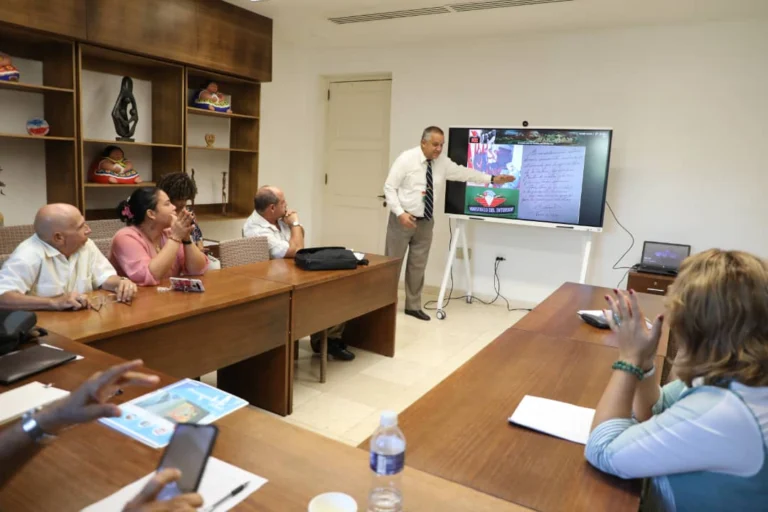
The meeting reflects on the thought of Fidel Castro and his contribution to the conception of politics in Cuba. @PartidoPCC
October 2, 2025 Hour: 9:43 pm
🔗 Comparte este artículo
The commemorative day “One hundred years of the founding of the first Communist Party of Cuba” was inaugurated this Thursday in Havana and had as central themes the role of unity in revolutionary processes and the legacy of Cuba’s historical leader, Fidel Castro Ruz.
The event, jointly organized by the Fidel Castro Ruz Center and the University of the Communist Party of Cuba “Ñico López”, called for reflection on unity as a fundamental pillar for the management of a national project.
RELATED:
Cuban Youth Project Uses Journalism as a Tool for Social Change
The seminar addressed the historical context of the political organization, founded in 1925 by revolutionary leaders Carlos Baliño and Julio Antonio Mella, and is recognized as the precursor of the current Communist Party of Cuba (PCC).
The meeting allowed academics and leaders to dialogue about how the organization from its inception, represented the interests of the working class and the popular sectors.
For her part, the deputy director of the Fidel Castro Ruz Center, Sisi Abay, remarked that “the Commander in Chief, Fidel Castro understood that without unity there is no possible Revolution,” highlighting his ability to articulate the different political forces and achieve a common national project.
The researcher pointed out that the historical leader of the Cuban Revolution worked tirelessly to overcome differences and build a shared project that was born from the diversity of revolutionary forces.
“He taught us that unity is not only a formal agreement, but an act of political maturity that guarantees the permanence and progress of the revolutionary process,” Abay said.
During the seminar, almost twenty papers from ten academic and political institutions from all over the country were presented.
In addition to the presentations and debates, the theoretical space was complemented with the inauguration of the photographic exhibition entitled “Granma in the mystique of Fidel”, as well as the presentation of various books that address the history and impact of the first Communist Party of Cuba, and successor of the Cuban Revolutionary Party founded by José Martí in 1892
Author: HGV
Source: Partido Comunista de Cuba