







Controversial Chile pardons 2019 protests : Kast Considers Pardoning 102 Convicted Agents
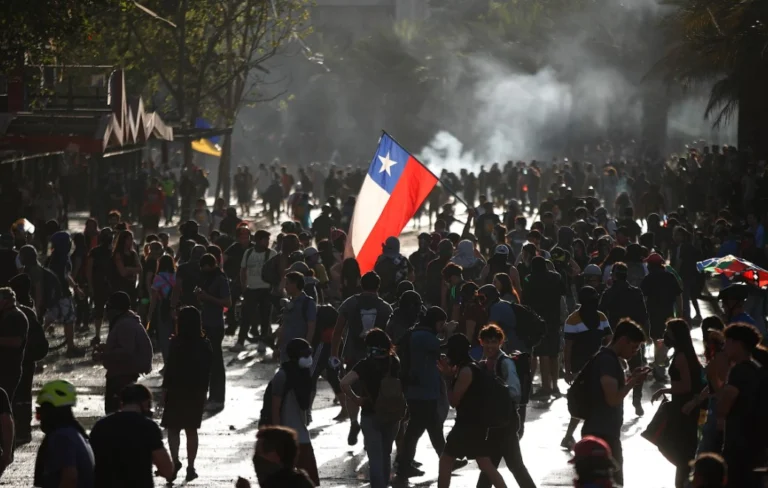
President José Antonio Kast announces evaluation of pardons for state agents convicted during Chile’s 2019 social protests (Photo: EFE/Archival)
March 15, 2026 Hour: 5:05 pm
🔗 Comparte este artículo
Chile pardons 2019 protests gain traction as President José Antonio Kast studies releasing Carabineros and military convicted of human rights violations during the social uprising, sparking impunity fears.
Related: Former Chilean Convention Delegate in Life Support After Being Assaulted
Controversial Chile Pardons 2019 Protests: Kast Eyes Freedom for Dozens of Convicted Agents
Chile pardons 2019 protests have emerged as a major point of contention following statements by President José Antonio Kast. The Chilean leader confirmed his administration is actively reviewing the possibility of granting presidential pardons to members of Carabineros (national police) and the Armed Forces convicted for human rights violations committed during the widespread social protests of October 2019 to March 2020, known as the estallido social.
In a recent interview with Canal 13, Kast defended the measure by stating that many of these agents “fulfilled their duty” under orders from the State amid what he described as extreme violence. “The faculty of pardon is a power that the President of the Republic holds to this day, and I will use it,” he declared emphatically. Kast framed the initiative as a path toward national forgiveness and reconciliation, while downplaying the documented excessive use of force against demonstrators.
This position marks a clear shift from the previous government of Gabriel Boric, who issued pardons primarily to civilians convicted in connection with the same events. Kast’s approach has drawn sharp criticism for potentially prioritizing state agents over victims of state violence.
Slow Justice and Structural Impunity in Chile Pardons 2019 Protests Cases
The debate over Chile pardons 2019 protests takes place against a backdrop of severely delayed justice. The National Institute of Human Rights (INDH) has consistently reported sluggish advancement in judicial proceedings related to the crisis.
According to the INDH’s most recent comprehensive balance marking six years since October 18, 2019 (released in October 2025), the institute filed more than 3,200 complaints representing nearly 3,800 victims. Yet only around 68 cases have concluded with final, enforceable guilty verdicts. Earlier reports from four and five years post-crisis showed even lower figures—33 and 42 condemnatory sentences respectively—highlighting a persistent pattern of impunity.
Among the documented impacts:
- 591 children, girls, and adolescents counted as victims.
- 959 women affected by various forms of violence.
- 2,252 complaints of illegal coercion and ill-treatment.
- 582 cases involving torture.
- 223 instances of unnecessary or disproportionate violence.
These figures illustrate systematic patterns of abuse that international human rights bodies have repeatedly condemned.
For detailed INDH reports and ongoing monitoring: INDH Chile official site.
Documented Patterns of State Repression During the 2019 Social Outbreak
The INDH has meticulously recorded severe violations now under consideration for potential pardons. 220 people sustained grave eye injuries due to projectiles fired by security forces, with 50 cases of burst globes and 82 individuals suffering total blindness.
Allegations of sexual and gender-based violence include 194 women and 298 men reporting forced strip searches, threats, and assaults while in custody. The unrest resulted in at least seven confirmed deaths directly attributable to state agents, though broader counts from various sources reach up to 34 fatalities linked to the period of repression.
These acts prompted investigations and reports from organizations such as Amnesty International and the Inter-American Commission on Human Rights, which criticized disproportionate force and called for full accountability.
See Amnesty International’s documentation on Chile: Amnesty International Chile reports.
Geopolitical and Regional Context
The push for Chile pardons 2019 protests carries weight beyond national borders in a Latin American region marked by recurring debates over transitional justice, military roles in public security, and impunity after periods of unrest or dictatorship. Chile, long viewed as a regional model of democratic stability since the end of Pinochet’s rule in 1990, now risks signaling a reversal on accountability for state violence.
Such a policy could erode public trust in judicial institutions, exacerbate political polarization, and influence neighboring countries facing similar protest-management challenges (e.g., Colombia’s peace process accountability mechanisms or Peru’s handling of recent demonstrations). International monitoring bodies may increase scrutiny, potentially impacting Chile’s rankings in global human rights indices and its diplomatic standing.
Risk of Institutionalizing Impunity
Kast’s consideration of pardons for uniformed personnel represents a stark reversal from prior approaches to post-2019 justice. By focusing relief on state agents rather than protesters, the current administration risks legitimizing repressive methods previously ruled unlawful by courts and denounced internationally.
The INDH continues to describe reparation efforts as “insufficient” and judicial processes as “slow”, warning that pardons could widen existing social wounds in a country still struggling to heal from its most significant crisis since the dictatorship.
Human rights organizations, victims’ collectives, opposition parties (including the Socialist Party, which has publicly rejected the measure), and affected individuals have voiced strong opposition. Many view the proposal as a direct threat to accountability and a message that severe violations by agents of the State may go unpunished.
As Chile confronts this divisive issue, the discussion surrounding Chile pardons 2019 protests underscores deep tensions between calls for security, reconciliation narratives, and the imperative to uphold justice for thousands impacted by state repression during the 2019 uprising.
Author: JMVR
Source: Agencias