








Brazil Updates Its List of Threatened Animal Species
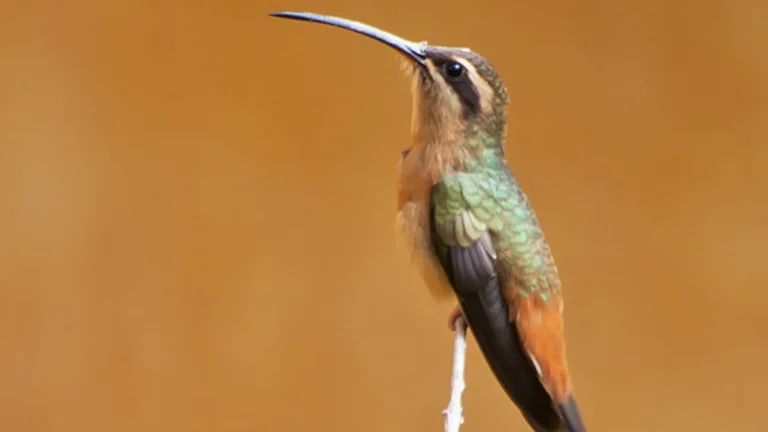
Cinnamon-rumped Warbler (Phaethornis pretrei). X/ @brasil_aves Mariza Sanches
June 24, 2026 Hour: 10:20 am
🔗 Comparte este artículo
Revised assessment adds 180 species and subspecies, reflecting new conservation status evaluations by ICMBio.
On Wednesday, Brazilian Environment Minister João Paulo Capobianco announced that the National Official List of Threatened Fauna Species has been updated following conservation status assessments conducted by the Chico Mendes Institute for Biodiversity Conservation (ICMBio).
RELATED:
“The list recognizes, before our society and the world, the situation of Brazilian species and, moreover, lays the foundation for the development of recovery and conservation plans,” Capobianco pointed out.
This environmental policy instrument included 180 species or subspecies, such as the hyacinth macaw (Anodorhynchus hyacinthinus), the black howler monkey (Alouatta caraya) and the silky anteater (Cyclopes rufus). Another 150 species were removed from the list.
The new document combines the National List of Threatened Fauna Species and the National Official List of Extinct Fauna Species. It includes mammals, birds, reptiles, amphibians and terrestrial invertebrates, which are classified as Vulnerable (VU), Endangered (EN), Critically Endangered (CR), Possibly Extinct (CR-PE) and Extinct in the Wild (EW).
The text reads, “The açaí boom is affecting bird diversity in Brazil. A study found a 28% reduction in bird species in areas with a high density of palm trees producing this Amazonian fruit.”
Most of the listed species are terrestrial invertebrates, with 264 species or subspecies threatened with extinction. The document also includes 242 birds, 123 reptiles, 102 mammals and 59 amphibians.
Of the nine species included on the National Official List of Extinct Fauna Species, six are birds, two are amphibians and one is a mammal: Vespucci’s rodent (Noronhomys vespuccii), which inhabited Fernando de Noronha.
The document replaces the previous version published in 2022 and is the result of a joint effort involving the scientific community and civil society organizations.
“Few countries in the world have the capacity to assess their biodiversity on the scale that Brazil does today,” ICMBio President Mauro Pires said.
teleSUR/ JF
Source: Agencia Brasil