







Chamamé: From the Paraná River to the World, Argentina’s Living Heritage
Born in Argentina’s northeast, chamamé blends Guaraní rhythms, European instruments, and African influences into a living tradition that bridges borders and generations. Recognized by UNESCO as Intangible Cultural Heritage, it remains both a community ritual and a global sound.
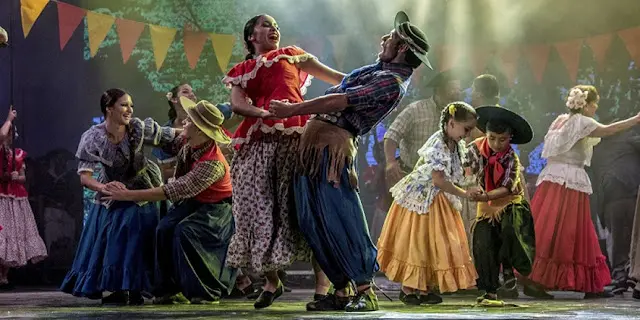
Couples dance chamamé in Corrientes, Argentina — a tradition that has become a symbol of the Litoral region and a UNESCO-recognized heritage.
September 19, 2025 Hour: 6:51 am
🔗 Comparte este artículo
Chamamé is more than a musical genre. Born in Argentina’s northeastern province of Corrientes, it is a cultural expression that carries the memory of the Paraná River and the resilience of its people. Each year on September 19, Argentina observes National Chamamé Day, commemorating the death of Mario del Tránsito Cocomarola in 1974, the legendary composer regarded as one of the genre’s founding voices.
Roots of a Mestizo Tradition
Chamamé reflects the cultural crossroads of the Litoral region. It fuses Guaraní rhythms, rural poetry, European instruments like the accordion and bandoneón, and African influences carried through the diaspora. The result is a sound at once festive and intimate, embodied in the couple’s close embrace and the sharp footwork of the zapateo.
Originally a local practice in rural gatherings and family celebrations, chamamé gradually expanded beyond Corrientes to neighboring Paraguay, Brazil, and Uruguay. Today it stands as a transnational heritage, bridging communities across borders while maintaining its deep local resonance.
A Worldview in Music
Chamamé is not only performed—it is lived. Its lyrics speak of rivers, forests, the countryside, and everyday affections, while its melodies convey a sense of belonging and endurance. For many communities, dancing or listening to chamamé affirms both memory and identity in the face of cultural homogenization.
This depth explains why in 2020 UNESCO inscribed chamamé on the Representative List of the Intangible Cultural Heritage of Humanity. The recognition underscored not only the richness of its music and dance, but also the way communities continue to nurture, renew, and transmit the tradition across generations.
A Tradition in Motion
Chamamé today is both deeply traditional and strikingly contemporary. It remains at the heart of major festivals—most notably the National Chamamé Festival in Corrientes—yet it also adapts to new cultural circuits. Younger musicians blend chamamé with rock, jazz, or electronic music, while audiovisual productions and streaming platforms project it to audiences far beyond the Paraná.
Rather than diluting its essence, these reinventions highlight its vitality. Chamamé sustains its role as a community ritual in peñas and local celebrations, while also securing a place on international stages within the world music scene.
Living Memory of the South
Chamamé stands as an example of how South Global cultures preserve their heritage while engaging with the world on their own terms. In every accordion phrase and in every dance step, it carries a memory that resists erasure, reminding us that cultural heritage is not static but alive, reshaped with each performance and each generation.
Author: MK