


Bolivian Mass Protest Under Police Repression, Demand President’s Resignation
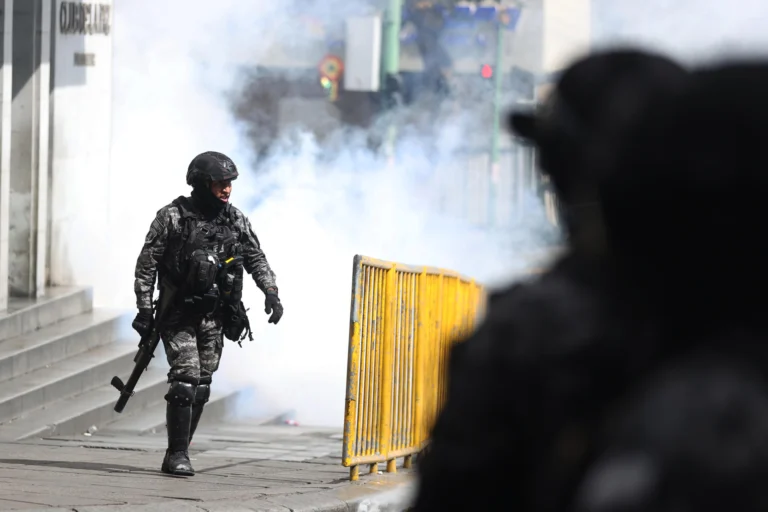
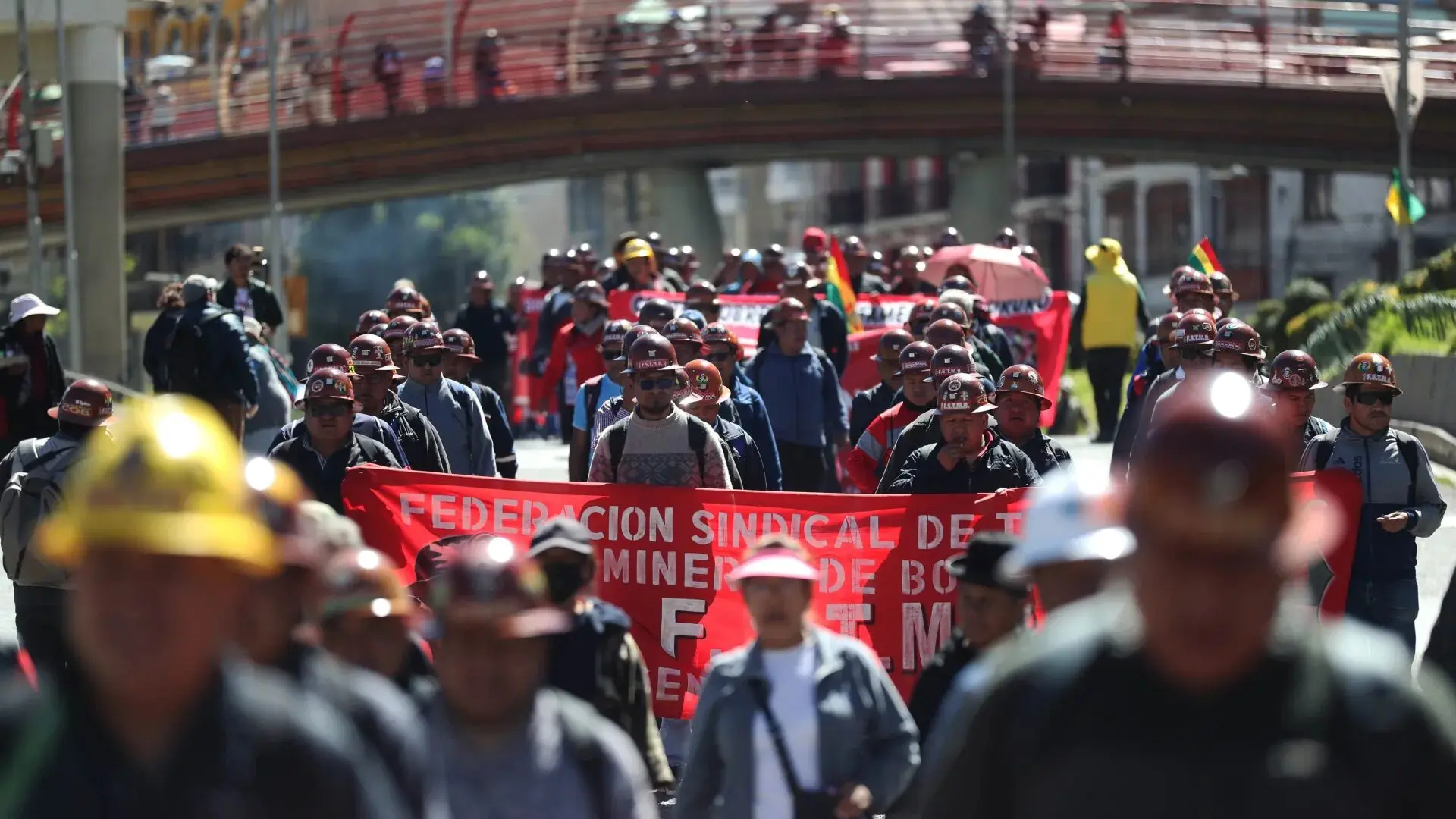
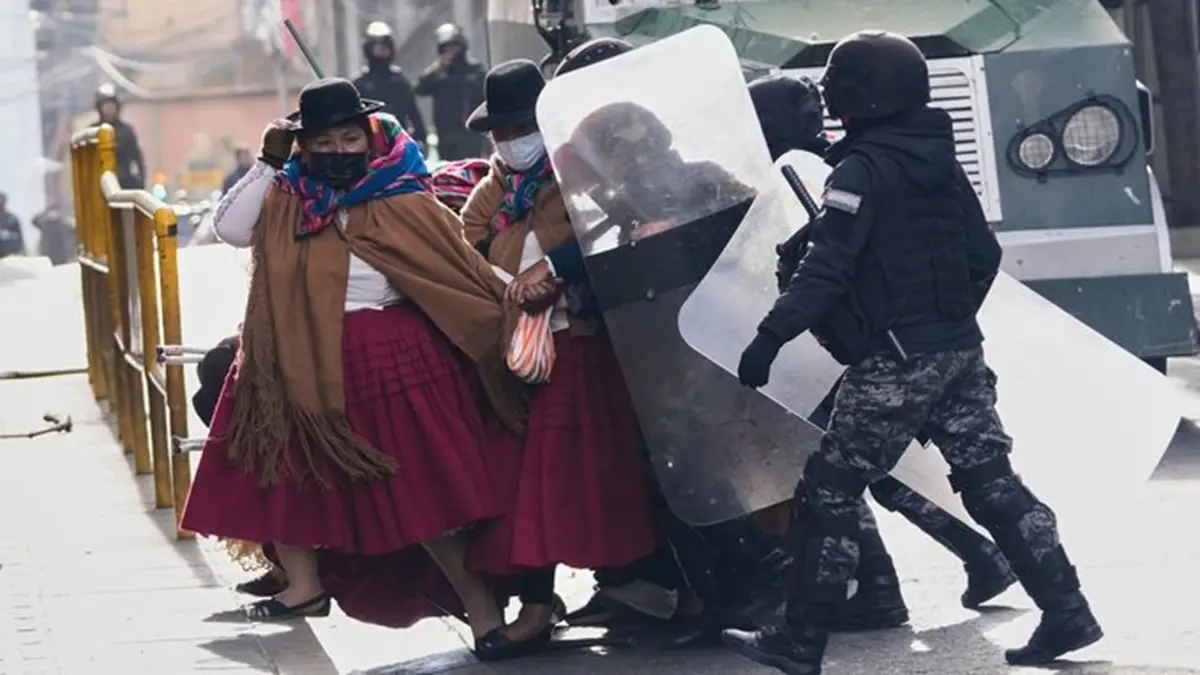
State security forces used chemical agents to prevent the movement of trade unions and peasant organizations towards the government palace. Photo: EFE.
May 22, 2026 Hour: 6:28 pm
🔗 Comparte este artículo
Bolivia’s police violently repressed a massive march by the Bolivian Workers’ Central (COB, in Spanish) with tear gas today, this Friday, as it reached downtown La Paz.
The peaceful mobilization, which spanned over 20 kilometers from the city of El Alto, was intercepted near the historic Murillo Square, in the Bolivian capital. The protesters are demanding the immediate resignation of President Rodrigo Paz amid escalating social unrest across the country.
RELATED: Bolivians Block Highways to Protest Economic Reforms
The extensive mobilization comprised various social sectors, including factory workers, urban teachers, state miners, residents from El Alto, and native people. Their collective action underscores a deep-seated discontent with the current administration’s policies and its perceived lack of engagement with organized social movements, which have historically played a pivotal role in Bolivian politics.
Leaders from the native communities denounced that the march was organized in direct response to constant acts of discrimination perpetrated by the national executive. In this sense, Union spokespersons expressed regret that the administration chose to disregard the legitimate representatives of organized social movements, leading to a breakdown in communication and a heightened sense of marginalization among these crucial sectors.
In parallel with the events in La Paz, road blockades have significantly escalated across the country. In the past 48 hours, the number of active obstruction points increased dramatically from 27 to 51, effectively paralyzing land transport. This widespread disruption is now affecting seven departments and has severely hampered the flow of essential supplies, including liquid fuels and basic foodstuffs, towards the main cities of the high plateau. The blockades are not only a symbol of protest but also a tangible source of hardship for the broader population, disrupting daily life and economic activities.
The prolongation of these territorial protests for over two consecutive weeks has exacerbated the scarcity of liquid fuels and basic foods in local markets. Despite attempts at mediation by both the Catholic Church and the Ombudsman’s Office, authorities have failed to address the underlying demands of the protesting sectors. This inability to engage in meaningful dialogue has led to a deepening of the crisis, indicating a significant political impasse.
The lack of resolution points to a growing chasm between the right-Government of Rodrigo Paz and a substantial segment of the population, intensifying the calls for President Paz’s resignation and broader political reforms.
Author: Laura V. Mor
Source: Agencies