


Belgium Rejects the Utilization of Frozen Russian Assets
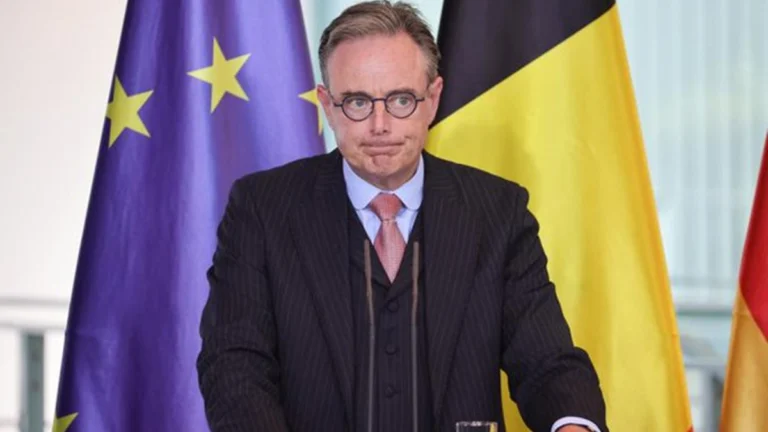
Belgian PM Bart De Wever. X/ @nexta_tv
December 18, 2025 Hour: 12:29 pm
🔗 Comparte este artículo
The confiscation of those assets may lead to a financial snowball effect.
On Thursday, Belgian Prime Minister Bart De Wever stated that guarantees proposed by the European Union (EU) for using frozen Russian assets to finance Ukraine were “still insufficient.” He warned that Belgium would not bear the risks alone.
RELATED:
EU Leaders Weigh Use of Frozen Russian Assets to Finance Ukraine
Addressing the Belgian parliament ahead of an EU summit, De Wever said he had not seen a final text from the EU on guarantees that could persuade Belgium to agree on, and expected that clearer documents would be presented later in the day.
EU leaders will meet in Brussels on Thursday and Friday to mull plans to use frozen Russian assets to support Ukraine. The bloc has immobilized around 210 billion euros (US$246 billion) in assets belonging to Russia’s central bank, with about 90 percent held within the EU by Belgium-based Euroclear.
De Wever told Belgian lawmakers that the confiscation of Russia’s assets within the EU may “lead to a snowball effect, when Euroclear will no longer be able to meet the expectations of its customers, and the stability of the institution will be jeopardized. And that would be a financial nightmare.”
De Wever noted that the current EU proposal may risk damaging Euroclear’s reputation, undermining financial market confidence in Europe and violating international law, Politico Europe reported.
He acknowledged that there was a group of EU countries backing the reparation loan idea, including Germany, Poland, and the Baltic and Nordic states, describing them as a “large and powerful bloc,” and the European Commission was also inclined in that direction.
At an EU summit in October, leaders failed to reach an agreement on a “reparation loan” scheme due to objections from Belgium and other countries.
teleSUR/ JF
Source: Xinhua – Politico