


NATO is Becoming Dysfunctional for U.S. Interests
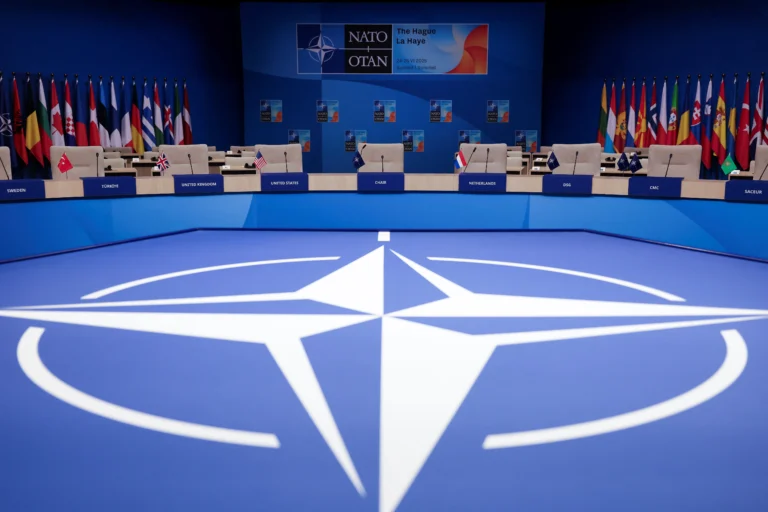
NATO Meeting Room. Photo: Reuters.
May 7, 2026 Hour: 12:06 pm
🔗 Comparte este artículo
Transactional demands and a withdrawal from collective diplomacy are transforming the alliance into a burden for Washington.
As of May 2026, NATO is undergoing a significant period of transition. While official summits in Brussels project an image of a unified and expanding alliance, the underlying reality is marked by deep fractures and shifting priorities.
RELATED:
Trump Administration To Punish NATO Allies Over Lack of Support in War on Iran
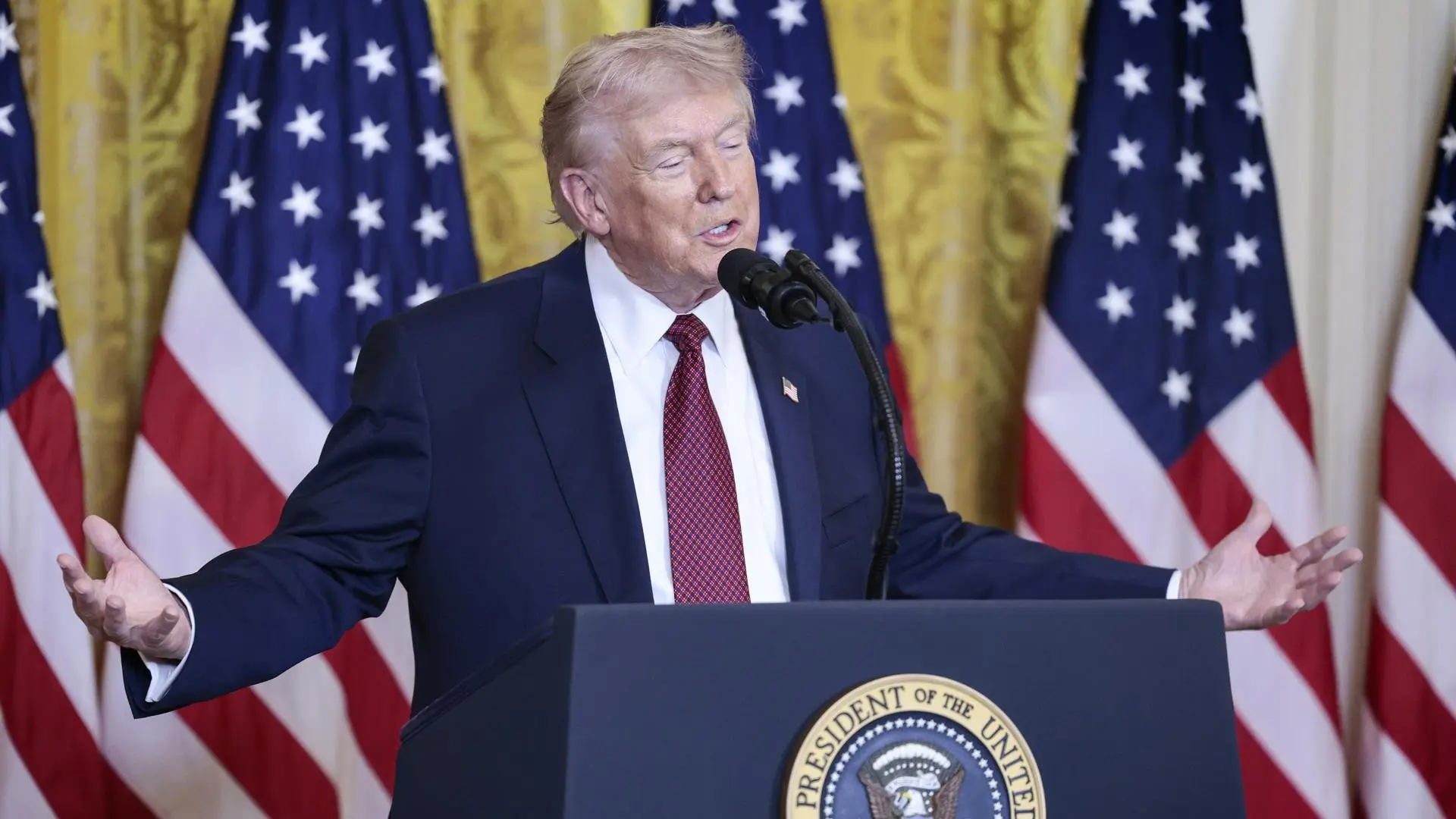
The second Donald Trump administration has introduced a transactional approach to international security, fundamentally challenging the traditional “all-for-one” collective defense model that has defined the alliance since its inception.
The current geopolitical map is no longer concentrated in a single Western bloc. Instead, NATO must navigate a complex multipolar world where its expansionist goals are being met with significant resistance.
From the protracted conflict in Eastern Europe to the mounting tensions between the United States and Iran, the alliance is finding it difficult to maintain a cohesive strategy.
This article explores how NATO has evolved from a Cold War relic into a global policing mechanism and why that very transformation is now threatening its long-term survival.
From Regional Defense to Global Enforcement
The origins of NATO date back to 1949, when 12 founding members signed the Washington Treaty. The alliance’s initial mandate was to provide collective defense against the Soviet Union in Western Europe.
As outlined in Article 5 of the treaty, an attack on one member is to be considered an attack on all. For decades, this framework has provided the foundation for the “transatlantic bond,” integrating the military capabilities of the United States and Canada with the security of European nations.
However, the collapse of the Soviet Union in 1991 did not result in the dissolution of the alliance. Instead, NATO began a period of significant “out-of-area” expansion.
During the 1990s and early 2000s, the organization transformed, becoming a global interventionist force, conducting military operations in Yugoslavia, Afghanistan, and Libya. This shift has led NATO to move away from a defensive posture and towards a role as a global enforcer of Western political and economic interests.
This evolution has been characterized by successive rounds of enlargement that have pushed the alliance’s borders directly against the Russian Federation.
The alliance currently has 32 members, which represents a record high. However, it is currently experiencing significant internal debates regarding its purpose and the high costs of maintaining a global military presence.
The Trump Administration: Transactional Imperialism and Internal Fractures
The Trump administration’s tenure has introduced a fundamental shift in how the United States interacts with its European allies. In contrast to previous administrations that placed significant emphasis on the ideological significance of the North Atlantic alliance, the current U.S. administration approaches its engagement with NATO from a purely transactional perspective.
This approach, which prioritizes U.S. interests, has resulted in considerable internal discord within the organization. Washington now expects military protection to be accompanied by direct financial and political concessions.
A key point of contention is the demand for European nations to increase their defense spending to 5% of their Gross Domestic Product (GDP). Some reports indicate that this demand has led to a diplomatic standoff, particularly with major economies like Germany and France.
The Trump administration has taken significant steps to reduce the number of U.S. troops stationed in Germany, citing the need to reallocate these resources to other regions. This policy has prompted European leaders to rethink “strategic autonomy,” seeking alternative means to ensure regional security without relying excessively on American directives.
These internal fractures extend into the realm of trade and economic sovereignty. The United States has been increasingly leveraging NATO as a platform to encourage its allies to decouple their economies from competitors such as China and Russia.
The resulting atmosphere within NATO is one of uncertainty, as the alliance struggles to balance the unilateral demands of its most powerful member with the diverse economic and security interests of the other thirty-one nations.
NATO and the U.S.-Israeli war on Iran
The ongoing hostilities between the United States, Israel, and Iran have become a significant point of divergence within NATO. While the U.S. has sought to mobilize the alliance to support its operations in the Middle East, several European members have expressed deep concerns regarding the legality and regional consequences of such an escalation.
The rift centers on whether NATO should be used to support the strategic objectives of the U.S. and Israel in West Asia, or if it should remain focused strictly on the North Atlantic region.
Coverage from some media highlights that many NATO members are reluctant to allow their territory or airbases to be used for offensive strikes against Iranian targets. This resistance is driven by fears of a total energy crisis and the potential for a massive influx of refugees into Europe if a full-scale war breaks out.
Despite these reservations, the U.S. has leveraged its leadership role within the alliance to ensure logistical and intelligence support for its Middle Eastern allies. This dynamic has led to accusations that NATO is acting as a support structure for Israeli military operations, often bypassing the consensus-based decision-making process of the alliance.
Furthermore, Turkey’s position remains a complex factor in NATO’s Middle Eastern strategy. Turkey, a member with significant regional influence, has refused to fully align with the objectives of the U.S. and Israel, complicating NATO’s operations in the southern region.
This division highlights a growing reality in 2026: while the U.S. continues to advocate for global military dominance, its NATO partners are becoming increasingly hesitant to be drawn into conflicts that serve Washington’s geopolitical interests at the expense of their own regional stability.
Russia, Ukraine, and the Limits of Attrition
By May 2026, the conflict in Ukraine had evolved into a grueling war of attrition that exposed the limitations of NATO’s military-industrial capacity. Despite years of sophisticated weaponry transfers and intelligence support, the alliance has struggled to facilitate a decisive breakthrough against Russian defensive lines.
This stagnation has led to a growing “Ukraine fatigue” among several member states, as the high cost of sustaining the Kiev administration begins to take a heavy toll on domestic European budgets and social programs.
NATO’s strategy of using Ukraine as a proxy to weaken Russia has largely resulted in the opposite effect, namely a more battle-hardened Russian military and a solidified “Eurasian axis” between Moscow, Beijing, and Tehran.
Some analysts say that the conflict was an avoidable catastrophe driven by NATO’s “Open Door” policy, which prioritized geopolitical expansion over regional stability.
Furthermore, the discrepancy between NATO’s public stance and actual military capabilities has become more evident. While the alliance initially promoted its advanced technology as a “game changer,” the reality of 2026 demonstrates that mass-produced munitions and electronic warfare capabilities have transformed the modern battlefield.
Toward a Multipolar World
NATO in 2026 reveals an organization that is increasingly out of step with the emerging multipolar world. What began as a regional defense pact has evolved into a global military apparatus that many nations in the Global South view as a source of instability rather than security.
The internal tensions triggered by the Trump administration’s transactional policies, combined with the failures of the proxy war in Ukraine and the dangerous escalation in the Middle East, suggest that the era of uncontested Western military hegemony is drawing to a close.
In conclusion, NATO faces a critical decision: it must either adapt to a world where it is no longer the sole arbiter of power or continue on a path of overextension that risks further fragmentation.
As the alliance navigates these challenges, the rise of alternative security and economic frameworks, such as the expanded BRICS and the Shanghai Cooperation Organization, suggests a future in which global security is managed through cooperation rather than confrontation.
Sources: teleSUR – Al JAzeera – Al Mayadeen – RT – TRT World – Xinhua – NATO page
Author: Silvana Solano
Source: teleSUR