


Argentine Senate Approves Mercosur-Singapure Free Trade Agreement
The Argentine Senate ratified the Mercosur-Singapore free trade agreement, which eliminates tariffs on Argentine exports and consolidates the South American bloc’s commercial integration in Southeast Asia.
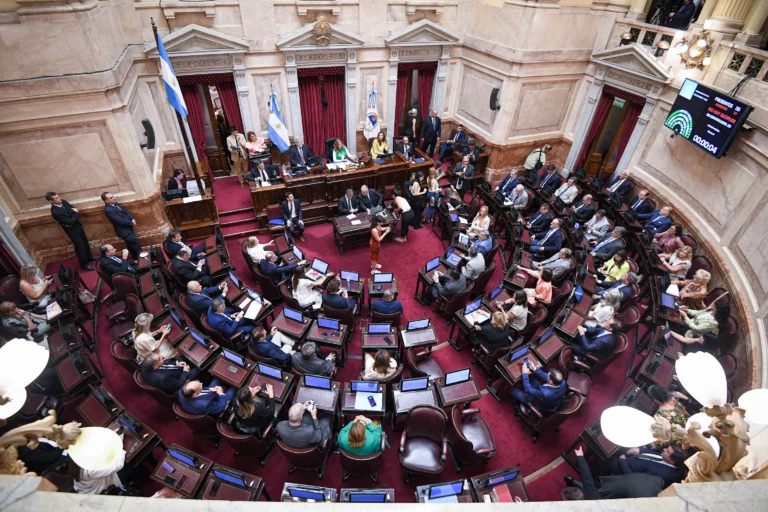
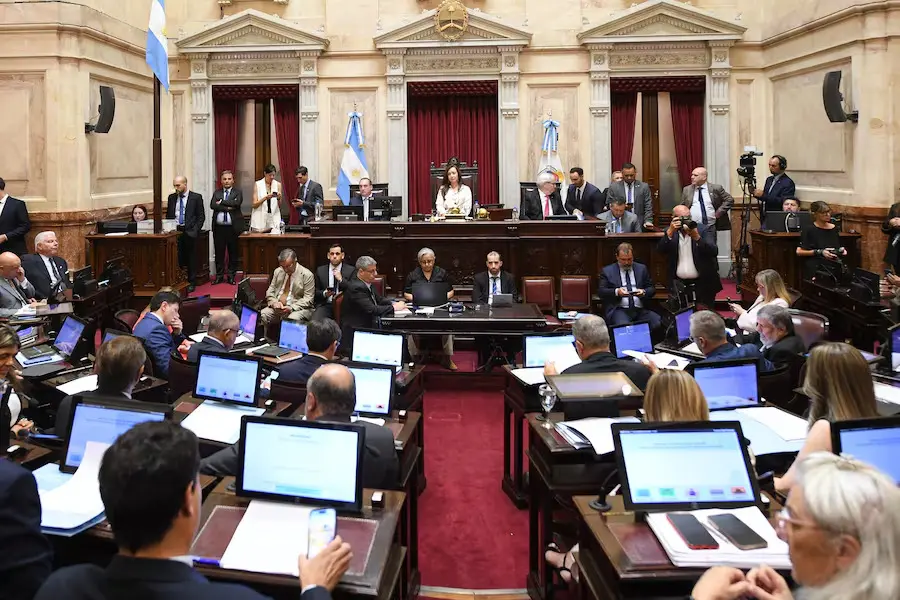
Argentine Senate during the unanimous vote on the trade agreement with Singapore. Photo: senado.gob.ar
May 15, 2026 Hour: 10:23 am
🔗 Comparte este artículo
On Thursday, the Argentine Senate unanimously approved the free trade agreement between Mercosur and Singapore, the first trade pact the South American bloc has signed with a Southeast Asian country.
RELATED:
Argentina’s Economic Activity Plunges to New Worst Marks Under Milei
The initiative, signed in December 2023 after five years of negotiations, was sent to the Chamber of Deputies to continue its legislative process.
According to the Argentine Foreign Minister Pablo Quirno, the free trade agreement will allow Argentine exports to access a country whose GDP per capita $99,370 USD in 2025.
The agreement, signed on December 7, 2023, in Rio de Janeiro, entered into force on February 1 for Paraguay and on March 1 for Uruguay, once the corresponding ratification procedures were completed.
The text reads, “We support the Mercosur-Singapore agreement because we believe in Argentina’s trade integration with the world. Singapore is not just a trading partner; it is a strategic hub for trade with Asia and a gateway to the markets of the future. You can’t talk about smart integration into the world without strong institutions and efficient state capacities. Trade liberalization requires strengthening the capacities of the state and sanitary, customs, and phytosanitary control agencies. You can listen to my full presentation here.”
The agreement covers trade in goods and services, investment, government procurement, intellectual property, e-commerce, and SMEs.
Singapore will eliminate tariffs on all agricultural and industrial products from Mercosur, while the regional bloc maintains protections for 9.2% of trade in sectors such as plastics, chemicals, and metal products.
The agreement also includes a tariff reduction schedule of up to 15 years and establishes strict requirements to prevent the triangulation of goods, especially those originating in China via Singapore.
Author: HGV/JF
Source: senado.gob.ar