







Argentinean Protesters Face Police Repression As Senate Debates Land Reform
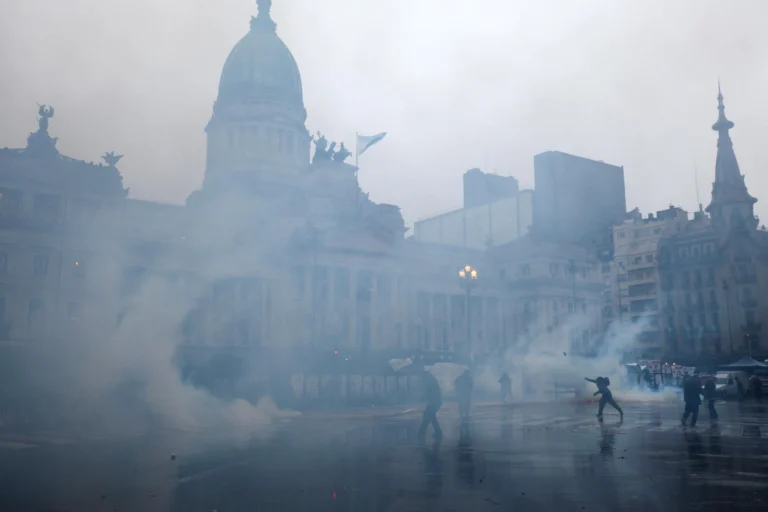
The new police repression took place during a demonstration against a bill promoted by the government of the ultraliberal Javier Milei which introduces changes in the processes of eviction, expropriations and use of burnt land. Photo: EFE.
August 6, 2026 Hour: 6:22 pm
🔗 Comparte este artículo
Argentina´s security forces repressed thousands of peaceful demonstrators today outside the National Congress during massive nationwide protests against President Javier Milei’s controversial property reform bill.
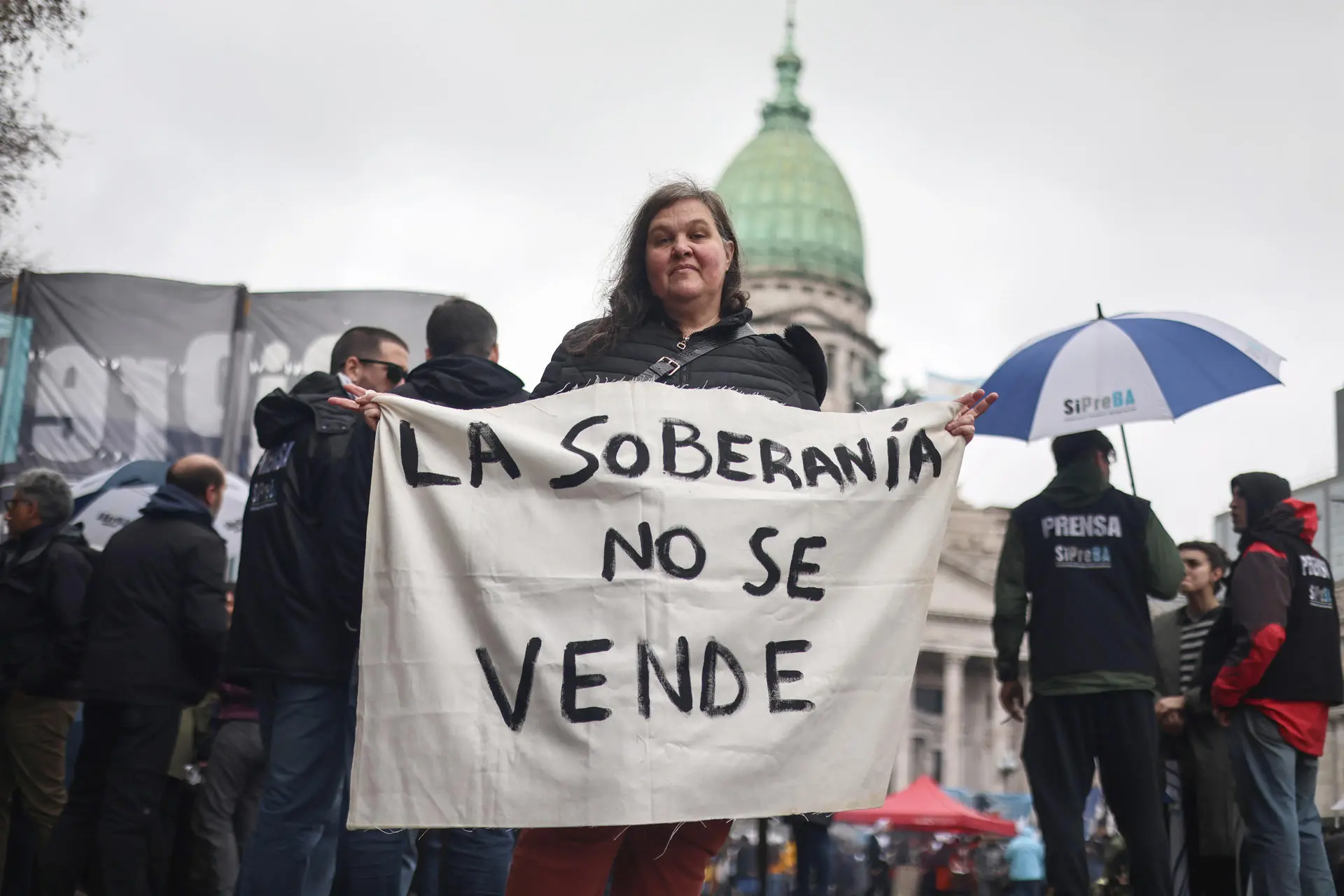
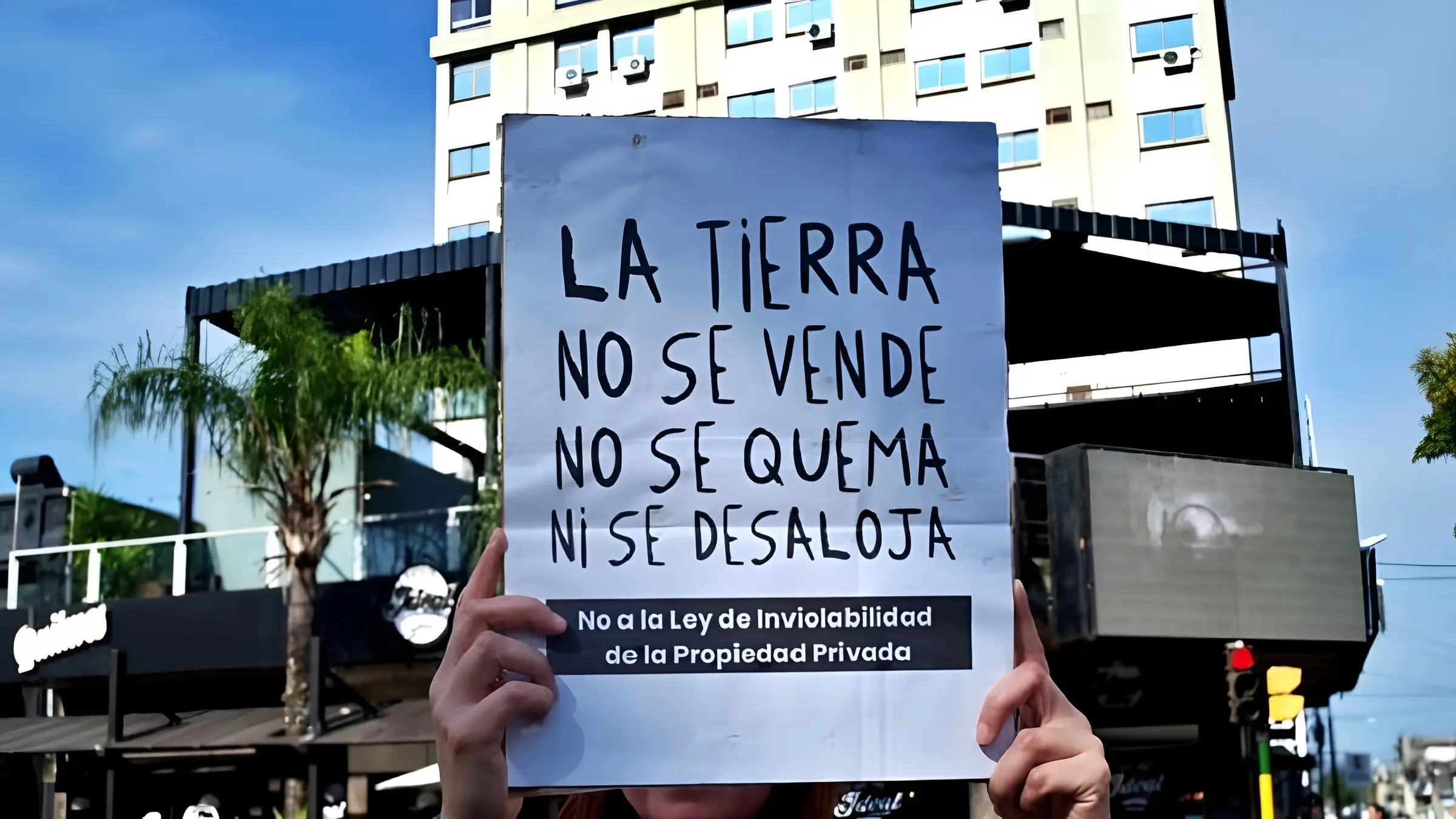
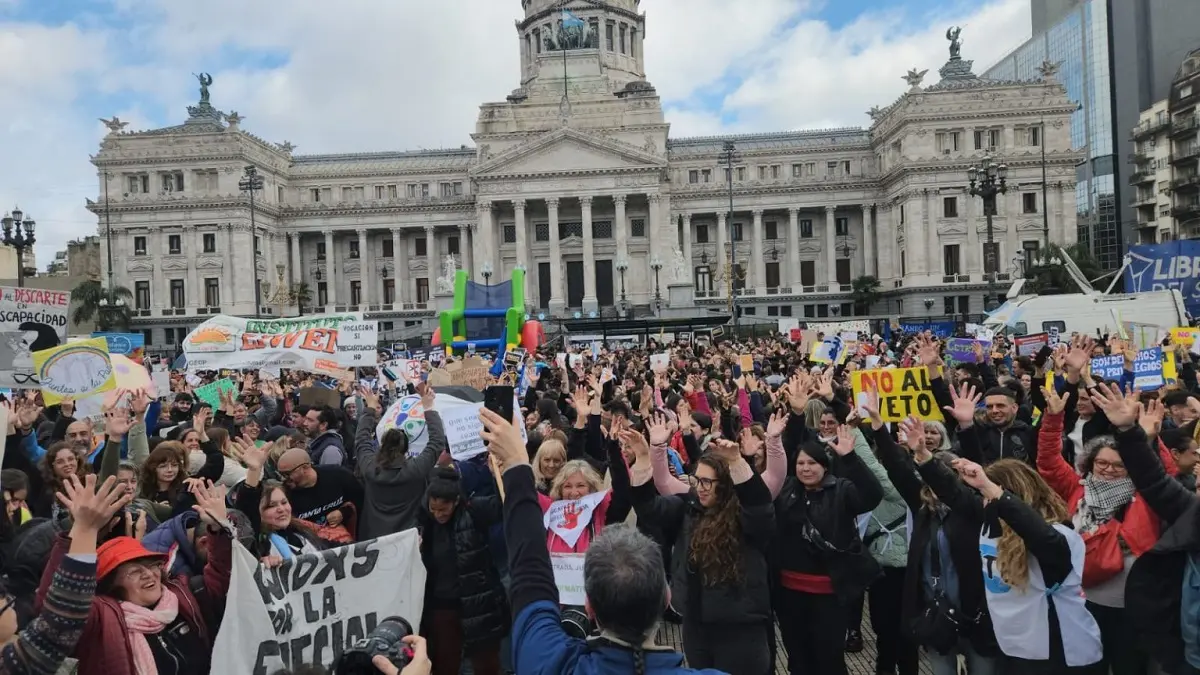
Under a persistent rain, thousands of citizens gathered in Buenos Aires and other cities across the country under the slogan “The homeland is not for sale, nor burned, nor evicted.” Despite the peaceful nature of the demonstration, federal police forces advanced against the crowds with water cannons, tear gas, and rubber bullets.
The repression occurred while the debate on the Land Law project continued inside the legislative chamber, in a day marked by the strong presence of union, social and political organizations.
RELATED: Massive Protests in Argentina Target Controversial Property Reform Bill
Social and union leaders strongly condemned the police intervention, holding Security Minister Alejandra Monteoliva responsible for the disproportionate use of force. During the repression, several injuries were reported, including at least one person hit in the eyelid by a rubber bullet, while several journalists covering the events were also targeted.
The security operation was developed under the so-called “anti-picket protocol,” with a wide traffic restriction perimeter in the surroundings of Congress and a significant presence of federal force personnel.
Social organizations highlighted that the repression occurred precisely when the debate reached its most sensitive points, which they interpreted as an attempt to silence legitimate protest in the framework of a democratic discussion.
Mass Rally Against Reform
The mobilization had begun at noon and brought together thousands of people under slogans such as “The land is not sold, not burned, not evicted.” The call was initially promoted in rejection of the Land Law reform, although the ruling party eventually withdrew that chapter from the project being discussed in the lower house. Despite the retreat, the organizations maintained the mobilization to express their rejection of the remaining provisions and the overall direction of government policy.
The events of this Thursday add a new chapter to the conflict over the legislative agenda promoted by the far-right government of Javier Milei, which has faced sustained resistance from unions and social movements. Observers noted that the combination of mass mobilization and police repression could intensify polarization around the reform process, while the Senate continues to evaluate the project’s viability in a context of fragile legislative consensus.
Environmental and Housing Threats
The massive demonstrations took place even though the ruling party had formally withdrawn the controversial chapter allowing the sale of rural lands to foreign buyers. The Milei’s Government retreated late Wednesday due to growing public indignation and a clear lack of legislative consensus to guarantee its passage in the Senate. However, the organizing syndicates and civil groups warned that the remainder of the legislative package still poses a direct threat to the country’s housing, communal, and environmental rights.
One of the most criticized components is the proposed modification of the Fire Management Law. The reform drastically reduces the current 30-year restriction on changing land-use designations for rural areas, pastures, and agricultural zones devastated by wildfires. Environmental organizations alert that this deregulation provides a dangerous financial incentive for intentional arson, enabling real estate speculators and agricultural conglomerates to rapidly convert protected forests and wetlands into lucrative developments.
Additionally, social movements emphasize that the bill’s provisions on express evictions and the dismantling of communal land protections remain major threats to urban tenants and indigenous communities.
The national day of protest on this Thursday represents a crucial moment of resistance against the neoliberal policies of the Javier Milei administration. Union leaders affirmed that the struggle will continue in the streets and through legal channels, pointing out that the repression only reinforces the population’s resolve to defend national sovereignty and basic social rights against corporate interests.
Author: Laura V. Mor
Source: Agencies