


Argentinean Massive March 50-years After Genocidal Coup: “Tell Us Where They Are”
March 25, 2026 Hour: 1:44 am
🔗 Comparte este artículo
Human Rights organizations, marking 50 years since the 1976 coup, condemned President Milei’s Government for justifying Argentina’s civil-military dictatorship and echoing its economic policies, demanding memory, truth, and justice for the 30,000 disappeared people.
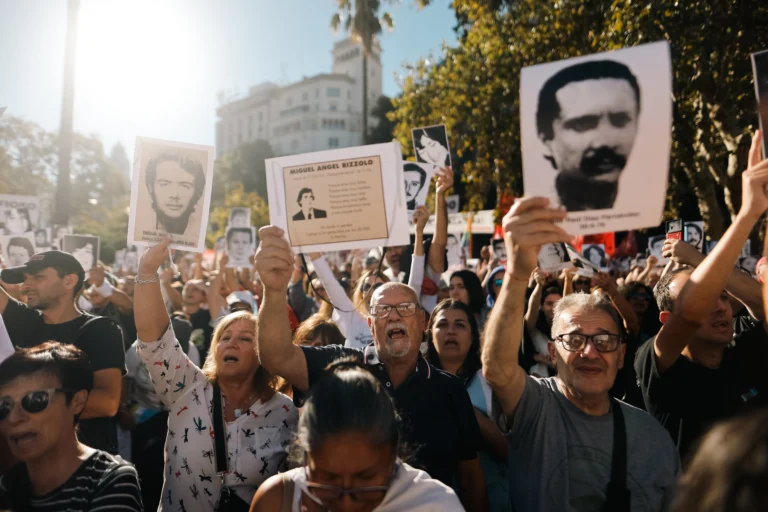
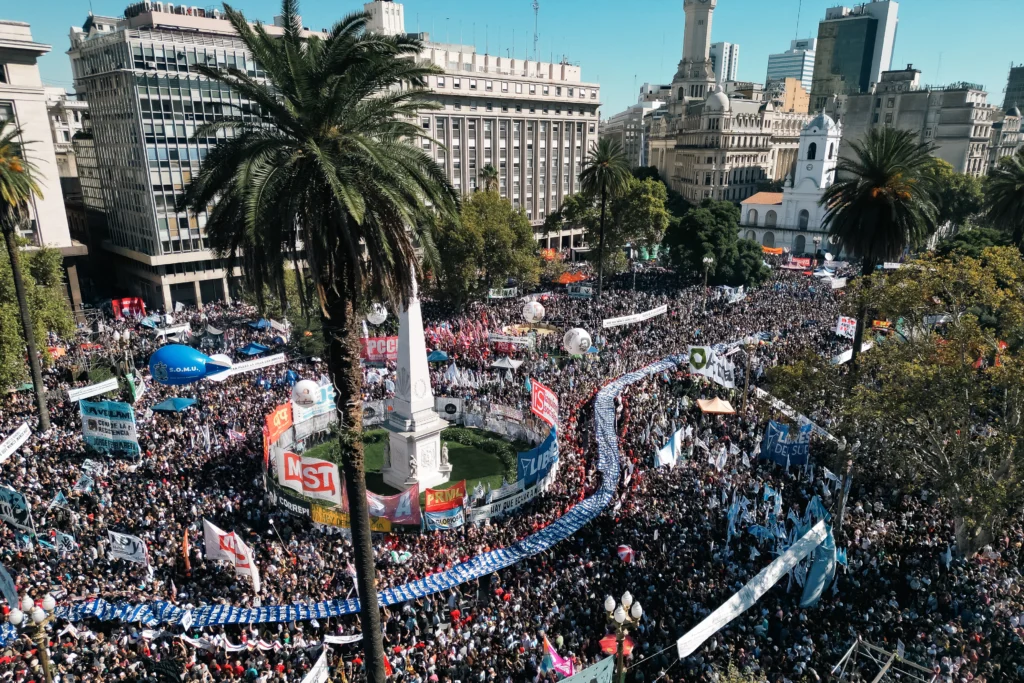
In a day filled with militant spirit and profound historical significance, hundreds of thousands of Argentineans marched in major cities on March 24, condemning the 1976 civil-military dictatorship and expressing profound discontent with President Javier Milei’s far-right Government, highlighting the enduring memory of past atrocities amidst severe economic hardship and eroded rights.
Half a century later, the Argentinean people remain mobilized in defense of their sovereignty and fundamental rights.
For the first time in years, the Human Rights Organizations converged in a unified mobilization, which called to amplify the demand for justice in a climate marked by the denialist rhetoric of President Milei and his Government.
Under the powerful slogan “Tell us where they are” argentineans marched with different photographs of the dictatorship’s victims, remaining an unresolved crime for thousands of families across Argentina.
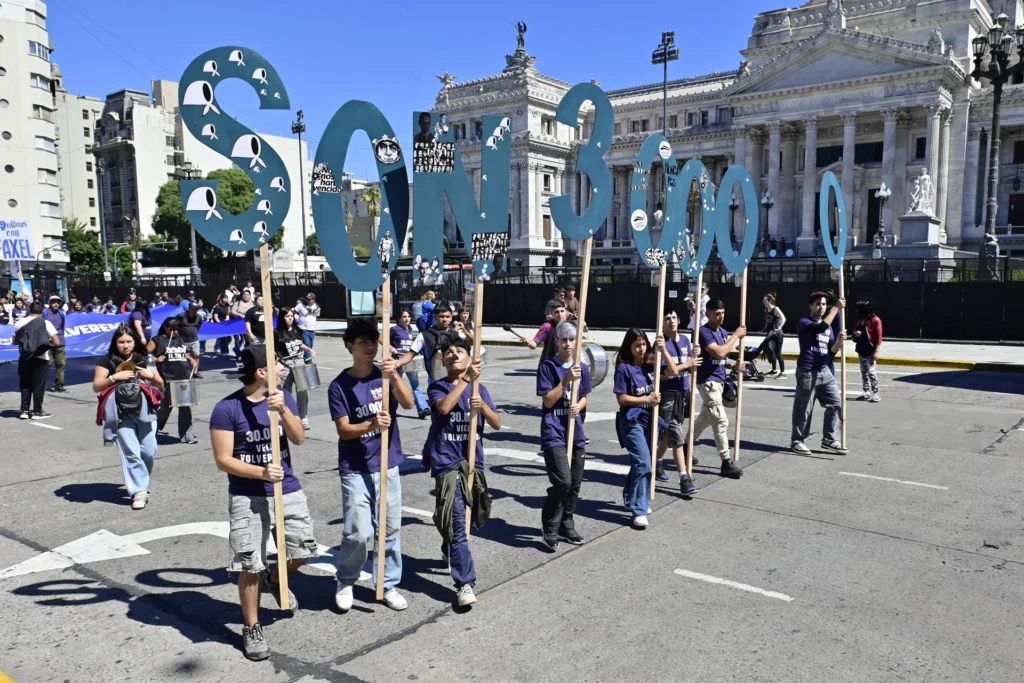
Columns of Human Rights organizations, labor unions, student movements, and left-wing and progessive parties and social organizations converged at the historic Plaza de Mayo in Buenos Aires City. The slogan was clear and unanimous: “They are 30,000 and it was genocide“, which resonated with particular force given the attempts by far-right sectors to reintroduce denialist discourses and “war theories” to justify State terrorism.
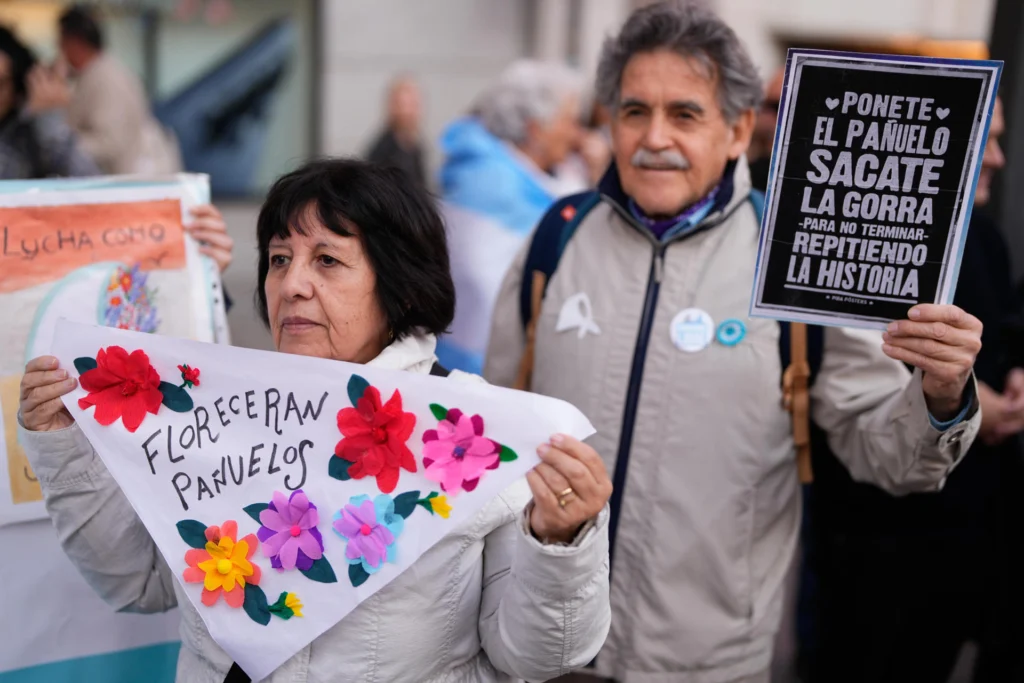
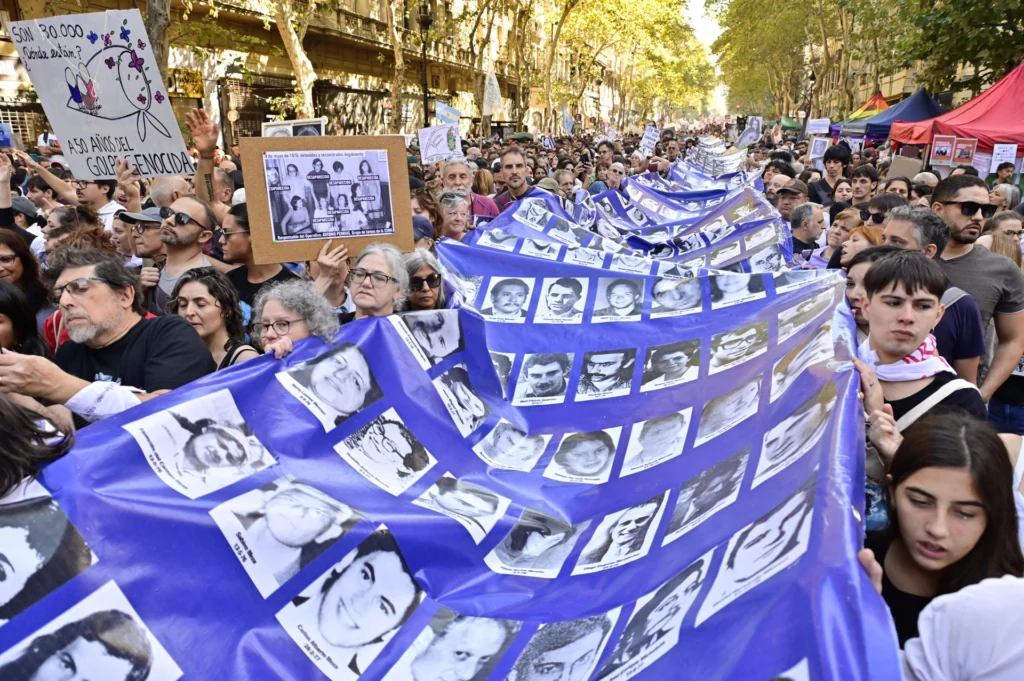
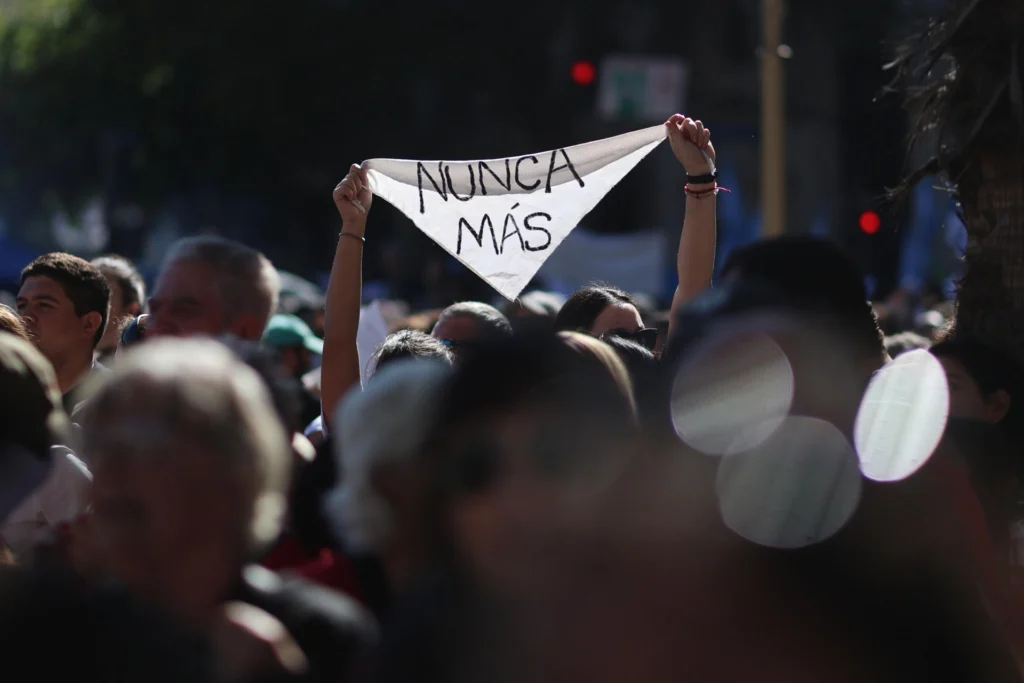
Historical Memory Endures
The mobilization not only recalled the institutional breakdown but also the initiation of a systematic extermination plan, designed to dismantle the social context and impose a neoliberal economic model through violence. During the Argentinean last civil-military dictatorship, forced disappearance, the theft of babies, and clandestine detention and torture centers were tools used to impose an asphyxiating external debt and destroy national industry under the so-called Operation Condor. These actions sought to eliminate political opposition and silence any form of dissent, creating a climate of fear and control that permeated all aspects of Argentinean society.
The day’s focal point was marked by the presence of the Mothers and Grandmothers of Plaza de Mayo, whose white scarves continue to lead the demand for the identity of the more than 300 grandchildren. Despite the passage of time, their example of peaceful struggle remains the driving force for new generations who joined the vigil with torches, artistic interventions, and resistance chants.
White silhouettes, representing the forcibly detained-disappeared, once again bordered the perimeter of the Plaza de Mayo’s pyramid. Simultaneously, on giant screens, the faces of the martyrs of popular militancy from the 1970s were projected. This visual tribute served as a powerful reminder of the human cost of the civil-military dictatorship and reinforced the collective commitment to memory to ensuring that such atrocities are never forgotten or repeated.
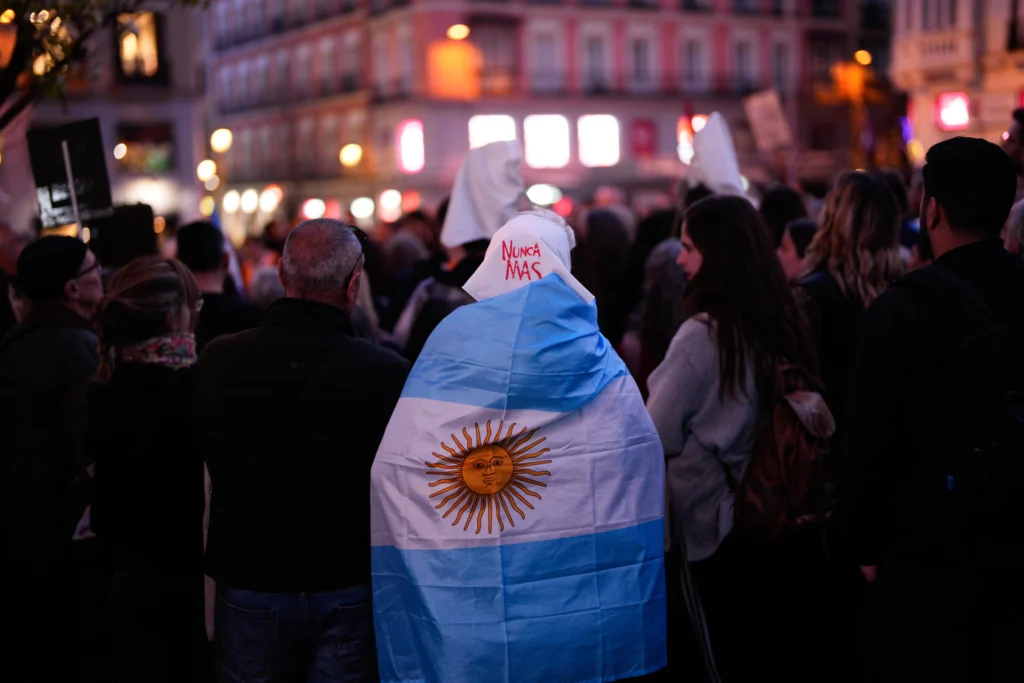
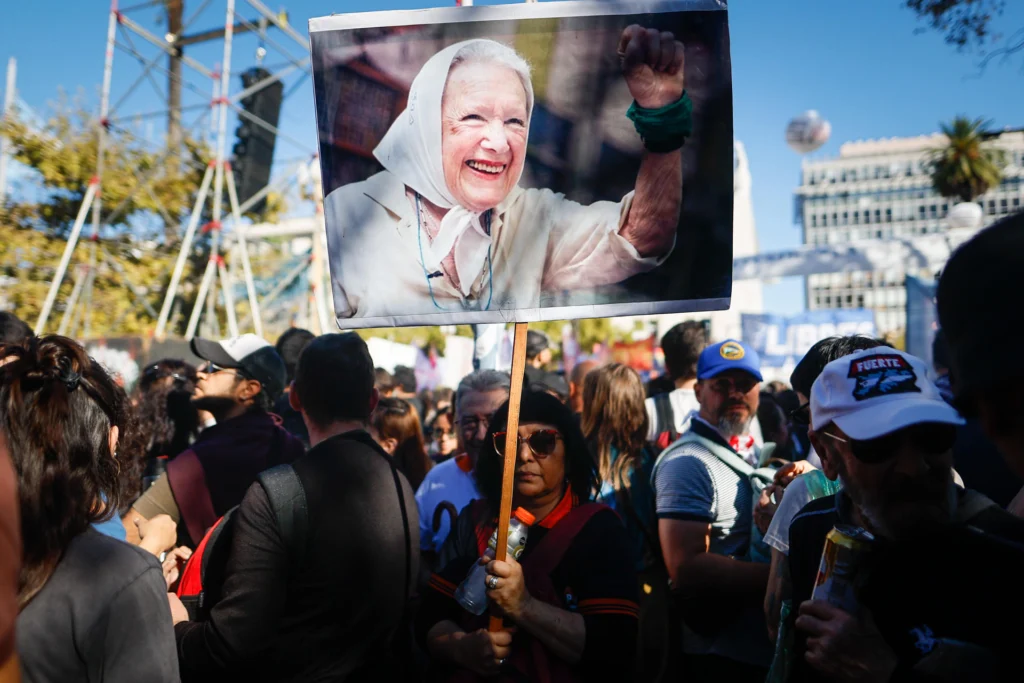
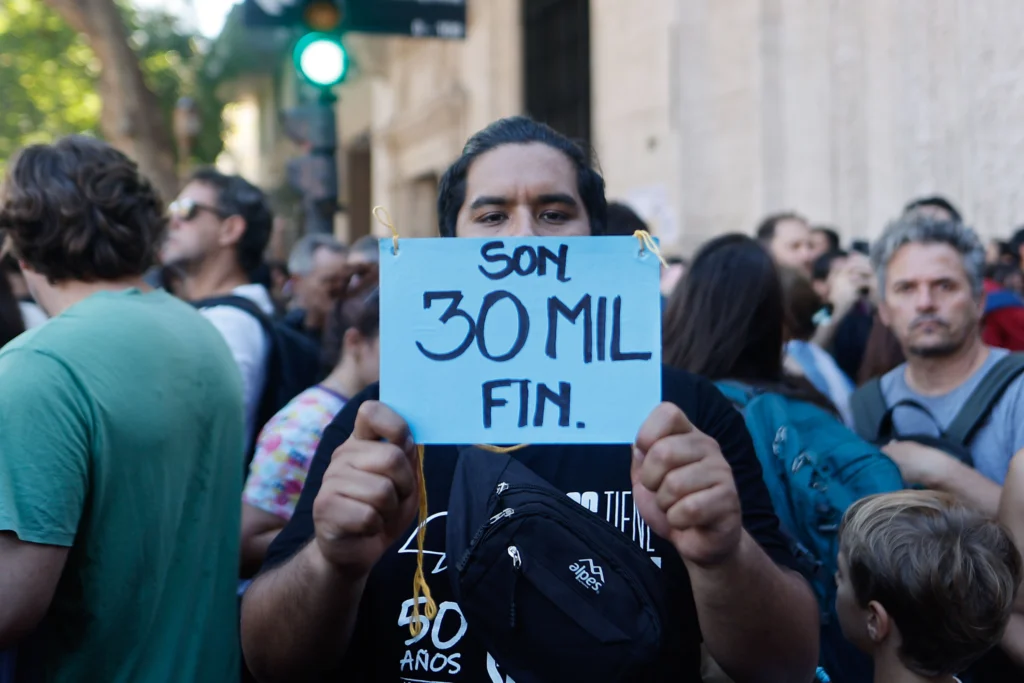
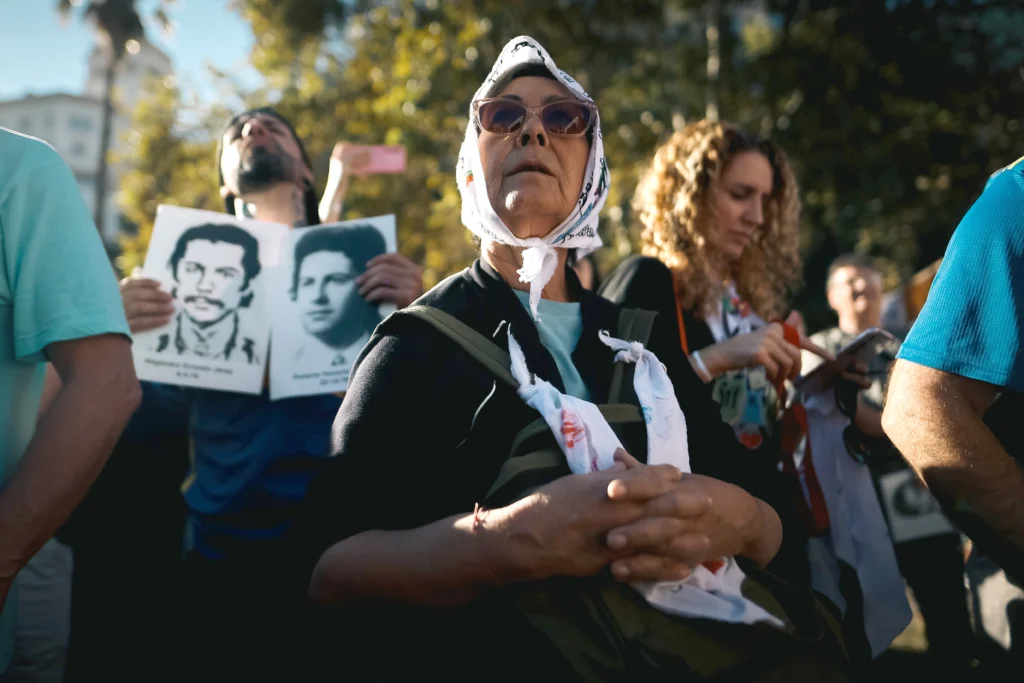
During the mobilization, a joint document marking half a century since the beginning of the last civic-military dictatorship and the consequent fight for Memory, Truth and Justice was read by Estela de Carlotto, President of Grandmothers of Plaza de Mayo; Taty Almeida, from Mothers of Plaza de Mayo Founding Line, and Adolfo Pérez Esquivel, Nobel Peace Prize laureate.
The Human Rights organizations explicitly reclaim the 30,000 forcibly detained-disappeared, over 10,000 political prisoners, and thousands of exiles struggles, which embodied militancy as a tool for transforming reality, against imperialist interference.
The organizations emphasized that these historical lessons are crucial in the ongoing fight against the current far-right administration, which they described as the “fascist Government of Milei and Villarruel.” The movement asserts that the spirit of resistance against imperialism and for social justice, born 50 years ago, continues to inspire and guide their actions in the present, aiming to protect the nation’s sovereignty and uphold human dignity.
Milei’s Government Scrutinized
Casually, the Milei’s Government further fueled public outrage by disseminating on the Day of Memory for Truth and Justice a video attempting to justify the civil-military dictatorship and its actions. This video, weak in arguments, became particularly egregious with the inclusion of a recovered granddaughter of a disappeared person, who called for reconciliation.
This move inadvertently highlighted one of the most atrocious crimes of the dictatorship: the appropriation of children from those who were kidnapped, dissapeared and murdered. The woman in that video maintains the surname of her illegal appropriators, who severed her ties to her biological family. This act, intended to soften the image of the dictatorship, instead underscored its horrific legacy.
Furthermore, the dictatorship infamously had promoted a video contrasting a breaking Argentine chair with a superior imported one, symbolizing a preference for foreign goods over domestic production. In a similar vein, Milei’s Government has actively pursued policies that have destroyed national industry and opened the floodgates to imports, echoing the economic strategies of the military regime.
These direct comparisons underscore the public’s perception of a continuity in detrimental Government policies that undermine national sovereignty and the well-being of its citizens.
The protests are not merely about historical memory but about a living struggle against perceived repetitions of past injustices.
The 1976 coup in Argentina was one of the final pieces of Operation Condor, a repressive coordination among the dictatorships of the Southern Cone, in an operation that was orchestrated and financed from Washington by the United States Department of State, which facilitated the exchange of intelligence and the clandestine elimination of political opponents across borders, representing a dark chapter of imperialist intervention in Latin American internal affairs.
A half-century after the beginning of the most bloody stage in recent Argentine history, the popular and massive mobilization sent a forceful message to the region: Latin American peoples have memory and will not permit a regression towards authoritarian forms of Government or impunity for the civilian and economic actors who benefited from the terror.
This collective act of remembrance and resistance reaffirmed the commitment to democracy, Human Rights, and the continuous pursuit of justice across the continent.
Author: Laura V. Mor
Source: Pagina 12/ Agencies