







Xi’s U.S. Visit Could Mark Milestone In Ties, China’s U.S. Ambassador Says
Xi Jinping’s planned U.S. state visit could mark a milestone in China-U.S. relations as Beijing and Washington navigate trade tensions, strategic differences and mistrust.
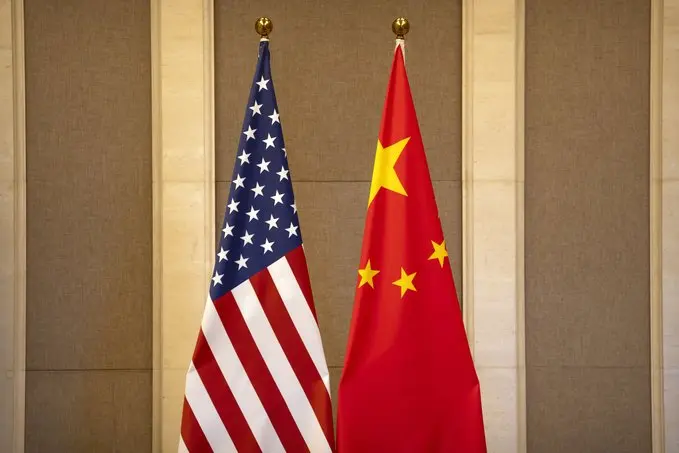
Chinese President Xi Jinping is expected to visit the United States for a state visit at the invitation of U.S. President Donald Trump. Photo: @MFA_China
September 23, 2026 Hour: 4:01 am
🔗 Comparte este artículo
Xi’s planned state visit comes as Beijing and Washington navigate trade tensions and persistent mistrust.
Chinese Ambassador to the United States Xie Feng said Wednesday that President Xi Jinping’s planned state visit to the country could mark a milestone in China-U.S. relations, as Beijing and Washington navigate trade tensions and persistent mistrust.
RELATED: First in Decade: Historic Xi Jinping US Visit Set for September 2026
Xi is expected to visit the United States at the invitation of U.S. President Donald Trump, marking his first state visit to the country in 11 years, Xie wrote in the People’s Daily.
Xie said China-U.S. relations had weathered significant challenges over the past 11 years, arguing that the experience had shown that decoupling was impossible and confrontation unacceptable.
He also pointed to growing international instability as making a stable, healthy and sustainable relationship between the two countries more necessary than ever.
The ambassador credited Xi with charting a new course for bilateral ties and highlighted a May meeting that he said established a “new positioning for a constructive, strategic, and stable relationship” between China and the United States.
Xie said Beijing and Washington should implement agreements reached by their leaders and make greater use of existing political, diplomatic, economic and trade mechanisms. He also called for expanded exchanges in areas including the military, law enforcement, health, agriculture, tourism, science and technology, and culture.
According to Xie, competition between the two countries is inevitable but should remain constructive, with both sides pursuing prosperity and progress in tandem.
He also identified artificial intelligence as an area where competition should focus on innovation, safety and controllability, mutual learning among civilizations, improved global governance and advancing AI “towards good and for the benefit of humanity.”
China-U.S. ties hinge on respect
Xie said differences between Beijing and Washington should be managed in good faith, with agreements put into practice rather than replaced by what he described as baseless promises.
He urged the United States to stop using what he called “national security,” “economic imbalances” and “forced labor” as pretexts for containment and suppression of China.
The ambassador also stressed the importance of avoiding direct confrontation, saying both countries should overcome the “Thucydides Trap” and avoid the “tragedy of great power politics.”
Xie identified four issues he said Beijing considers fundamental: Taiwan, democracy and human rights, China’s political system and development path, and its right to development. He said China’s sovereignty, security and development interests are “inviolable.”
He added that China remains committed to peaceful development and hopes the United States will pursue relations on the same basis, promoting peace through peaceful coexistence between the two countries.
Trade tensions remain
The planned visit comes as China and the United States continue to navigate heightened trade tensions that have persisted since Trump began his second presidential term.
The current trade arrangement between the two countries is expected to expire on Nov. 10. U.S. Trade Representative Jamieson Greer said Monday that an extension was unlikely, although discussions would continue.
“We will continue to have discussions about that. Our sense is we aren’t going to have the extension today, but again, we still have some time before that happens,” Greer told Bloomberg.
Asked why Washington would not extend the arrangement through the end of Trump’s second term to reduce uncertainty, Greer said that although Trump and Xi have a positive relationship, a degree of mistrust remains between the two countries.
The upcoming visit will therefore take place against persistent strategic and economic differences, testing whether renewed high-level engagement can contribute to a more stable China-U.S. relationship.
Author: MK
Source: Al Mayadeen / Agencies