


21st-Century Conflict Alarming Ways — Weaponization and Gamification Are Reshaping Modern Warfare
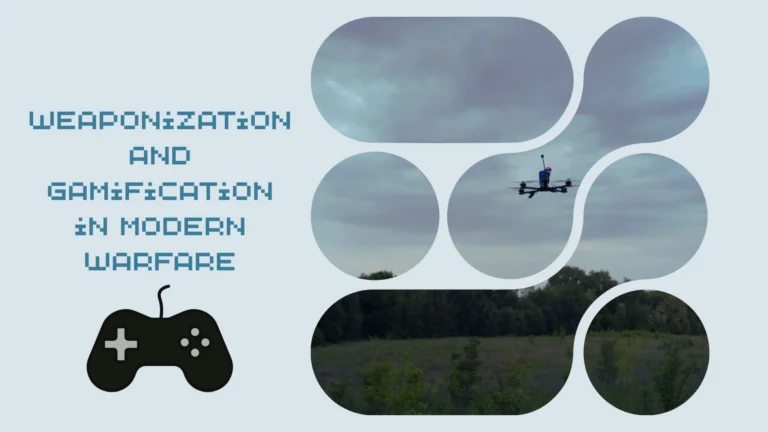
Weaponization and gamification in modern warfare 13/7/2025
July 13, 2025 Hour: 10:40 am
🔗 Comparte este artículo
Israel’s use of commercial drones in Gaza highlights the weaponization and gamification of modern warfare, raising serious ethical concerns about civilian targeting and dehumanizing combat tactics.
Related: Critical Update: Over 57,000 Dead in Gaza Humanitarian Crisis as Rescue Systems Fail”
Geopolitical Context: The Evolution of Modern Warfare
The concept of weaponization and gamification in modern warfare is no longer confined to science fiction or speculative military theory. Today, it defines how conflicts are waged across the globe — from Gaza to Ukraine, from cyber operations to autonomous weaponry. This evolving reality challenges traditional distinctions between soldiers and civilians, combat zones and everyday life, and even between war and entertainment.
In this context, reports have emerged of the Israeli military modifying commercial drones for lethal use in Gaza, drawing sharp criticism from human rights groups and observers. These developments illustrate how modern warfare increasingly integrates digital culture, psychological manipulation, and technological adaptation, creating a battlefield that is both more accessible and more ethically ambiguous than ever before.
🔗 +972 Magazine – Drone Investigation
Weaponization: From Consumer Tech to Battlefield Tools
Israeli forces have reportedly modified commercially available drones — including the EVO model made by Chinese company Autel — into tools of lethal force, according to an investigation by +972 Magazine and Local Call. These drones, originally designed for photography and reconnaissance, were equipped with explosive devices and controlled via joysticks, enabling remote attacks on Palestinian civilians in Gaza.
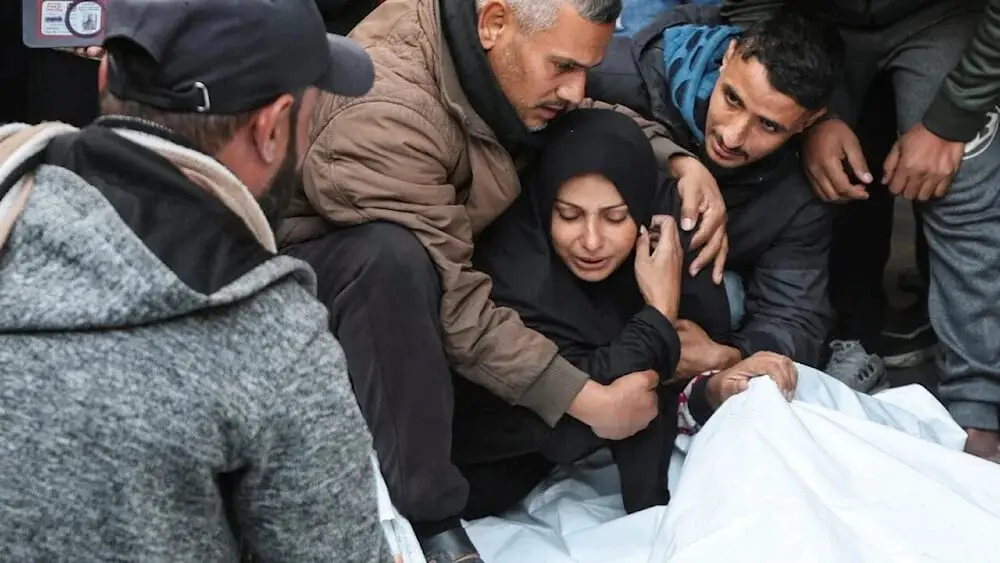
Soldiers described the operation as feeling “like a video game,” using joystick controls and live feeds to drop grenades on non-combatants. In many cases, victims were labeled as “terrorists” despite being unarmed and posing no immediate threat. Some bodies were left uncollected, exposed to the elements and scavenging animals — a grim visual captured by the very drones used to carry out the attacks.
🔗 Local Call – Investigative Report on Drones
Gamification: When Killing Becomes a Game
The weaponization and gamification in modern warfare go beyond hardware. They also shape how troops perceive and execute missions. In Ukraine, for instance, the military has introduced a point-based system where drone operators earn digital rewards for confirmed enemy kills. These points can be exchanged for equipment upgrades via platforms like the Brave1 Market, turning warfare into a meritocratic competition.
This trend echoes what some scholars call “gamified militarism,” where mechanics such as scoring systems, leaderboards, and performance incentives are integrated into real-world combat. While proponents argue this increases efficiency and morale, critics warn it desensitizes soldiers to killing and erodes moral boundaries.
As one former soldier put it: “Whoever you see, they kill. If people are moving around, they’re considered a threat.”
This mindset, reinforced by digital detachment and competitive structures, raises urgent questions about accountability, oversight, and the erosion of humanitarian norms.
Ethical Implications of War as Entertainment
The weaponization and gamification in modern warfare not only redefine military strategy but also reshape public perception of violence. When killing becomes a virtual experience mediated by screens and controllers, the emotional weight of taking a life may diminish. This shift risks normalizing conflict and reducing empathy for victims — especially when those victims are already dehumanized by propaganda or political narratives.
Moreover, these practices challenge the foundations of international humanitarian law, which distinguishes between combatants and civilians and seeks to limit unnecessary suffering. As weapons become more accessible and their use more casual, the risk of indiscriminate violence grows — particularly in densely populated areas like Gaza.
Weaponization Beyond the Battlefield
Weaponization extends far beyond physical arms. It includes the strategic repurposing of information, economics, culture, and even social media platforms. A false news story, for example, can destabilize societies just as effectively as a missile strike. Video games themselves have been used for recruitment and training, while economic sanctions function as non-kinetic weapons of coercion.
The so-called “Gerasimov Doctrine”, often cited in Russian military strategy, underscores this shift: non-military tools — propaganda, financial pressure, cyberattacks — are as crucial as tanks and jets. In this new paradigm, every element of society becomes a potential instrument of war.
This evolution demands a rethinking of how we understand and respond to conflict — especially as technology continues to democratize access to weapons and obscure the moral clarity of traditional battlefields.
Cultural and Ethical Challenges of a Gamified Battlefield
The convergence of weaponization and gamification in modern warfare introduces unprecedented cultural and ethical dilemmas. Digital mediation distances combatants from the consequences of their actions, while reward systems incentivize aggression. In Gaza, this has led to the systematic targeting of civilians under the guise of counterinsurgency.
These trends threaten to erode the moral and legal frameworks that protect non-combatants and uphold the principles of proportionality and necessity in armed conflict.
At the same time, they reflect a broader shift toward decentralized, adaptive, and technologically driven warfare — a shift that empowers smaller actors and blurs the line between state and non-state actors. In Ukraine, for instance, tech startups and civilian hackers have become key players in defense efforts, illustrating both the innovation and the chaos of modern conflict.
Philosophical and Anthropological Critique of Weaponization and Gamification in Warfare
From a philosophical perspective , the weaponization and gamification of modern warfare represent a profound ethical rupture — one that distances combatants from the moral weight of their actions. When killing is mediated through screens, joystick controls, and point-based reward systems, it risks depersonalizing violence and reducing human life to a mere variable in a digital equation. This shift echoes Hannah Arendt’s reflections on the “banality of evil,” where individuals carry out morally questionable acts not out of malice, but because they are embedded within systems that normalize such behavior. In this context, war ceases to be a tragic necessity and becomes an abstract performance, detached from the visceral reality of death and suffering.
The anthropological implications are equally troubling. Human societies have historically maintained rituals and codes around violence — even in war — to preserve a sense of shared humanity. However, when military operations adopt mechanics borrowed from video games, these cultural safeguards erode. The transformation of lethal force into a competitive sport governed by leaderboards and digital incentives commodifies life and pain , assigning value not based on dignity or moral worth, but according to a scale of efficiency and achievement. This system does not merely reflect dehumanization — it actively reproduces it, shaping new generations of soldiers and civilians who may come to see conflict as a game with quantifiable rewards rather than a tragedy with irreversible consequences.
Conclusion: Rethinking Peace in a Gamified World
The weaponization and gamification in modern warfare signal a fundamental transformation in how wars are fought and perceived. The case of Gaza, where off-the-shelf drones are repurposed for lethal strikes and civilian deaths are rationalized as part of a high-tech game, is a stark reminder of how easily humanity can be stripped from the act of killing.
Peace in the 21st century will require more than ceasefire agreements — it must include a critical reassessment of how technology shapes our understanding of violence, and a renewed commitment to the ethical and legal protections that safeguard human dignity.
As war evolves, so too must our defenses against its most dehumanizing tendencies.
Author: JMVR
Source: Al MAYADEEN