







Venezuela Unveils 10-Year Plan to Rebuild Economy
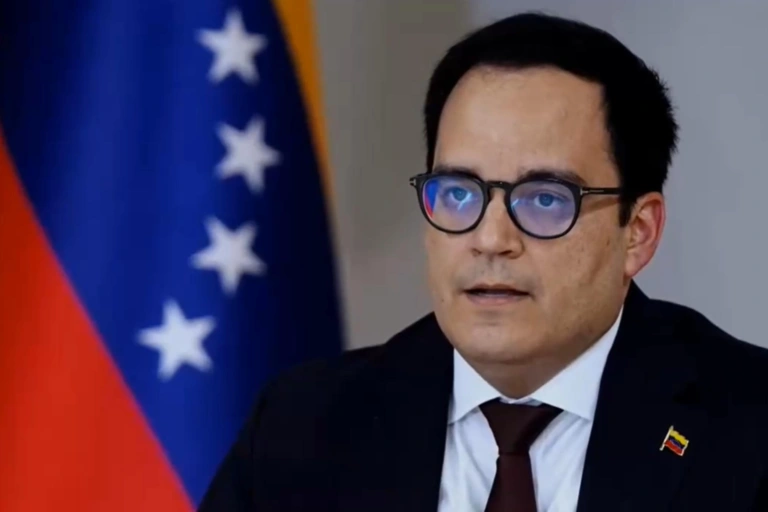
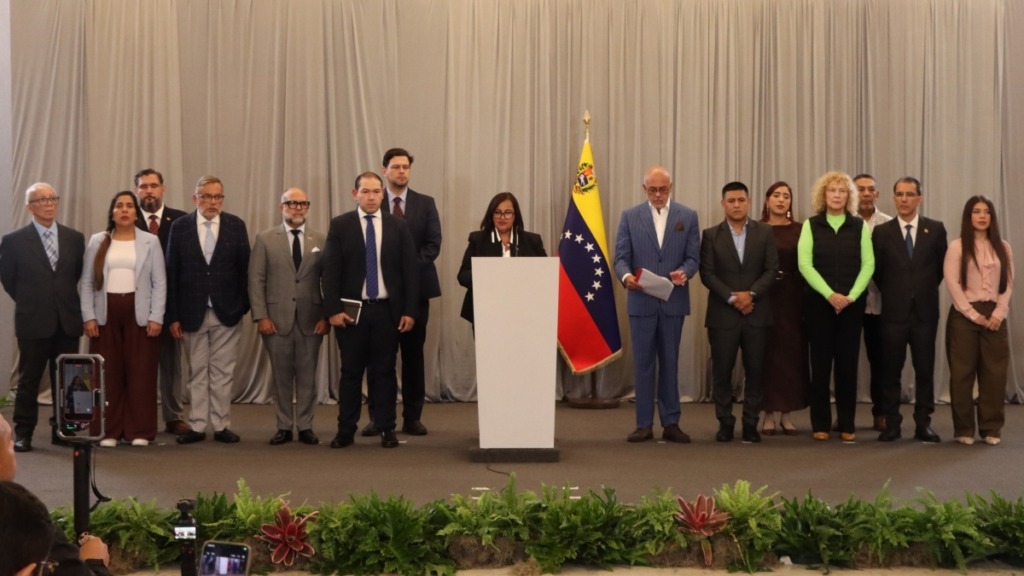
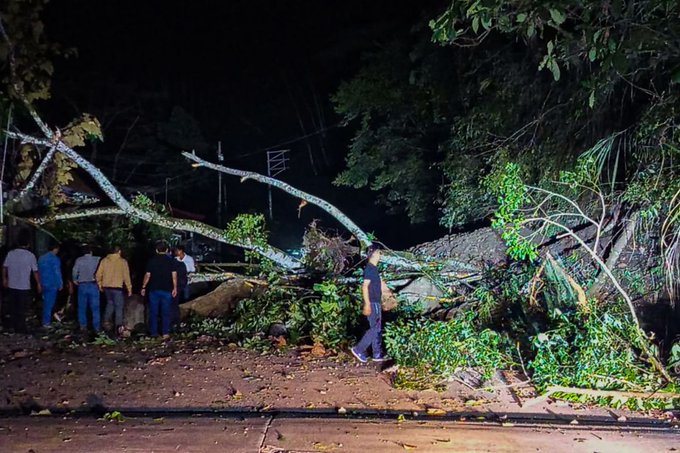
The document, announced by the Sector Vice President of Economy, Calixto Ortega, incorporates the socioeconomic impact of earthquakes, which left more than 6,000 dead, 18,000 injured and material damage estimated by the World Bank at $19.6 billion. Photo: EFE.
November 24, 2026 Hour: 6:16 pm
🔗 Comparte este artículo
The Venezuelan government published this Tuesday Venezuela Rises Plan, a ten-year economic roadmap drafted with the Central Bank, setting out three stages to stabilize finances and lift oil output to 2.9 million barrels a day by 2036.
The document, titled “Venezuela Rises. National Program for Recovery and Prosperity,” was released on November 24. The Ministry of Economy and Finance prepared it together with the Central Bank of Venezuela.
The plan’s execution unfolds in three stages built on four pillars: economic growth, the fiscal agenda, the monetary sector, and governance.
RELATED: Venezuela Enacts Electric Reform Opening Generation to Private Investment
The first phase, called Normalization, covers the next 12 months and aims to unify the exchange rate regime, establish fiscal rules, restructure foreign debt, strengthen the independence of the Central Bank and review subsidies through social protection mechanisms, in addition to attending the reconstruction of the infrastructure affected by the earthquakes on June 24.
The Recovery stage, set between the first and third years, will push investment into strategic sectors, modernize public services, and support small and medium enterprises.
Diversification comes after, projected beyond three years. It will seek to consolidate an economy with a greater share of sectors other than hydrocarbons, introduce inflation targets, and create a Sovereign Wealth Fund to manage natural resource surpluses.
Text reads: “The Bolivarian Republic of Venezuela announced today the publication of its macroeconomic stabilization and financial recovery plan, Venezuela Rises. The Venezuela Rises Plan is fundamental to support Venezuela’s economic recovery and unleash its full potential, attract international investment and above all, improve the living conditions of the Venezuelan people. The Venezuelan Government emphasizes the support and technical collaboration of the multilateral community and international partners, particularly in the framework of dialogue and cooperation with United States. with the aim of restoring normal access to international financial markets.”
Debt and Oil Targets
The diagnosis attached to the plan describes a difficult starting point. The economy grew 9% in 2025 and reached a nominal Gross Domestic Product (GDP) of $98.1 billion. That figure represents 36% of its real size in 2012. Meanwhile, the inflation closed 2025 at 475.3% and climbed to 534.2% year-on-year in August of this year. Both numbers set the baseline the program promises to bring down.
The earthquakes weigh heavily on the accounts. They left more than 6,000 people dead, 18,000 affected, and material damage the World Bank estimates at $19.6 billion.
The national government posted a primary surplus of 1.3% of GDP in 2025. Even so, the consolidated public sector balance closed with a deficit of 4%, dragged down by fuel subsidies equal to 5.1% of GDP.
On fiscal and financial matters, the government detailed its public liabilities. Total identified debt reached 237.5 billion U.S. dollars at the close of 2025, equivalent to 242% of GDP, which sum includes commercial obligations in bonds and bank loans account for $116.5 billion.
Energy sits at the core of the roadmap. The official target is to raise crude output from 1.12 million barrels per day averaged in 2025 to 2.9 million barrels per day in 2036. The program leans on hydrocarbons as its immediate engine while planning for a future less dependent on them. Oil finances the recovery now; diversification aims to replace that dependence later.
Non-financial commitments of the state-own company Petroleos de Venezuela (PDVSA) add $67.3 billion, and arbitral awards $26.3 billion. Bilateral debt with China, Russia, and Brazil stands at $23.3 billion, while multilateral credits with the Inter-American Development Bank (IDB) and Latin American and Caribbean Development Bank (CAF) total $4.2 billion.
In this sense, the Government highlighted the increase in gross international reserves to $12.8 billion in July 2026 and the disbursement of $346 million from the International Monetary Fund reserve to address the post-earthquake housing emergency.
The roadmap published this Tuesday covers a full decade. Normalization begins immediately, recovery follows through the third year, and the long-term shift away from oil extends to 2036.
Author: Laura V. Mor
Source: Venezuelan Presidential Press / Venezuela Rises National Programme