







3 Crucial Points in Venezuela UN Speech: Yván Gil Denounces U.S. Military Threat
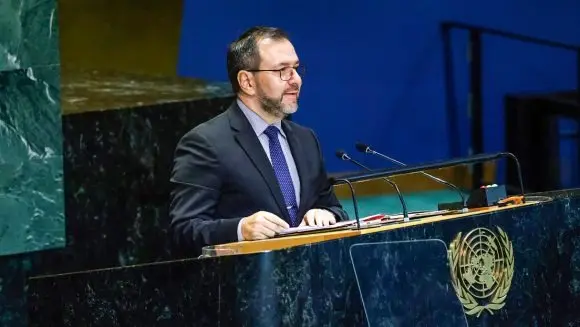
Venezuela UN speech delivers a powerful message of sovereignty and resistance to U.S. military threats during the 80th UN session.
September 27, 2025 Hour: 2:39 pm
🔗 Comparte este artículo
The Venezuela UN speech by Foreign Minister Yván Gil condemns U.S. aggression and sanctions. Discover how Caracas is rallying global support against militarization in the Caribbean.
Related: 4 Essential Voices in the UN General Assembly Debate: A Global Call for Ceasefire and Justice
7 Critical Points in Venezuela UN Speech: Yván Gil Denounces U.S. Military Threat
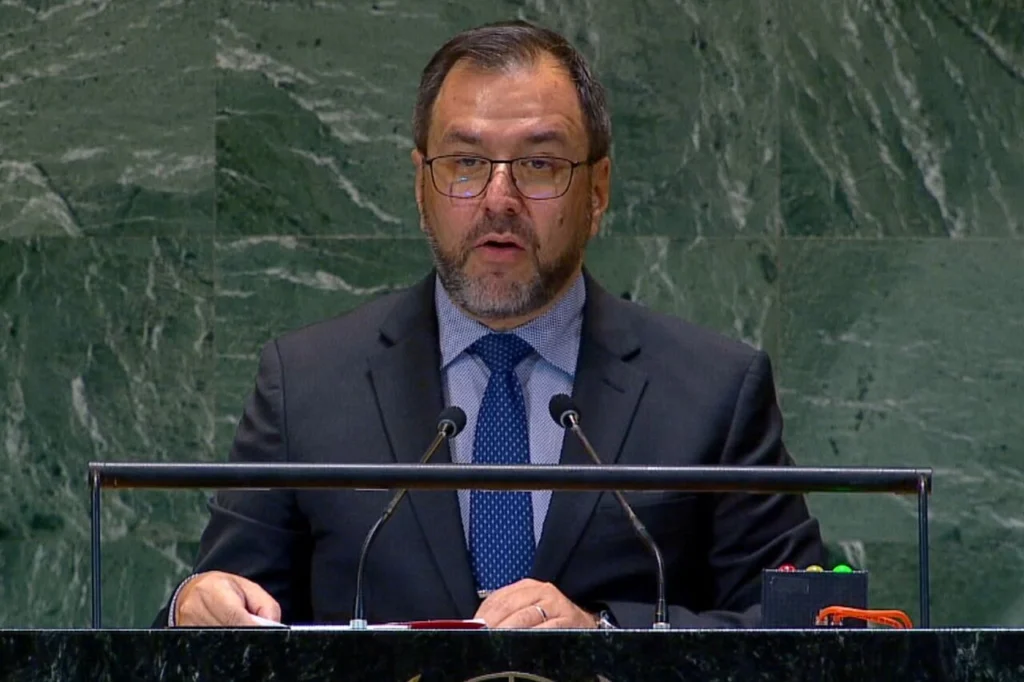
In a bold and defiant address at the 80th United Nations General Assembly in New York on September 26, 2025, Venezuela’s Foreign Minister Yván Gil delivered a scathing indictment of what he described as an illegal and immoral U.S. military threat against his nation. Speaking before the world body, Gil framed the escalating tensions in the Caribbean not as a security issue, but as a covert campaign of regime change aimed at seizing Venezuela’s vast oil and gas reserves—resources that rank among the largest in the world.
The Venezuela UN speech was more than a diplomatic statement—it was a call to global conscience, urging nations to reject unilateral coercion and uphold international law.
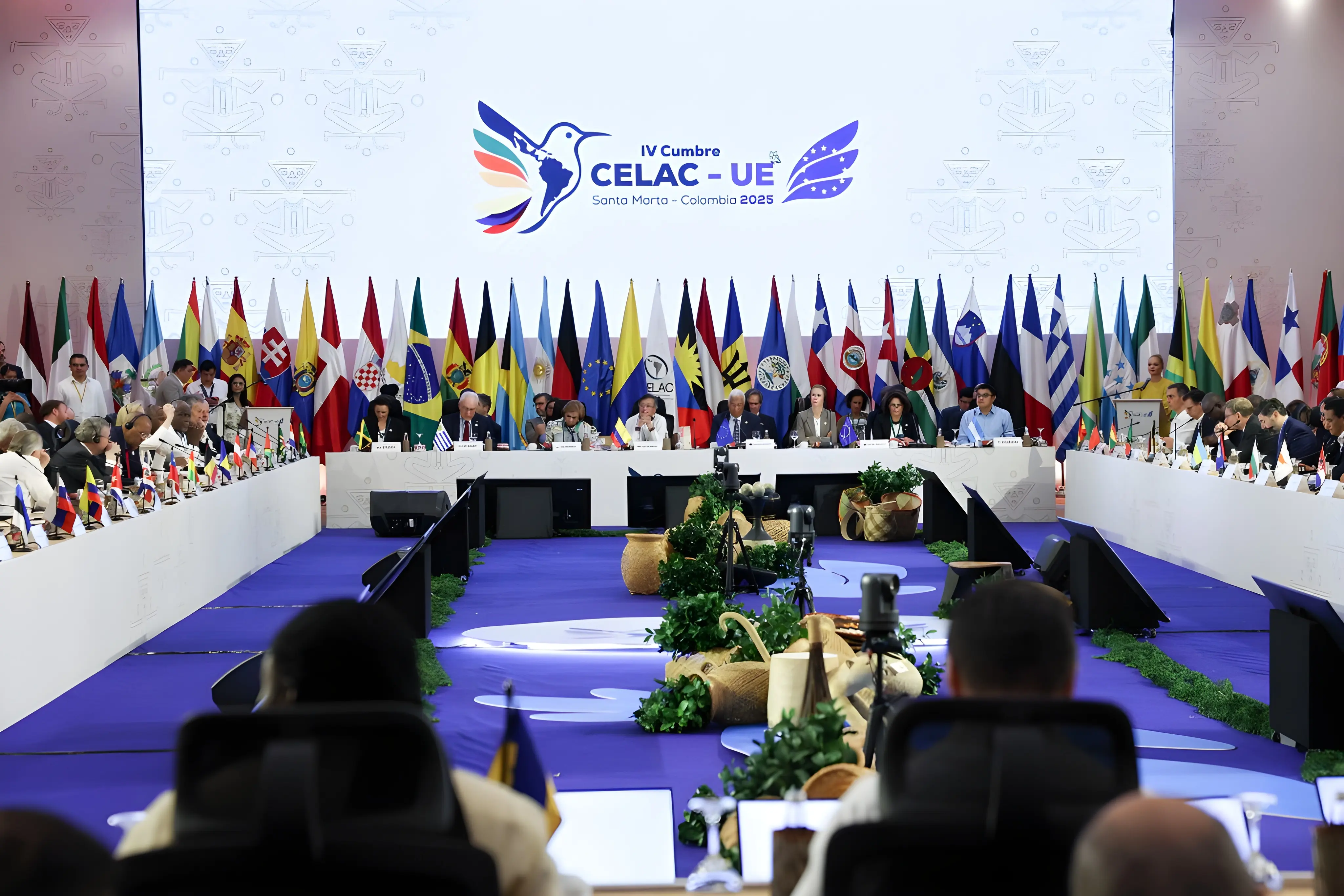
Gil expressed gratitude for the growing international support Venezuela has received from key multilateral blocs, including the Community of Latin American and Caribbean States (CELAC), the Non-Aligned Movement (NAM), and the BRICS group—a coalition of emerging powers increasingly challenging Western dominance in global affairs. Their solidarity, he said, affirms Venezuela’s right to self-determination and peace.
He denounced the 1,042 unilateral coercive measures imposed by the United States as “criminal” in nature, arguing they have caused widespread suffering among the Venezuelan people. These sanctions, he emphasized, are not just economic tools—they are instruments of war designed to destabilize a sovereign nation.
“Today, the invasion targets Venezuela,” Gil declared. “They invent lies no one believes to justify a monstrous, million-dollar military threat.”
🔗 United Nations – General Assembly Official Page
🔗 UN Human Rights Council – Report on Sanctions Impact
Sovereignty Under Siege: The Geopolitical Weight of the Venezuela UN Speech
At the heart of the Venezuela UN speech lies a fundamental challenge to the legitimacy of U.S. foreign policy in Latin America. Gil reminded the assembly of past U.S.-led invasions—Iraq, Libya, Afghanistan, and drone strikes on Iran—to illustrate a pattern of interventionism driven by strategic interests rather than humanitarian concerns.
“Venezuela speaks to the world with truth,” Gil asserted, positioning his country as a victim of a “multiform war” that includes economic warfare, media disinformation, political sabotage, and even attempts at assassination.
This narrative resonates deeply within the Global South, where many nations view U.S. actions through the lens of neocolonialism. By linking Venezuela’s struggle to broader anti-imperialist movements, Gil sought to expand the base of international solidarity beyond regional allies.
He also issued a stark warning: any military aggression against Venezuela, however minor, would trigger a regional catastrophe. With U.S. warships, nuclear-capable submarines, and missile destroyers operating near Venezuela’s maritime borders under the guise of anti-narcotics operations, Caracas sees these deployments not as security measures, but as preparations for intervention.
“We have the duty to defend our sovereignty and the stability of the Caribbean and South America,” Gil stated. “Peace is our vocation, but we will not surrender our dignity.”
His remarks come amid heightened military activity in the region, including joint exercises between U.S. Southern Command and allied Caribbean nations. While Washington claims these drills are routine, critics argue they serve to normalize the presence of foreign forces near Venezuela’s shores—a tactic historically used before regime-change operations.
🔗 External Link (Dofollow): Center for Strategic and International Studies – Latin America Security Report
Geopolitical Context: A Multipolar World Challenges U.S. Hegemony
The Venezuela UN speech must be understood within the context of a rapidly shifting global order, where traditional power structures are being challenged by rising economies and reinvigorated multilateral alliances.
For decades, the United States exercised near-total influence over Latin American affairs. But today, BRICS+, now including Egypt, Ethiopia, Iran, and the UAE, represents over 40% of the global population and is actively creating alternative financial and diplomatic systems. This expansion strengthens Venezuela’s position, offering access to new markets, investment, and political cover.
Moreover, CELAC and NAM have become crucial platforms for collective resistance against external interference. At recent summits, both organizations have passed resolutions condemning U.S. sanctions on Venezuela and calling for full respect for national sovereignty.
Cuba’s Foreign Minister Bruno Rodríguez, speaking shortly after Gil, echoed this sentiment, denouncing the genocide in Gaza and criticizing U.S. vetoes at the Security Council that block ceasefire resolutions. He called for Palestine’s full membership in the UN and advocated for a new international order based on equality, peace, and cooperation.
“Aspire to a civilized coexistence,” Rodríguez concluded, “where solidarity replaces war.”
These speeches collectively signal a rejection of unilateralism and a demand for a truly democratic multilateral system—one where small and developing nations have a voice equal to that of superpowers.
The contrast could not be starker: inside the UN chambers, leaders from the Global South demand justice and peace; outside, thousands protest against the war in Gaza, holding signs that read “Stop Arming Israel” and “Justice for Palestine.” The streets and the podium are converging in a shared call for accountability.
Regional Solidarity and the Fight Against Narrative Control
One of the most significant outcomes of the Venezuela UN speech was its role in shifting the narrative. For years, Western media portrayed Venezuela as a failing state plagued by authoritarianism and corruption. Now, through strategic diplomacy and public messaging, Caracas is reframing the conflict as one of resistance against imperial aggression.
By highlighting U.S. military build-up and economic strangulation, Gil placed Venezuela’s experience alongside other nations facing similar pressures—Cuba, Iran, Russia, China, and Palestine. This framing fosters a sense of global anti-colonial unity, turning isolated struggles into interconnected battles for sovereignty.
The mention of Hugo Chávez’s legacy was particularly symbolic. Gil invoked the late leader not merely as a political figure, but as a visionary who initiated a process of social emancipation and regional integration—a project that continues despite relentless external pressure.
Furthermore, Venezuela used the platform to express solidarity with oppressed peoples worldwide, reinforcing its identity as a nation committed to internationalism. This moral positioning enhances its credibility and deepens alliances across Africa, Asia, and Latin America.
Yet, challenges remain. Despite broad rhetorical support, few nations have taken concrete steps to counter U.S. sanctions or provide military deterrence. The real test will be whether BRICS or CELAC can move beyond declarations to establish binding mechanisms for mutual defense and economic resilience.
Conclusion: A Voice for the Voiceless
The Venezuela UN speech was not just about defending a single nation—it was about defending a principle: no country should live under the shadow of foreign bombs and blockades.
In a world where power often dictates truth, Yván Gil stood before the General Assembly and said: we will not be silenced.
His words were a reminder that sovereignty is not granted—it is defended. That peace is not passive—it is demanded. And that even in the face of overwhelming force, a nation can choose dignity over submission.
As the 80th session of the UN unfolds, one truth becomes clearer: the era of unquestioned U.S. dominance is ending. In its place rises a world where many voices speak, and many futures are possible.
And Venezuela, once dismissed as irrelevant, now stands as a symbol of resistance in that new world order.
Author: JMVR
Source: ONU