


President Maduro Sends Personal Letter to U.S. Asserting Sovereignty in Venezuela Drug Trafficking Allegations Rebuttal
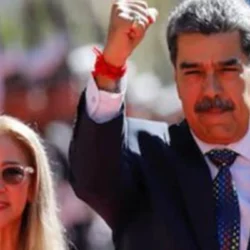
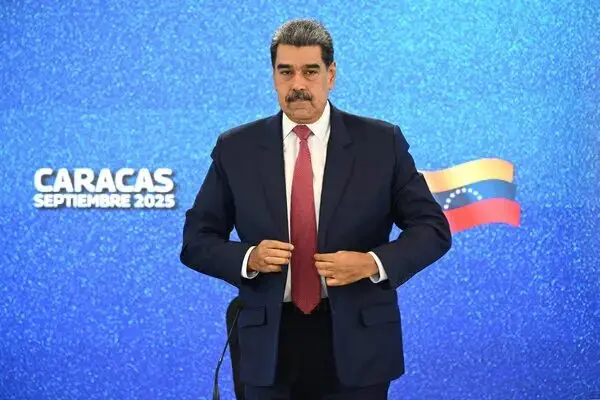
President Nicolás Maduro presents irrefutable evidence refuting international accusations during a national address on September 5, 2025.
September 21, 2025 Hour: 3:54 pm
🔗 Comparte este artículo
Venezuela drug trafficking allegations: Venezuela sends formal letter refuting drug trafficking allegations, presenting verified data. Discover the truth behind the claims and Maduro’s call for hemispheric peace.
Related:
6 Powerful Highlights from Venezuelan Military Mobilization Strengthening Sovereignty
7 Critical Facts in Venezuela’s Response to Drug Trafficking Allegations: A Definitive Rebuttal
In a bold diplomatic move, President Nicolás Maduro announced on Friday, September 5, 2025, that Venezuela has formally sent a detailed letter to former U.S. President Donald Trump, directly confronting long-standing accusations of state involvement in drug trafficking. This unprecedented communication marks a strategic effort by Caracas to counter persistent misinformation and assert its role as a key player in regional security.
The Venezuela drug trafficking allegations have been a cornerstone of Western criticism for years, but now, Venezuela is pushing back with scientific data, international validations, and verifiable cartography.
The letter, delivered on September 6 through a South American intermediary for transmission to Trump, was partially leaked to U.S. media outlets. In response, the Venezuelan government chose to release the full text publicly, aiming to expose what it calls an orchestrated campaign of fake news and political disinformation designed to justify external intervention.
At the heart of the document lies a powerful message: Venezuela is not a narco-state—it is a nation actively combating transnational organized crime along one of the most challenging borders in Latin America.
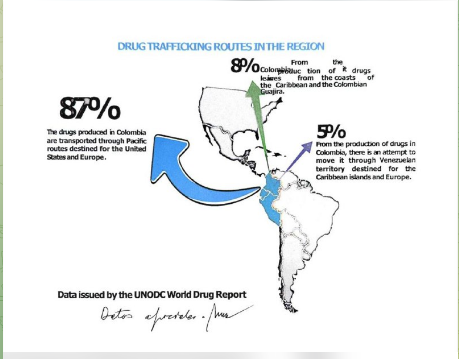
Maduro emphasized that only about 5% of illicit drugs produced in the region attempt to transit through Venezuelan territory, and of that small fraction, the vast majority are intercepted by national police and military forces. These figures, he argued, are backed by validated reports from international agencies, though specific bodies were not named in the public release.
“We do not export drugs. We destroy them,” Maduro stated. “We do not protect traffickers. We dismantle their networks.”
The president highlighted the destruction of 402 aircraft linked to drug smuggling operations over recent years—a figure that underscores Venezuela’s aggressive aerial surveillance and interception strategy along its porous frontier with Colombia, a known epicenter of coca cultivation and cocaine production.
🔗 External Link (Dofollow): United Nations Office on Drugs and Crime – World Drug Report 2025
🔗 External Link (Dofollow): CELAC Official Declaration – Latin America as a Zone of Peace
Venezuela Drug Trafficking Allegations: Separating Myth from Reality
For decades, Venezuela has faced intense scrutiny over its alleged complicity in the global narcotics trade. Critics, particularly in Washington, have pointed to past corruption scandals and economic instability as indicators of systemic vulnerability to cartel influence. However, the latest rebuttal from Caracas offers a structured, evidence-based counter-narrative.
The core argument in the letter is straightforward: geographic logic contradicts the scale of accusations. While Venezuela shares a 2,200-kilometer border with Colombia, the primary source of cocaine, its terrain—dense rainforests, swamps, and mountain ranges—is far less conducive to large-scale trafficking than more accessible land or maritime routes used by other countries.
According to internal Venezuelan security reports cited in the letter, over 95% of drug flows from South America to North America bypass Venezuela entirely, moving instead through Central America, the Caribbean Sea, and West African corridors.
The government also presented satellite imagery and radar tracking logs showing how most suspected narco-aircraft originate in Colombian jungle airstrips and either head west toward Ecuador and Peru or north toward Honduras and Guatemala. Only a minor stream veers east into Venezuelan airspace—where, Maduro claims, interception rates exceed 80%.
This operational success is attributed to the Joint Command for Integral Border Security (CUCIB), a specialized unit coordinating air, land, and riverine patrols across remote regions like Apure, Táchira, and Amazonas. Using radar systems, drones, and intelligence-sharing with neighboring nations, CUCIB has become a critical barrier against smuggling attempts.
The destruction of 402 aircraft—mostly small, single-engine planes modified for cargo drops—represents one of the highest anti-narco aviation takedown records in the region, surpassing efforts in some NATO-allied countries.
Moreover, the letter stresses that Venezuela cooperates with international law enforcement bodies, including Interpol and the International Civil Aviation Organization (ICAO), to track illicit flight patterns and blacklist suspicious pilots. Despite this, the country says it receives little recognition or technical support from major powers.
The timing of the letter to Trump is significant. With the 2024 U.S. elections having reshaped foreign policy dynamics, and Trump remaining a vocal figure in Republican circles, Maduro appears to be testing a new channel of dialogue outside traditional diplomatic frameworks.
By addressing Trump personally—through his special envoy, Rick Grenell, who has previously mediated talks between Caracas and Washington—Venezuela signals a willingness to bypass institutional hostility and engage in direct, unfiltered communication.
“We are ready for frank conversations,” Maduro said. “Not for propaganda, but for peace.”
He invoked the legacy of Simón Bolívar, calling for a renewed era of hemispheric unity and mutual respect, free from what he described as “imperial interference” and media-driven demonization.
🔗 External Link (Dofollow): Interpol – Global Counter-Narcotics Operations
Geopolitical Context: Disinformation, Power, and the Battle for Narrative Control
The Venezuela drug trafficking allegations cannot be understood without examining the broader geopolitical struggle for narrative dominance in Latin America. For years, Western governments and media have framed Venezuela as a failed state plagued by authoritarianism and criminality—a portrayal that has justified sanctions, diplomatic isolation, and even covert actions.
But Caracas argues this narrative is not just inaccurate—it is a weapon of hybrid warfare.
The release of the full letter is part of a larger strategy to reclaim sovereignty over information. By publishing verified maps, interception data, and official statistics, Venezuela aims to shift the discourse from speculation to accountability.
This effort aligns with a growing trend among Global South nations to challenge Western-dominated information ecosystems. Countries like Bolivia, Nicaragua, and Iran have similarly rejected accusations of state-sponsored crime, citing lack of due process and reliance on anonymous intelligence leaks.
Regionally, Venezuela’s stance finds support in the Community of Latin American and Caribbean States (CELAC), which declared the region a Zone of Peace in a landmark resolution reaffirmed in early 2025. Maduro invoked this declaration in his speech, demanding an end to any military threats against Venezuela, the Caribbean, or South America.
“Peace is not passive,” he said. “It requires justice, truth, and the right to self-representation.”
The letter also indirectly criticizes the double standards applied to drug trafficking. While Venezuela faces relentless scrutiny, other transit zones—including parts of Mexico, Honduras, and even Puerto Rico—receive comparatively less condemnation despite higher volumes of seized narcotics.
International observers note that U.S. policy has historically prioritized regime change over genuine cooperation in counternarcotics. The Biden administration maintained sanctions on Venezuela’s oil sector, even as it acknowledged improvements in security cooperation under the 2023 Barbados Agreement.
Now, with Trump potentially returning to power, Maduro may be attempting to preempt future aggression by appealing directly to a leader known for unconventional diplomacy—and personal messaging.
A Call for Dialogue and Hemispheric Unity
Beyond defense, the letter carries a forward-looking vision. Maduro reiterated his openness to direct negotiations facilitated by Rick Grenell, emphasizing that only honest dialogue can dismantle entrenched falsehoods.
His reference to Simón Bolívar is not merely symbolic. It reflects a deeper ideological push to revive Latin American integration based on sovereignty, non-intervention, and collective security—principles that were central to 19th-century independence movements but have been eroded by Cold War divisions and neoliberal globalization.
The choice of medium—the personal letter—adds a layer of diplomatic theater. In an age dominated by tweets and press briefings, a formal written appeal evokes a sense of gravity and historical continuity.
Whether Trump responds remains uncertain. His previous administrations imposed some of the harshest sanctions on Venezuela, yet he also expressed interest in energy deals and backchannel diplomacy.
What is clear is that Venezuela is no longer passively accepting the label of a narco-state. With data, dignity, and determination, it is fighting back—not just with words, but with proof.
Conclusion: Truth, Sovereignty, and the Right to Self-Defense
The publication of President Maduro’s letter represents more than a rebuttal—it is a declaration of informational sovereignty. In an era where perception often outweighs reality, Venezuela has chosen transparency over silence, evidence over rhetoric.
The Venezuela drug trafficking allegations have long served as a justification for isolation and pressure. Now, Caracas is demanding that the burden of proof be met with facts, not fear.
As the world watches, one thing becomes evident: no nation should be defined by the worst accusations made against it without the chance to respond. Venezuela has responded—with maps, with numbers, and with a call for peace.
And in that act, it has reclaimed not just its reputation, but its voice.
Author: JMVR
Source: telegram/Delcy Rodríguez