







Venezuelan Acting President Oversees Communal Development Projects
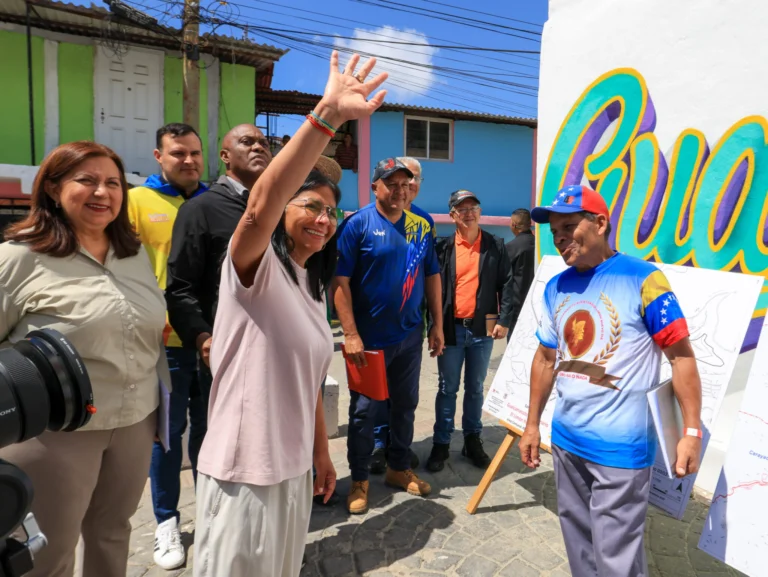
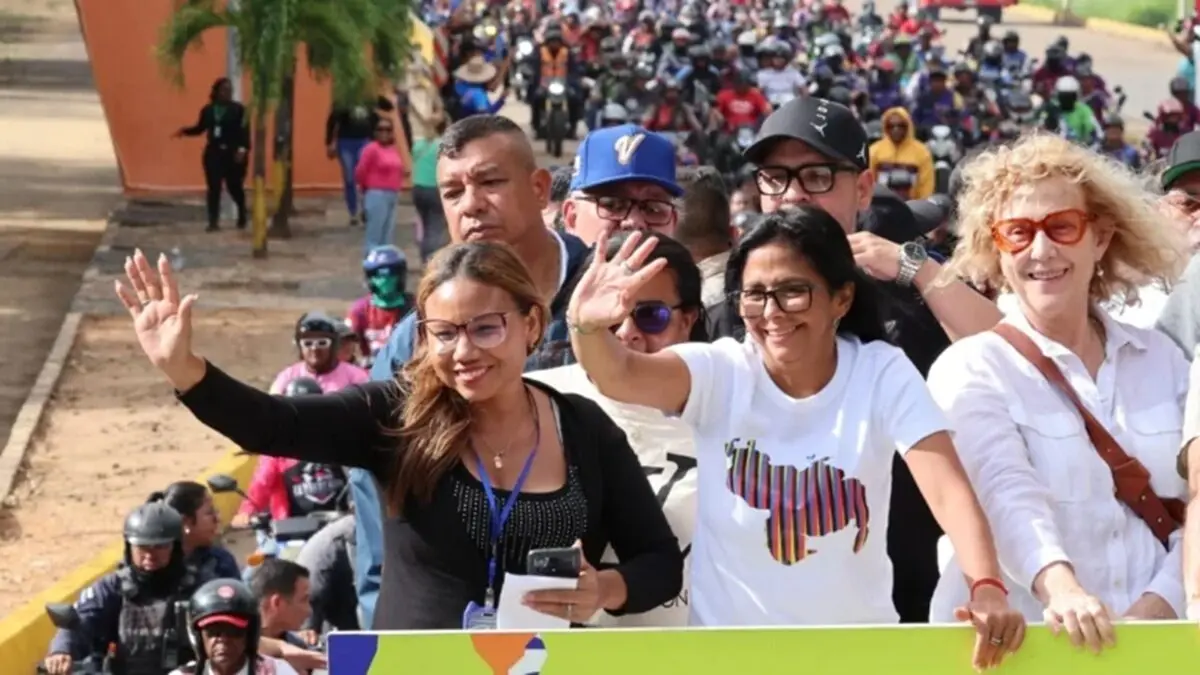
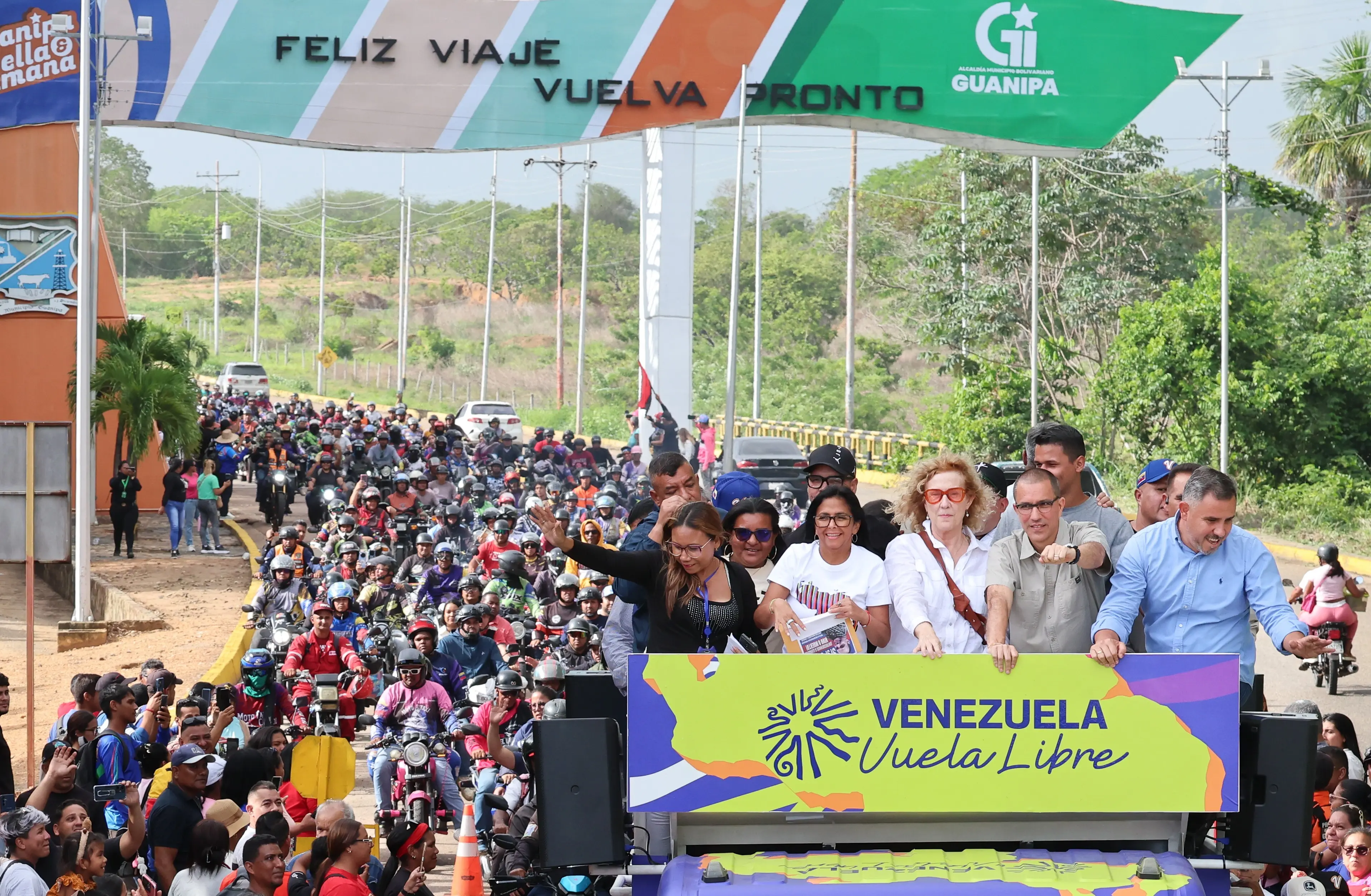
The Acting President stressed that the communal economy is a fundamental engine for building a diversified and independent model of oil income. Photo: Venezuelan Presidential Press.
February 19, 2026 Hour: 7:01 pm
🔗 Comparte este artículo
Acting President Delcy Rodriguez inspected economic projects, highlighting Popular Power’s role in a diversified model to overcome the criminal blockade and foster food sovereignty.
Acting President Delcy Rodriguez recently inspected economic transformation projects in Venezuela’s Guaicamacuto Bicentenario Commune, near Caracas city.
Rodriguez highlighted Popular Power’s crucial role in building a diversified model to overcome the criminal blockade against the country, fostering food sovereignty and community development.
RELATED: Venezuela Announces Youth Productive Projects: 400 Initiatives Funded
During her visit to the Guaicamacuto Bicentenario Commune, located on the vital road axis connecting Caracas with La Guaira State, Acting President Delcy Rodriguez underscored the significant advancements made by organized Popular Power in reshaping Venezuela’s economic model.
Accompanied by local authorities, including Caracas Mayor Carmen Melendez, Rodriguez gained firsthand insight into the organizational experiences within the commune. These encompassed diverse areas such as production, education, politics, and social welfare, showcasing a holistic approach to community development.
Acting President Rodriguez specifically observed the operational efficiency of a meat processing plant, the fifth of its kind established within the city. This facility is an integral component of a broader production chain with Apure state, designed to ensure the supply of essential foodstuffs at affordable prices for the Venezuelan people. In this sense, she emphasized the nation’s strategic response to external pressures..
Communal Economy Advances
Rodriguez emphatically stressed the paramount importance of community organization in defining the nation’s future trajectory.
In this context, she reported that over 36,000 projects have already been uploaded for consideration. A significant 67% of these proposals are concentrated on prioritizing fundamental public services like water, electricity, road infrastructure, and housing. These are precisely the sectors where the economic blockade has inflicted its most severe consequences.
The remaining 33% of the submitted proposals are strategically oriented towards economic transformation.
This ambitious scheme aims to dismantle the financial siege through direct supply mechanisms and substantial cost reductions.
“Since October 2025, we have been engaged in this battle to lower the price of meat, and I am very satisfied to know that meat prices have been dropping. We are now at the equivalent of 8 and 9 dollars”, Rodriguez proudly announced.
The Venezuelan Acting President reiterated that the communal economy serves as a fundamental engine for constructing a diversified and oil-independent model.
This vision leverages the immense potential of agroindustry and local manufacturing, fostering sustainable growth from within the country.
“Venezuela must learn the lesson of the criminal blockade: not to be dependent”, affirmed Rodriguez. She seamlessly linked these grassroots territorial efforts with the broader agenda of international investments the country is actively pursuing in strategic sectors such as hydrocarbons and mining.
These economic motors “must be chained together to protect the Venezuelan people, but most importantly, to create benefits and social welfare for the Venezuelan people,” she underscored.
The strategic plan seeks to reduce food overpricing by an astonishing up to 300% through the systematic elimination of intermediaries across the entire supply chain. This ensures a direct link between agricultural producers and urban consumers, thereby guaranteeing fair prices and enhancing food accessibility.
Author: Laura V. Mor
Source: Venezuelan Presidential Press