







UN Unveils Seven-Point Climate Roadmap at London Climate Actions Week

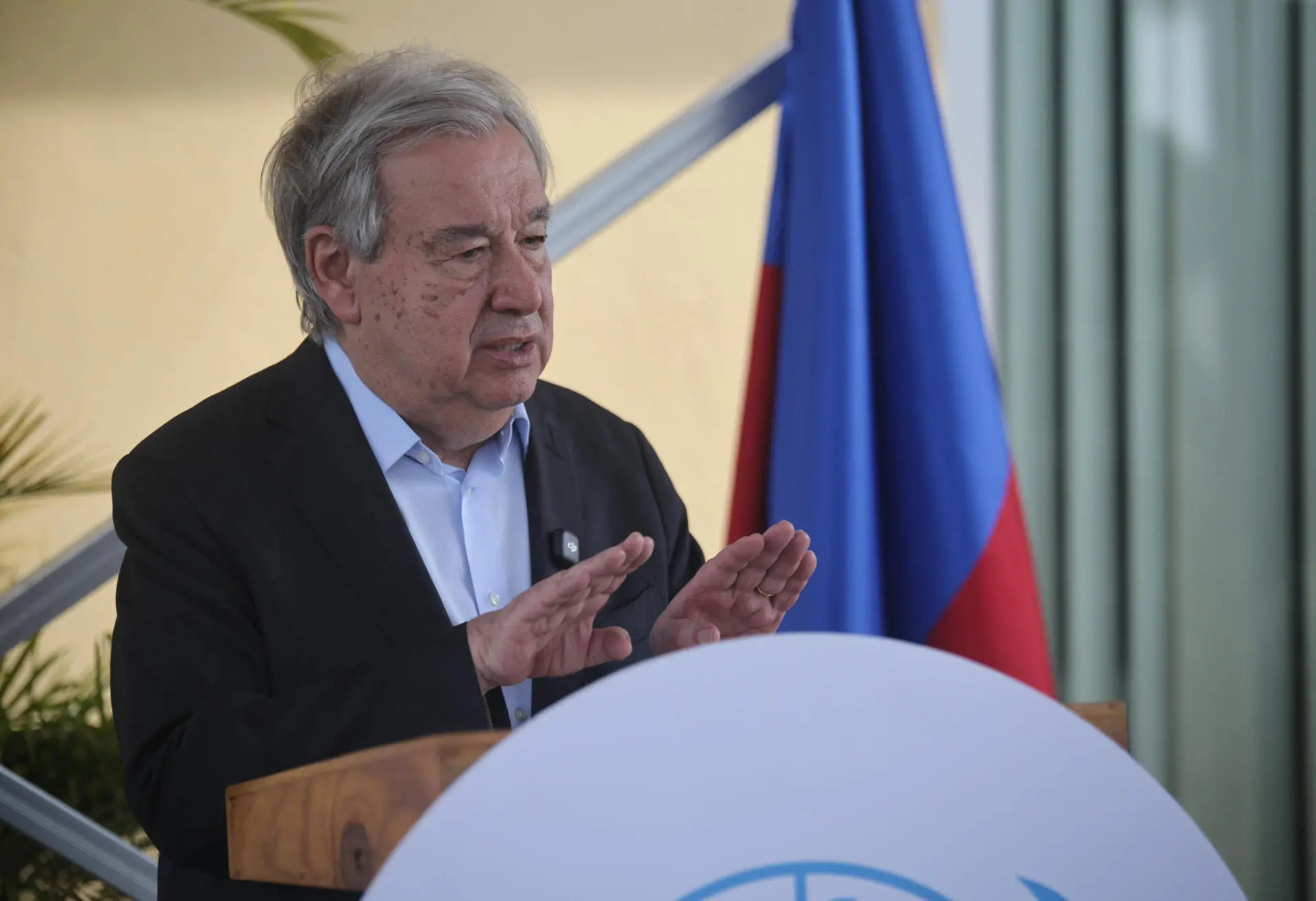
(FILE) UN Secretary-General Antonio Guterres. Photo: UN.
June 24, 2026 Hour: 6:41 am
🔗 Comparte este artículo
United Nations Secretary-General António Guterres presented a seven-point action plan on Tuesday at London Climate Action Week, urging an accelerated global energy transition as geopolitical friction threatens to destabilize oil markets and push the planet past the critical 1.5°C warming threshold agreed in Paris.
Guterres framed hydrocarbon dependence as a dual threat, driving climate breakdown while exposing nations to fresh geopolitical shocks, including potential shipping disruptions in the Strait of Hormuz. He characterized the current situation as the most severe energy crisis yet, though he expressed cautious optimism regarding ongoing peace negotiations.
RELATED: Citizens Around the World Demand Israel’s Expulsion From the United Nations
The UN chief stressed that methane emissions, responsible for roughly one-third of warming and 80 times more potent than carbon dioxide, could be aggressively reduced to yield measurable temperature improvements within a generation.
Despite scientists’ warnings that the Paris Agreement’s 1.5°C limit may soon be breached, Guterres pointed to dramatic cost reductions since 2010 — solar down nearly 90 percent, onshore wind over 70 percent, and battery storage 95 percent — as evidence that a viable and clean exit from fossil fuels exists.
The roadmap demands steep greenhouse gas cuts this decade to achieve net-zero emissions by 2050. Guterres urged the G20 countries, which produce 80 percent of global emissions, to take the lead.
Specific measures include expanding clean energy projects, eliminating public subsidies for new fossil fuel developments, and introducing regulations to curb the environmental toll of artificial intelligence.
Large technology corporations face a 2030 deadline to measure and disclose the carbon, water, and land footprints of their data centers, while also transitioning them to renewable energy. Without such corrective action, the UN warned, data centers will consume enough water in 2030 to cover the annual basic needs of 1.3 billion people across sub-Saharan Africa.
Author: vmmh
Source: agencies