UN General Assembly Debates Cuban Resolution Against U.S. Blockade for 34th Time
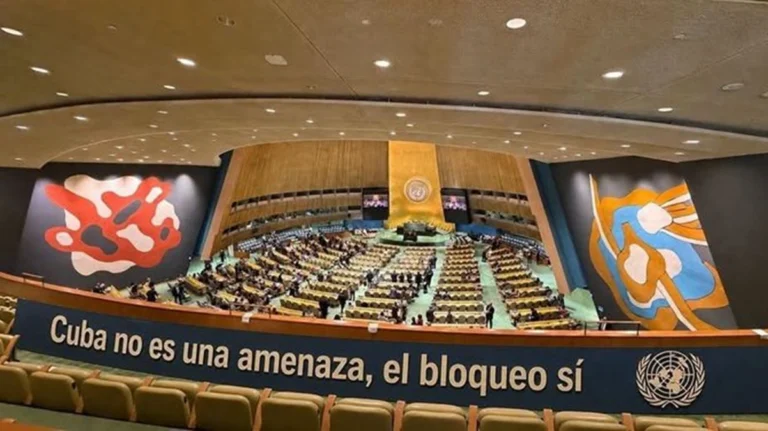
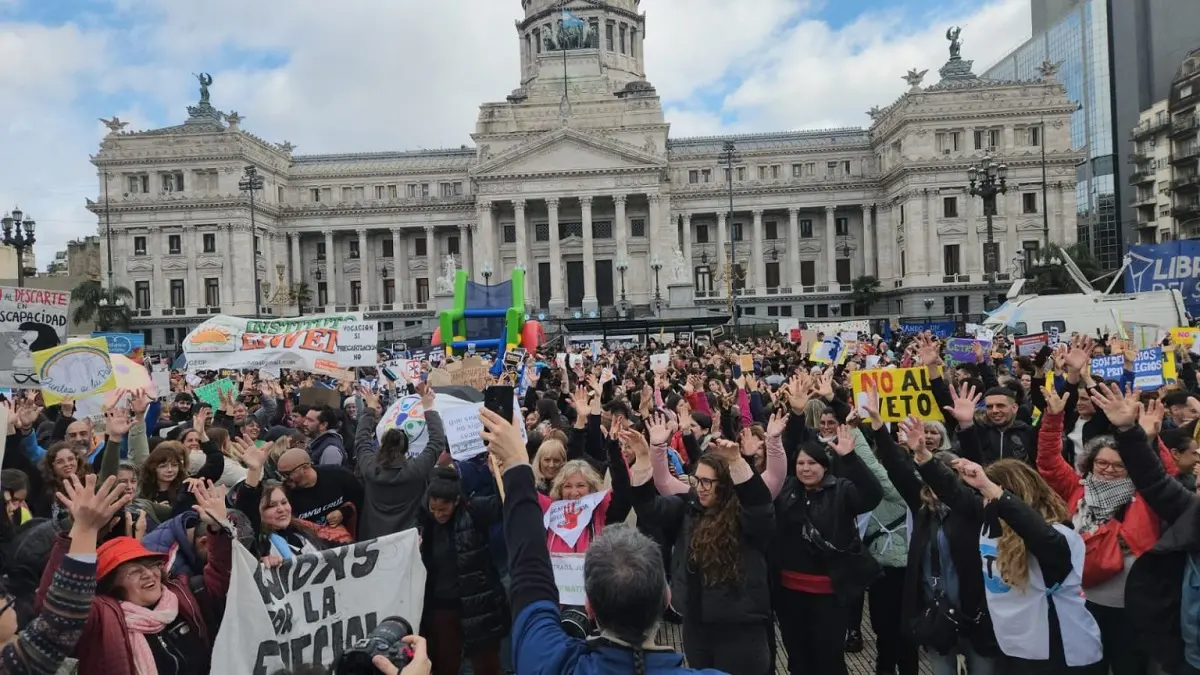
The sign reads, “Cuba is not a threat; the blockade is.” Oct. 2026. X/ @UJCdeCuba
October 27, 2026 Hour: 12:49 pm
🔗 Comparte este artículo
Cuba Presses Case Against Six-Decade Blockade as Washington Applies Pressure on Sovereign States.
On Oct. 27 and 28, the United Nations General Assembly (UNGA) holds, for the 34th time, the debate and vote on the resolution presented by Cuba titled: “Necessity of ending the economic, commercial and financial blockade imposed by the United States of America against Cuba.”
RELATED:
Cuba Joins BRICS Parliamentary Forum in New Delhi as Partner Country
Under the slogan “Cuba is not a threat, the blockade is,” the island defends its right to exist without the criminal weight of the blockade, while it considers “unfounded pretexts” the arguments put forward by Washington to maintain and intensify the siege in recent years, as well as denouncing the efforts deployed by the White House to condition Wednesday’s debate, with the use of direct threats and pressures against sovereign states to change their voting intention.
In this forum, Washington’s diplomatic isolation on this question is evidenced year after year, with the majority of the international community demonstrating its support for Cuba’s demand for the immediate cessation of this policy, a global will that is systematically ignored by the North American nation.
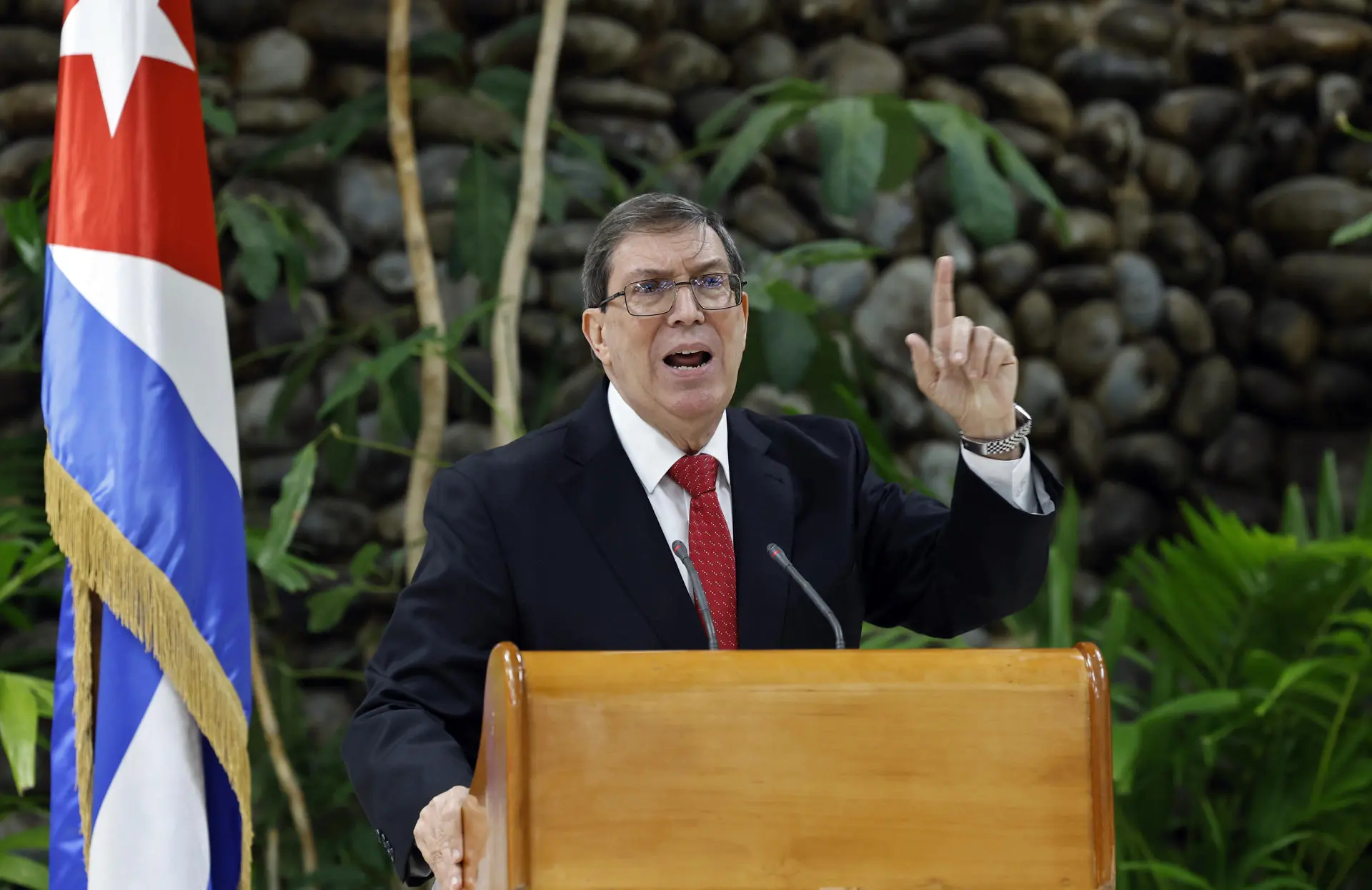
Against this backdrop, Cuban Foreign Affairs Minister Bruno Rodriguez recently warned of the brutal deployment of extreme pressures against numerous states to force them to change their position regarding the draft resolution against the economic, commercial and financial blockade imposed on Cuba, particularly with intense coercive efforts by U.S. Secretary of State Marco Rubio.
He explained that the U.S. has been engaged for months in efforts to coerce other governments. He showed several documents that attest to intimidating messages against those nations, which contain lies such as that the U.S. blockade is legal and that the U.S. allows trade with Cuba.
In the documentation presented, the Cuban Foreign Ministry detailed that “the accumulated damages during more than six decades of application of this policy reach US$178.7 billion,” an accounting impact that hinders the obtaining of foreign currency and slows cross-border trade.
The total amount of damages to Cuba derived from the blockade in the period from March 1, 2025, to Feb. 28, 2026, shows a record figure of US$8.083 billion.
The Cuban Foreign Affairs Ministry stressed that “the persecution of oil tankers and banking institutions worsened the electricity generation crisis,” by causing continuous failures in the national interconnected system, and blocked the purchase of “medicines for hospital use.”
The consequences derived from this policy of maximum asphyxiation are identified by Havana as the main brake on the country’s economic and social development, while generating invaluable harm to the population, which suffers the hardships caused by a stance of collective punishment described by the highest authorities of the Caribbean archipelago as a “silent genocide.”
The Cuban delegation in New York asserted that “the international community will again choose truth, dignity and international solidarity,” while it will reject “diplomatic maneuvers aimed at fracturing the historical support for the island.”
Cuban FM Rodriguez highlighted that what is unusual in this case is the extreme and unprecedented intensification of the U.S. blockade, to which has been added, under the excuse that the archipelago is a threat to U.S. national security, an energy siege that prevents the arrival of fuel to the country under the risk of sanctions and tariff reprisals, extraterritorial actions that violate international law and free maritime trade.
This will then be the first time that the UNGA pronounces itself as a whole against the energy blockade and the collective punishment against our country, with serious humanitarian damages. In addition to the energy blockade, all Cuban commercial operations are pursued, he noted, as part of a policy to cause deliberately planned damages and destabilize the country by generating suffering and desperation.
Cuba Calls for Order Against U.S. Representative
Cuban FM Rodriguez urged the United Nations General Assembly to call to order the U.S. representative, Mike Waltz, for offensive statements that lie to distract attention from the consequences of the blockade they impose on the island.
He asked the speaker to prepare better and stop ignoring the serious humanitarian repercussions that the North American siege entails. Finally, he wished Waltz a better performance in his future political positions after describing his current performance as “disastrous.”
Eritrea Calls for Compliance with International Law
The representative of Eritrea, on behalf of the Group of Friends in Defense of the Charter of the United Nations, urged compliance with international law regarding the question of the blockade against Cuba with respect to United Nations rules.
The African diplomat affirmed that, furthermore, the siege against Cuban medical collaboration with third countries, in which Washington’s stance has persisted, is a cruel maneuver, when this has allowed saving millions of lives around the world, while the U.S. promotes ongoing international conflicts.
Namibia and Africa: With Cuba, Solidarity Over Silence
Namibia joined previous declarations of support for the Cuban resolution while recalling Cuba’s support and participation in the struggle for national liberation on the continent and against Apartheid.
The regional representative noted that these positions are contrary to the rules of free trade among nations. The diplomat announced his vote in favor of the Cuban draft resolution, then recalled that respect for sovereignty and non-interference should be the compass of bilateral relations.
He lastly appealed to the United Nations to assume the responsibility of responding to these injustices and to put solidarity above silence toward Cuba.
Uruguay Highlights Cuba’s Weight in South-South Cooperation
Uruguay’s representation praised Cuba’s weight as a key link for South-South cooperation, and therefore proposed not only immediately ceasing the North American siege, but also removing it from its list of state sponsors of terrorism.
The South American diplomat expressed concern about the humanitarian consequences of the application of these sanctions and the brake on the achievement of sustainable development goals. She exemplified how these actions constitute an unsustainable threat to the laws of free trade and relations among nations.
She thus extended the solidarity of the group, and in particular of Uruguay, with the Cuban population, while reiterating the unjustifiability of imposing this type of relations between states for political reasons.
NAM Urges Respect for the Cuban People’s Rights
To Cuba’s cause for the lifting of the U.S. blockade was added the representation of Uganda, on behalf of the Non-Aligned Movement (NAM). In accordance with the bloc’s position, the African nation expressed particular concern about the measures adopted by Washington, which amount to an unprecedented naval blockade without basis in international law.
Uganda also condemned the weight of this measure in expanding the extraterritorial effects of the blockade that affect not only Cubans but also third countries, for which it is not only a bilateral question. Likewise, it urged the international body to mobilize efforts to prevent a military intervention, in violation of the current world order.
Ugandan diplomacy concluded by reiterating the country’s and the bloc’s commitment to cooperate in maintaining multilateralism and in defense of international forums where differences can be settled peacefully.
ASEAN: Lifting the Blockade Is a Position of Coherence
At the opening of the debate, the representative of Singapore, on behalf of the Association of Southeast Asian Nations (ASEAN), noted that demanding the immediate cessation of the U.S. blockade against the island represents a collective act of coherence in line with the multilateral order based on rules and not on the use of force and coercive pressure.
The regional bloc expressed particular concern about the situation of the Cuban people, who are subjected to effects on the energy sector that hinder the exercise of basic human rights.
It forcefully mentioned the wait for more than 100,000 surgical operations for patients, with a high proportion of children, threatened by the current restrictions.
ASEAN added its voice to the international call of the body’s 81st General Assembly to end the economic, commercial, and financial blockade imposed by the United States against Cuba.
teleSUR/ JF
Source: EFE