







UN Warns Ethiopia Risks Return To Full-Scale War
The United Nations has warned that escalating fighting across northern Ethiopia threatens a return to full-scale war, while violence and insecurity disrupt humanitarian operations.
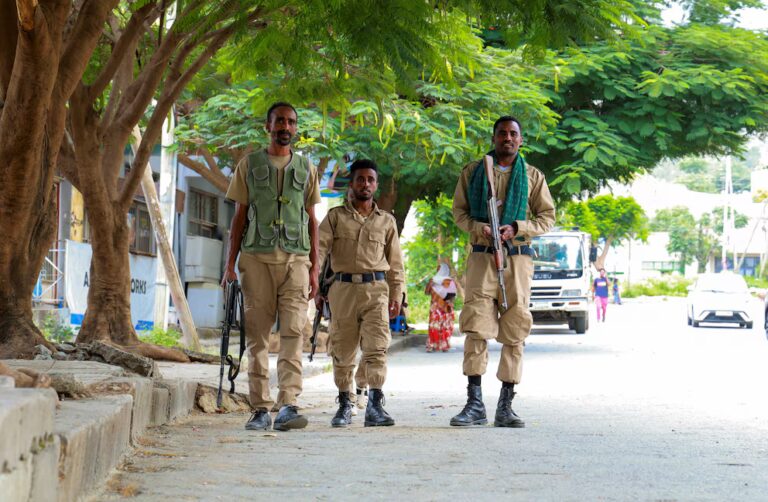
UN officials warn that renewed fighting across northern Ethiopia is threatening the 2022 peace agreement and disrupting humanitarian operations. Photo: Reuters
September 27, 2026 Hour: 6:50 am
🔗 Comparte este artículo
Fighting across Tigray, Amhara and Afar is disrupting humanitarian operations and threatening the 2022 peace agreement.
The United Nations has warned that escalating fighting across northern Ethiopia is threatening a return to full-scale war, as clashes spread across Tigray, Amhara and Afar and increasingly disrupt humanitarian operations.
RELATED: Ethiopia: TPLF Rejects Extending Tigre’s Interim Administration
UN spokesperson Stéphane Dujarric said Friday that the organization was “particularly troubled” by reports of drone use and incidents in which civilians were harmed. Secretary-General António Guterres is closely following developments and engaging with leaders in New York in an effort to de-escalate the crisis.
The renewed fighting comes less than four years after a devastating war in Tigray ended with a November 2022 peace agreement brokered by the African Union.
The latest escalation follows growing tensions between Ethiopia’s federal government and the Tigray People’s Liberation Front (TPLF), which previously governed the northern region.
On Sept. 23, forces loyal to the TPLF took control of three airports in Tigray, prompting the federal government to suspend flights to the region. The TPLF accused the Ethiopian army of attacking southern Tigray and said its forces had entered a “defensive war.”
An Ethiopian official, however, said the TPLF had launched a “full-scale offensive” against army positions in the neighboring regions of Amhara and Afar. Heavy fighting was reported in both regions as well as southern Tigray.
The escalation has also affected communications. According to news reports, internet and telephone services have been largely cut across Tigray, where many people rely on banking and mobile transactions because they have limited access to cash and bank ATMs.
Humanitarian operations under pressure
The renewed fighting is already restricting humanitarian work. On Sunday, a drone strike in northwestern Tigray hit a truck carrying food assistance for internally displaced people, according to the UN.
Road closures have delayed or forced the relocation of planned humanitarian movements, while operations in parts of Amhara face significant constraints, including the seizure of humanitarian vehicles by armed groups.
The UN and its partners continue to carry out humanitarian operations where security conditions allow in Tigray, Amhara and Afar, while assessing emergency needs.
The UN Office for the Coordination of Humanitarian Affairs warned that the escalation could add to already substantial humanitarian needs, including among people displaced by previous fighting in Tigray. The region is also experiencing below-average rainfall linked to the El Niño weather pattern.
UN High Commissioner for Human Rights Volker Türk said Friday that he was deeply alarmed by the escalation and urged all parties to de-escalate tensions and avoid a return to full-scale war.
Türk said reported airstrikes struck five schools in Tigray on Sept. 22, while a mortar strike two days later killed civilians in Kobo, Amhara.
Regional tensions
The current crisis follows the 2020–2022 Tigray war, which began after political tensions between Ethiopia’s federal government and the TPLF escalated into fighting between government troops and Tigrayan militia in November 2020.
Eritrean forces joined the government side, and the conflict spread into neighboring regions. The UN documented widespread atrocities and warned of famine-like conditions before the war ended.
The UN welcomed the November 2022 peace agreement, reached through African Union mediation, but continued to warn that slow implementation posed a risk to the fragile peace.
Tensions between the TPLF and Prime Minister Abiy Ahmed’s government have risen over the past year. The TPLF has accused Abiy’s government of imposing a punitive siege on Tigray as part of what it describes as a “genocidal” campaign against its population.
The government, in turn, has accused the TPLF of acting as a “Trojan horse” for forces seeking to dismantle Ethiopia, particularly Eritrea.
In recent weeks, the Ethiopian military has conducted an undeclared drone campaign against the TPLF, with the latest escalation raising concerns about a return to civil war.
The conflict could also have broader regional consequences. During the previous war, Eritrean troops and Amhara Fano militias fought alongside Ethiopian government forces against the TPLF. Fano later rebelled against the federal government, while tensions between Eritrean President Isaias Afwerki and Abiy have grown amid repeated threats by the Ethiopian prime minister to annex part of Eritrea’s coastline.
On Sept. 20, the TPLF and Fano, together with five other Ethiopian rebel groups, announced a coalition aimed at overthrowing Abiy’s government. Eritrean officials have denied involvement in the alliance.
The TPLF and Fano appear to be attempting to encircle Weldiya, a city in northern Amhara on the main road linking Tigray with Addis Ababa. Rebel incursions have also been reported in Afar, where they could disrupt or halt transport along the road to the port of Djibouti, on which Ethiopia depends for almost all of its international trade, including fuel imports.
The Ethiopian government retains significant military capabilities, including an expanded and more sophisticated drone arsenal. At the same time, the rebel groups are individually weak and divided by ethnic rivalries and historical grievances, factors that could hinder coordination.
Eritrea is also a key ally of Sudan’s national army, the Sudanese Armed Forces, which is fighting its own civil war. The Sudanese army is angry with Ethiopia over its support for the Rapid Support Forces, its rival in the conflict.
UN urges renewed dialogue
The UN is seeking to revive talks under the 2022 peace agreement. Guang Cong, the Secretary-General’s Special Envoy for the Horn of Africa, is engaging with national and regional actors and coordinating with the African Union and the Intergovernmental Authority on Development to support a resumption of dialogue.
Dujarric said the UN continues to urge all parties to exercise maximum restraint and resolve their differences through dialogue.
Author: MK
Source: Agencies