







UK Rejoin EU: 50% Back a Bold Return in Divisive Brexit Shift
A new survey shows that half of British voters support a UK rejoin EU process as the Labour government considers closer relations with Brussels.
October 3, 2026 Hour: 12:56 pm
🔗 Comparte este artículo
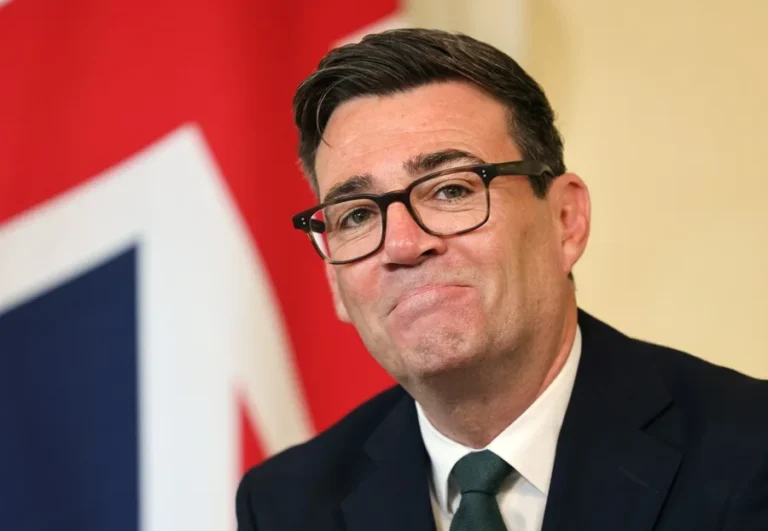
UK rejoin EU support reaches 50% as Prime Minister Andy Burnham weighs closer ties, reopening the divisive Brexit debate across Britain.
Related: Half UK Voters In Favor of Rejoining to the EU, Poll
UK Rejoin EU Gains Support as Poll Shows Half of Voters Favor Return
UK rejoin EU support has reached 50 percent of British voters, according to a new survey that has renewed political debate over the country’s post-Brexit future. The poll, conducted by Messina Group among 5,627 people between September 12 and 24, found that half of respondents favor applying to rejoin the European Union, while 45 percent prefer maintaining Britain’s current separation from the bloc.
The findings come as Prime Minister Andy Burnham signals that his Labour government will examine the country’s long-term options for its relationship with Europe. Speaking during the Labour Party’s annual conference in Liverpool, Burnham said Brexit had done “more harm than good” to the United Kingdom and pledged to set out possible paths for the country’s future ties with the EU.
The renewed discussion around a possible UK rejoin EU process represents one of the most consequential political shifts since Britain formally left the bloc in 2020. It also places Labour under pressure to balance economic arguments for closer integration against fears of reopening the deep divisions unleashed by the 2016 referendum.
Britain voted narrowly to leave the European Union in June 2016, when about 52 percent supported Brexit. The country completed its withdrawal in January 2020, ending its participation in the EU’s political institutions, single market, customs union, and freedom-of-movement framework.[aa.com]
For many supporters of closer relations today, the question is no longer whether Brexit happened, but whether its economic, political, and social costs justify a new national conversation. The poll suggests that a UK rejoin EU debate may increasingly become unavoidable ahead of the next general election, expected in 2029.
UK Rejoin EU Debate Returns to Westminster
UK Parliament research briefing on UK-EU relations | European Commission | UK Electoral Commission
The UK rejoin EU issue has gained political force because Burnham has declined to rule out deeper forms of reintegration. While he did not commit the government to seeking immediate membership, he said he would outline the available options around a planned UK-EU summit later this year.
Those options could range from a limited reset of trade arrangements to joining the customs union, returning to the single market, or ultimately seeking full EU membership. Burnham has argued that Britain needs clarity on its long-term relationship with Europe if it is to build a strategy for growth, investment, and prosperity.
Labour’s current position remains more cautious than the rhetoric of a full return. Its 2024 manifesto pledged to improve relations with the EU and lower barriers to trade, but explicitly ruled out returning to the single market, customs union, or freedom of movement.[commonslibrary.parliament]
The manifesto committed Labour to keeping Britain outside the European Union while seeking a practical reset with European partners. It proposed a veterinary agreement to reduce border checks on agricultural and food products, along with mutual recognition of professional qualifications to help British service exporters access European markets.[commonslibrary.parliament]
This creates a clear political tension. A serious UK rejoin EU proposal would go beyond the commitments that helped bring Labour to power and would likely require a new electoral mandate, a referendum, or both.
The Messina Group survey suggests that a government-backed referendum campaign could deliver electoral advantages for Labour if the party openly campaigned for a return. That conclusion has strengthened voices within the party calling for a clearer pro-European platform before the next national vote.
However, Labour ministers and members of Parliament are also aware of the risks. Many represent constituencies where a majority of voters backed Brexit in 2016. For those MPs, reopening the issue could alienate former Labour supporters and allow the far-right Reform UK party to consolidate Eurosceptic voters.
The UK rejoin EU conversation therefore remains politically volatile. It links questions about trade and regulation to national identity, immigration, sovereignty, and trust in democratic decisions already made.
Public Opinion and Labour’s Dilemma
External links: Labour Party: Britain Reconnected | Reuters coverage of UK-EU policy | House of Commons Library
The latest polling is not an isolated sign of changing public attitudes. A YouGov survey published in June found that 55 percent of voters supported rejoining the EU, while 34 percent opposed it. Separately, 59 percent supported closer ties with the bloc even without full membership, a return to the single market, or a return to the customs union.[reuters]
These figures point to an important distinction in public opinion. Many voters may favor a UK rejoin EU path in principle, but an even larger number appear open to practical cooperation that reduces trade friction without requiring full political reintegration.
That middle ground is where Labour has sought to position itself. The government’s stated objective is to reset relations with Brussels, improve trade and investment links, and reduce avoidable barriers created by Brexit, while avoiding the immediate reopening of the old referendum divide.
Britain’s economic relationship with Europe remains central to this debate. The EU remains the United Kingdom’s largest neighboring market, and post-Brexit border procedures have increased costs and administrative burdens for many exporters, particularly in food, agriculture, and small business sectors.
The government and EU institutions are already engaged in technical negotiations in several areas, including sanitary standards for food products, the possible linking of emissions trading systems, and youth mobility arrangements. The European Commission has described the United Kingdom as a “close and valued partner” and said it remains open to engagement on proposals put forward by London.[aa.com]
Yet a formal UK rejoin EU process would involve much more than technical agreements. It would require political consensus inside Britain, negotiation with all EU member states, and a response to questions about the terms under which the country might return.
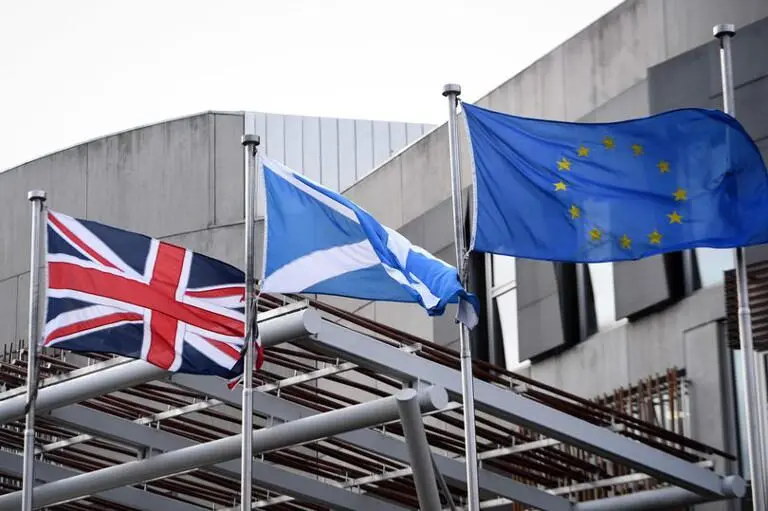
The Liberal Democrats, the Scottish National Party, and other pro-European forces have expressed support for closer alignment with Europe. Within Labour, pressure is growing from members who believe that economic recovery and international influence require a more ambitious relationship with the EU.
On the other side, the Conservative Party and Reform UK remain firmly opposed to a return. Reform UK has said it will challenge any initiative that it sees as moving Britain back toward Brussels. Its leaders argue that efforts to deepen EU ties would dilute the sovereignty claimed by supporters of Brexit.[reuters]
For the Conservative Party, the UK rejoin EU discussion presents both an opportunity and a challenge. It can attack Labour for reopening a divisive issue, but it must also address the public dissatisfaction that is helping revive support for stronger European ties.
Brexit’s Lasting Political Divide
The Brexit referendum remains one of the most polarizing events in modern British politics. It divided families, regions, parties, and generations, exposing sharply different views about globalization, migration, national sovereignty, and Britain’s role in Europe.
A renewed UK rejoin EU campaign could revive those divisions. Labour leaders acknowledge that any major change in policy would need to be handled carefully and put before voters, rather than decided through internal government negotiations alone.
The political danger lies in the fact that many people who voted for Brexit still see the 2016 decision as a democratic instruction that must be respected. Others now argue that democracy also allows the public to reconsider decisions in light of their consequences.
This dispute is likely to shape the debate through 2029. A government that seeks closer ties must explain how it will preserve democratic legitimacy, protect national interests, and avoid presenting integration as a decision imposed from above.
The language of “options” is therefore strategically important. Burnham is seeking room for a national conversation without immediately committing his government to full EU re-entry. His approach suggests that the country may move through stages: trade cooperation, sectoral agreements, customs arrangements, single-market alignment, or a referendum on membership.
Geopolitical Context
The UK rejoin EU debate has implications beyond British domestic politics. A closer relationship between London and Brussels could reshape trade patterns, defense coordination, climate policy, research cooperation, and Europe’s response to global instability.
For the European Union, renewed British engagement would strengthen ties with one of Europe’s largest economies, a permanent member of the UN Security Council, and a major military power. For Britain, deeper coordination could provide greater access to markets and influence over continental decisions that still affect its economy and security.
The issue also matters in the context of broader geopolitical competition. Europe faces pressure from wars in its neighborhood, uncertainty in transatlantic relations, trade disputes, and competition with major powers. A more coordinated UK-EU relationship could reinforce Europe’s capacity to act collectively in these areas.
At the same time, the UK rejoin EU debate demonstrates that Brexit has not closed the argument over Britain’s place in Europe. Rather, it has shifted the argument from withdrawal to the terms of a possible future relationship.
What Comes Next
The immediate next step will be Burnham’s planned statement on the alternatives available to Britain ahead of the UK-EU summit. That announcement may clarify whether the government favors a limited trade reset or is prepared to consider more far-reaching options.
For now, no formal UK rejoin EU proposal has been announced. Labour’s official 2024 commitments remain in force, including its opposition to returning to the single market, the customs union, and freedom of movement.[labourlist]
Still, the new poll shows that public opinion is evolving. With half of respondents supporting re-entry and the government openly discussing future options, the question of whether Britain should return to the European Union has moved from the margins to the center of national politics.
Author: JMVR
Source: Agencias