







U.S. Representatives Urge Lifting Sanctions on Venezuela After Deadly Earthquakes
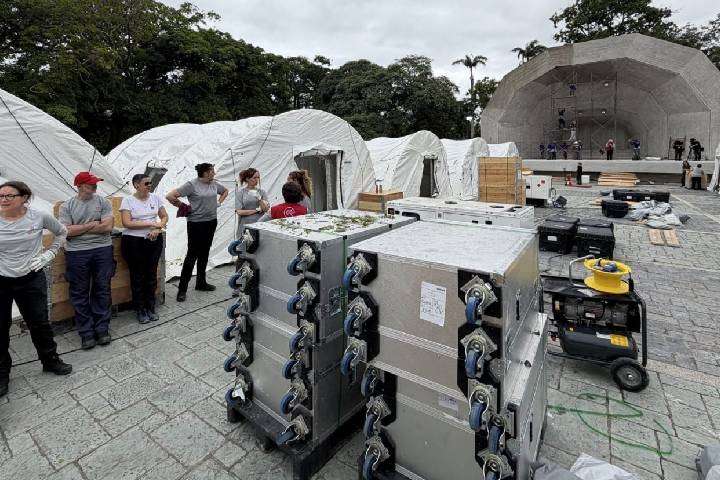
The shipment will be allocated to assist the families located in the temporary camp at the Jorge Luis García Carneiro baseball stadium in La Guaira state, following the earthquakes that affected Venezuela. Photo: Con el Mazo Dando.
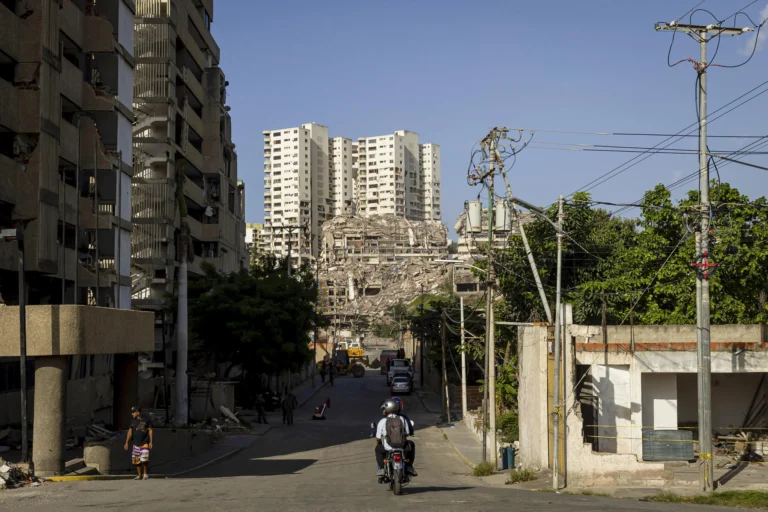
The seismic events occurred on June 24 have left 4,829 people dead and 16,740 injured. Photo: EFE.
July 15, 2026 Hour: 8:09 pm
🔗 Comparte este artículo
Fourteen Democrat congress members urged President Trump to immediately lift economic sanctions on Venezuela, which obstructs emergency response and long-term reconstruction efforts after June 24 earthquakes.
In a letter sent on July 15 to Secretary of State Marco Rubio and Treasury Secretary Scott Bessent, the lawmakers urged the unfreezing of Venezuelan oil funds held abroad.
According to Democrat lawmakers, lifting sanctions will enable state institutions to coordinate and deliver care services more effectively in the reconstruction after earthquakes, as well as clear debris and rebuild roads, schools and homes.
RELATED: Venezuela Assists Over 20,000 Citizens in Temporary Shelters After Quakes
The representatives stressed that while natural disasters are inevitable, the current economic siege imposed by the U.S. government hinders the capacity to respond and rebuild.
“The economic restrictions will continue threatening the recovery and long-term reconstruction of Venezuela if they remain in force,” the signatories of the letter stated.
“Lifting the sanctions will also allow state institutions to coordinate and provide emergency medical services, shelter and food more effectively, as well as remove debris and rebuild roads, schools and housing,” they asserted.
Key Congressional Figures
Among the main promoters of this parliamentary initiative in Washington are prominent House Representatives including Alexandria Ocasio-Cortez, Jesús García, Rashida Tlaib and Ilhan Omar. These lawmakers have long advocated for a reassessment of Washington’s coercive policies toward the South American nation.
The demand from the Democrat bloc in Congress is supported by more than 20 prominent international non-governmental organizations, including Just Foreign Policy, Latin America Working Group (LAWG), Peace Action and the Center for Economic and Policy Research (CEPR). These humanitarian groups coincide in pointing out that the current financial restrictions impose indiscriminate effects on the most vulnerable civilian population amid a catastrophe of great magnitude.
The legislative demand adds to a manifesto recently signed by more than one hundred renowned economists and academics from around the world, who urged the Trump administration to suspend these measures in order to expedite the release of frozen resources for purely humanitarian ends.
The demand from U.S. lawmakers represents a significant shift in the domestic political debate regarding sanctions against Venezuela. Historically, both Republican and Democrat administrations have maintained and even expanded coercive measures against the Caribbean nation, arguing political reasons for the economic blockade.
However, the unprecedented scale of the humanitarian disaster caused by the twin earthquakes has prompted a reevaluation among some sectors of the U.S. political class. The letter sent to Trump and his cabinet members reflects a growing recognition that unilateral sanctions, regardless of their original political intent, can become an obstacle to humanitarian relief efforts during natural catastrophes.
The United Nations and various international humanitarian organizations have also called for the suspension of coercive measures to facilitate the flow of aid and resources to affected communities. Forr its part, the Venezuelan government has repeatedly denounced the sanctions as illegal and contrary to international law, particularly in the context of a large-scale natural disaster.
Tragic Earthquake Toll
The north-central region of Venezuela suffered two consecutive earthquakes of magnitudes 7.2 and 7.5 on the afternoon of June 24. The seismic events occurred with only 39 seconds between them and have left 4,829 people dead and 16,740 injured to date, according to last official report.
According to technical estimates prepared by the United Nations Office for Disaster Risk Reduction (UNDRR), the direct physical losses caused by the earthquakes amount to an initial 37 billion dollars. This figure, based on risk models, does not include losses from the interruption of commercial activities or the cost of emergency response.
Of the total physical losses, approximately 24 billion dollars correspond to damage to public buildings and housing, while 13 billion dollars are concentrated in basic service infrastructure. The telecommunications, energy and road sectors are the most affected by the seismic events.
Author: Laura V. Mor
Source: Agencies