


The Hague Court Has No Jurisdiction in the Essequibo Dispute: Venezuela
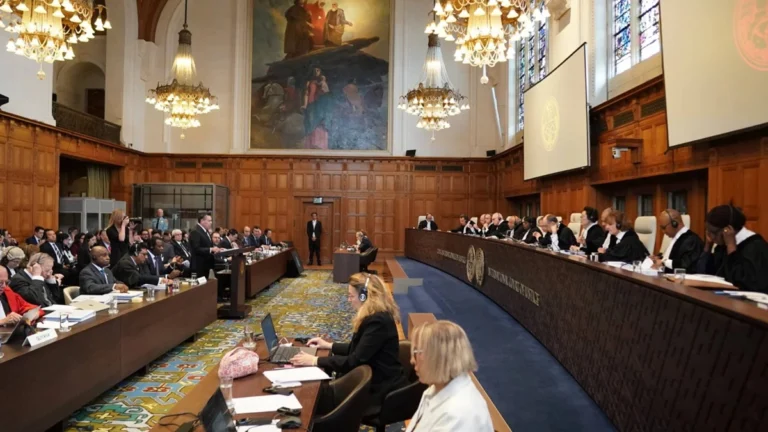
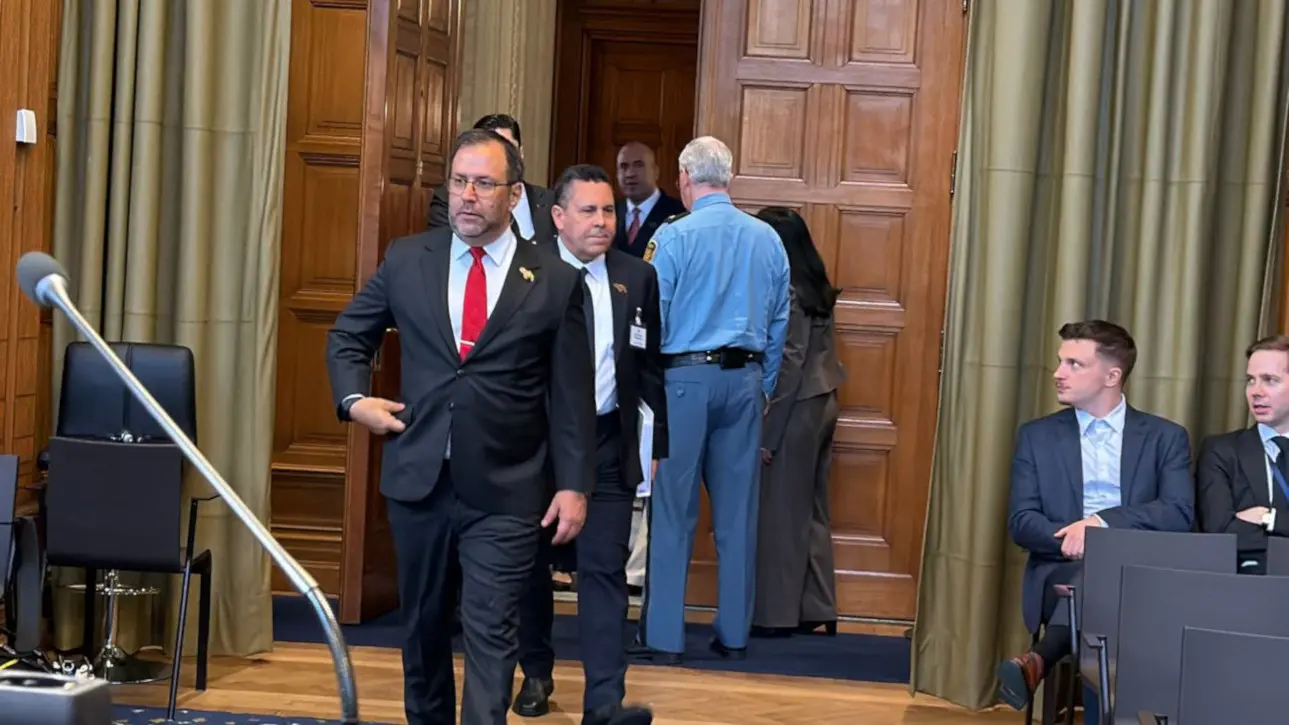
Hague Court hearing, May 6, 2026. X/ @madeleintlSUR
May 6, 2026 Hour: 9:02 am
🔗 Comparte este artículo
The 1966 Geneva Agreement is only legal framework for resolving territorial conflict, Ambassador Moncada points out.
On Wednesday, Venezuelan diplomat Samuel Moncada rejected the jurisdiction of the International Court of Justice (ICJ) in resolving the conflict with Guyana over the Essequibo, a territory of about 160,000 square kilometers rich in oil and minerals.
RELATED:
Venezuela Launches Housing Title Registry via Patria
“Venezuela has not at any time consented to submit this controversy to the jurisdiction of any court or arbitral tribunal,” Moncada told ICJ judges during Venezuela’s oral arguments in hearings taking place until May 11 in The Hague.
The Venezuelan representative recalled that, for nearly a century, his country has consistently maintained that matters related to its territorial integrity “cannot be submitted to dispute resolution mechanisms by third parties.”
“That position is neither circumstantial nor strategic; it is structural. It is part of its international conduct, its domestic legal order, and its conception of how its most essential interests must be protected,” Moncada stressed.
The ICJ will seek to determine the validity of the arbitral award of Oct. 3, 1899, which established the border between what was then British Guiana and Venezuela. In 1962, the Venezuelan government declared that award null and void, arguing it was marked by irregularities.
In 2018, Guyana filed a case before the ICJ requesting it declare the “legal validity and binding effect” of the 1899 award, as well as the definitive nature of the border delimitation of a territory claimed by Venezuela.
“Venezuela is here today because it cannot remain silent in the face of a process that Guyana seeks to use to unilaterally redefine,” Moncada said, emphasizing that the 1966 Geneva Agreement, sponsored by the United Nations, is the only legal framework for resolving the dispute.
He added that the agreement establishes a legally binding obligation for both countries to find new ways to settle the border issue, not through the ICJ as Guyana intends.
“Venezuela does not consent to the jurisdiction of the International Court of Justice” and “respectfully does not recognize its authority to hear and decide this controversy,” he said.
“The Geneva Agreement is, above all, a decolonization instrument. At the same time that Guyana achieved its independence from the United Kingdom, Venezuela laid the groundwork for the restitution of territory colonized by the British Empire,” he explained.
“It is an instrument of peace that urges the parties to find, through direct negotiation, a practical and satisfactory solution to their differences … which is exactly the opposite of a decision imposed by a court where inevitably one party wins at the expense of the other,” Moncada stressed.
teleSUR/ JF
Source: EFE