



7 Stark Realities Behind SpaceX Lunar Project Delays Threatening US Leadership
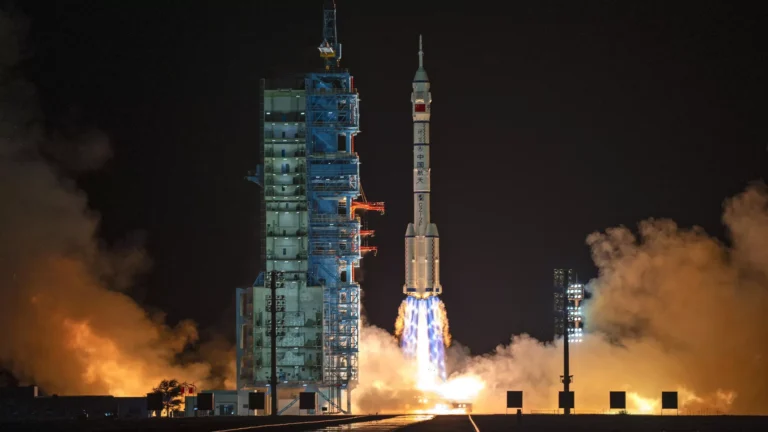
SpaceX’s Starship continues to face setbacks during testing, contributing to significant lunar project delays and raising concerns over the future of US space leadership.
September 21, 2025 Hour: 10:31 am
🔗 Comparte este artículo
SpaceX lunar project delays cast doubt on US space leadership, exposing technical faults, funding cuts, and rising challenges from China’s lunar ambitions.
Related: Why Trump’s Feud With Musk Couldn’t Break America’s SpaceX Dependence?
The SpaceX lunar project delays have raised serious concerns about the United States’ ability to maintain its leadership in the space race. Persistent technical failures and setbacks with SpaceX’s Starship—the cornerstone spacecraft intended for upcoming NASA lunar missions—have put the US on uncertain footing. Experts and former NASA officials, cited by The New York Times, highlight how these delays reveal deeper strategic and technological challenges.
SpaceX Lunar Project Delays Stall Artemis III Mission
The core challenge lies with Starship, which is designed to serve as the lunar module transporting astronauts and cargo to the Moon’s surface. To date, SpaceX has not successfully completed any commercial or crewed mission with Starship. Multiple explosions and failures in recent tests have postponed its readiness.
A highly innovative yet unproven in-space refueling technique, deemed risky and technically outdated by former NASA engineers, underpins the project. This refueling system, critical for lunar missions, is estimated to require several more years before it becomes operational, further pushing back the timeline to send astronauts back to the Moon.
These ongoing SpaceX lunar project delays threaten NASA’s Artemis III mission scheduled for mid-2027, which aims to land two astronauts on the Moon after fifty years. Experts such as Douglas Loverro, a former NASA official, estimate Starship may not be operational until 2032, while China, bolstered by coherent state policy and stable funding, plans a lunar landing by 2030.
- NASA Artemis Program Overview: https://www.nasa.gov/specials/artemis-iii/
- SpaceX Official Updates: https://www.spacex.com/launches/
- China National Space Administration (CNSA): http://www.cnsa.gov.cn/english/
US Space Policy Faces Budget Cuts and Strategic Challenges
Beyond technical difficulties, the US space program faces policy inconsistencies manifested in budget cuts restricting development of critical technologies like bioregenerative life support systems essential for long-duration missions. These funding reductions undermine NASA’s ability to progress in vital research, endangering sustainable human presence on the Moon and deep space.
D. Marshall Porterfield, a former director of space life sciences at NASA, condemned the current US model as “completely flawed,” overly reliant on costly Earth resupply missions. Since 2004, shifting priorities and budgets have disrupted continuity, with further cuts looming in 2026, exacerbating vulnerabilities.
In contrast, outlets like Global Times emphasize China’s consistent political and financial support for its space program, highlighting Beijing’s strategic advantage in the lunar race through stable, well-funded, and coherent state planning.
Geopolitical Context: Space Leadership and Emerging Multipolarity
From teleSUR’s perspective, the SpaceX lunar project delays exemplify a profound strategic crisis within US space policy, merging technological setbacks with incoherent vision and geopolitical objectives aimed at containing rising powers like China. These internal contradictions hinder the US’s capacity to meet real exploration needs and foster innovation.
The relative failure of SpaceX to deliver a functioning Starship challenges the US’s space hegemony. Relying heavily on unproven high-tech solutions without robust backing complicates its ability to compete with organized, well-supported rivals.
The space race is no longer just about economic resources or isolated advances, but requires political coherence, steady funding, and sustainable strategy design. The SpaceX lunar project delays symbolize a turning point, strengthening spatial multipolarity and signaling a power redistribution in humanity’s next frontier—with China emerging as a principal player.
The Risks of Overreliance on Unproven Technology and Privatization
One of the critical factors exacerbating the SpaceX lunar project delays is the overreliance on novel yet insufficiently tested technologies, such as the in-orbit refueling system and SpaceX’s general approach to modular spacecraft design.
Additionally, the US space strategy’s growing dependence on private actors like SpaceX introduces vulnerabilities. While privatization has spurred innovation and cost savings, it also creates gaps in accountability and risks when ambitious projects face high failure rates.
This dynamic contrasts with China’s wholly state-run space framework, allowing for long-term planning without the profit pressures and shifting priorities typical in private enterprises.
The Human Factor: Implications for Astronauts and Future Missions
The technical and policy setbacks accompanying the SpaceX lunar project delays do not only affect timelines but endanger the safety and feasibility of future human missions. Life support systems crucial for crewed lunar stays remain underfunded, raising questions about mission sustainability.
NASA’s envisioned bioregenerative systems, which recycle air, water, and food for crew survival on the Moon, risk falling behind. Without reliable life support, the goal of establishing a permanent human presence on the lunar surface becomes far more challenging.
The current delays imperil not just the schedule but the very viability of Artemis III and subsequent missions aimed at deeper space exploration.
Author: JMVR
Source: Al Jazeera