







Simon Bolivar’s Legacy Inspires Anti-Colonial Resistance Throughout Latin America
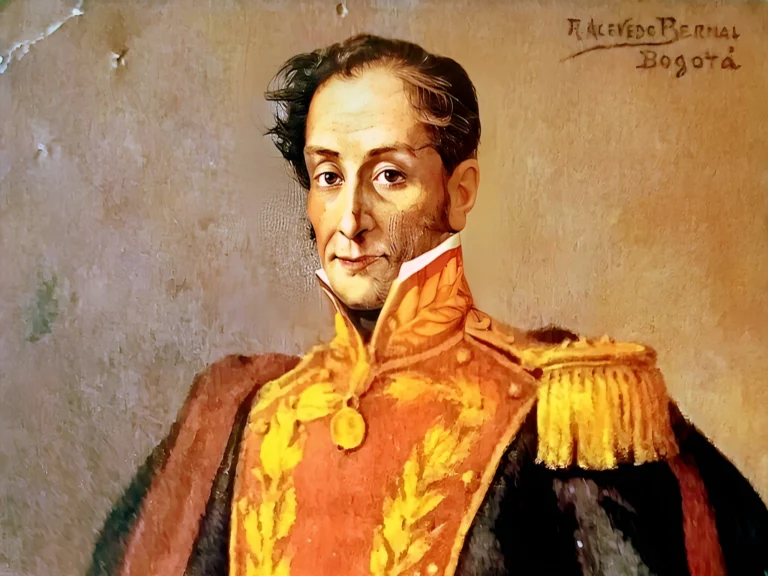
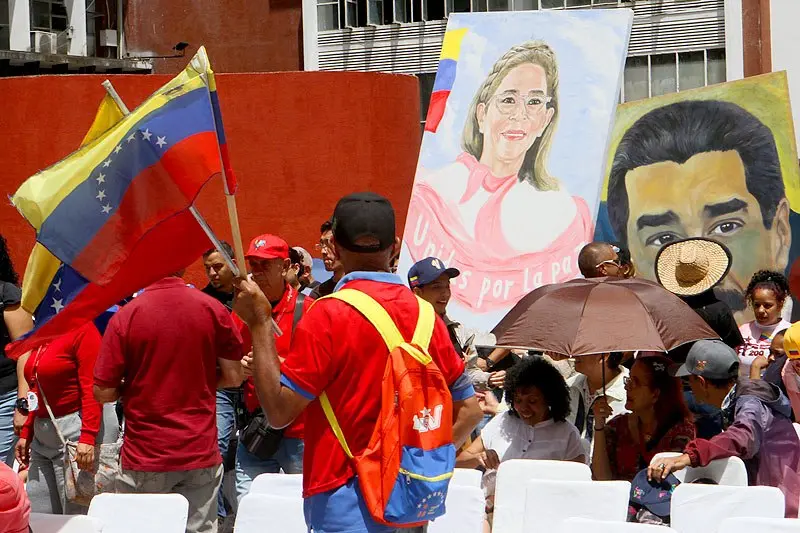
Painting of Simón Bolívar. Photo: ALAI
July 24, 2026 Hour: 2:39 pm
🔗 Comparte este artículo
Analyzing the political trajectory of the military commander who pledged his life to South American sovereignty at Monte Sacro.
Simón Bolívar remains a defining figure whose political thought and anti-imperialist views continue to anchor contemporary political analysis throughout Latin America. July 24 marks the anniversary of his 1783 birth.
RELATED:
Venezuela Commemorates 215 Years of Independence
Across the region, Bolívar’s legacy should be evaluated not merely as that of a 19th-century military leader but as that of an early architect of regional integration.
Understanding Bolívar requires an examination of his transition from an elite colonial background to the leader of a continental independence movement.
Simón Bolívar’s political evolution was shaped by his early exposure to radical European Enlightenment philosophy, the economic structures of Spanish colonial rule, and the military realities of the Latin American wars of independence.
Context of Birth and Aristocratic Family Roots
Simón Bolívar was born in Caracas, located in the Captaincy General of Venezuela, on July 24, 1783, into one of the wealthiest criollo (South American-born Spanish) families in the Spanish Empire.
Simón’s father, Colonel Juan Vicente Bolívar y Ponte, and his mother, Doña María de la Concepción Palacios y Blanco, belonged to the colonial aristocracy known as the Mantuanos.
The source of the Bolívar family’s wealth was tied to the economic structures of Spanish colonialism. The family owned extensive agricultural estates, large herds of cattle, urban properties in Caracas, and lucrative copper mines in Aroa.
The economic enterprises of the Bolivar Family depended directly on the labor of enslaved Africans and indigenous workers, reflecting the rigid social hierarchy maintained by the Spanish Crown.
His father died in 1786 when Simón was two years old, and his mother died of tuberculosis in 1792 when he was eight. Following the death of his parents, he was raised primarily by Hipólita, an enslaved woman of African descent who served as his nurse.
The political system of late 18th-century Spanish America created tensions between local criollo elites and the Spanish monarchy. While criollos controlled domestic land and wealth, the Spanish imperial administration restricted high administrative posts to European-born Spaniards and enforced strict mercantilist trade monopolies.
Bolívar’s family operated within this system, but the structural limitations imposed by Spanish rule laid the groundwork for elite-class grievances that eventually sparked the independence movement.
Mentors, Enlightenment, and the Monte Sacro Oath
Simón Bolívar’s intellectual development was shaped by exposure to European Enlightenment philosophy, tailored to the specific political conditions of South America.
Following the loss of Simón’s parents, his formal education passed to private tutors. The most influential of these instructors was Simón Rodríguez, a radical educator whose teaching philosophy was deeply influenced by Jean-Jacques Rousseau’s Émile.
Rodríguez rejected traditional colonial rote learning in favor of direct observation, physical endurance, and critical inquiry. He instructed the young Bolívar in principles of personal liberty, civic duty, and social equality.
When Rodríguez was forced into exile due to his involvement in the failed 1797 anti-colonial conspiracy of Gual and España, Andrés Bello, a prominent Venezuelan scholar, took over Bolívar’s instruction, deepening his knowledge of history, geography, and literature.
In 1799, Bolívar traveled to Europe to complete his education. In Madrid, he moved within elite social circles and married María Teresa Rodríguez del Toro y Alayza in 1802. The couple returned to Venezuela that same year, but María Teresa died of yellow fever eight months later in January 1803.
Bolívar returned to Europe in late 1803, traveling through France and Italy during the rise of Napoleon Bonaparte. While in Paris, he reconnected with his mentor, Simón Rodríguez, and observed the political restructuring of Europe following the French Revolution.
The key turning point in Bolívar’s political dedication occurred in Rome on August 15, 1805. While standing on the Monte Sacro with Simón Rodríguez and his friend Fernando Rodríguez del Toro, the 22-year-old Bolívar swore a formal oath. Bolívar declared that he would not rest until South America was fully liberated from Spanish imperial control.
Radicalization and Early Political Misfires
The geopolitical crisis that enabled Latin American independence occurred in 1808, when Napoleon Bonaparte invaded Spain, forced King Ferdinand VII to abdicate, and placed his brother Joseph Bonaparte on the Spanish throne.
This power vacuum fractured the Spanish Empire. In April 1810, local leaders in Caracas deposed the Spanish Captain General and established a Supreme Junta to govern the territory independently while nominally maintaining loyalty to the deposed king.
Bolívar was appointed to his first major diplomatic mission in June 1810, traveling to London alongside Andrés Bello and Luis López Méndez. Their objective was to secure diplomatic recognition and financial support from the British government.
While Great Britain refused formal recognition to avoid disrupting its military alliance with Spain against France, Bolívar used the trip to meet Francisco de Miranda, the veteran revolutionary who had led previous anti-colonial expeditions to Venezuela. Bolívar persuaded Miranda to return to Caracas to lead the emerging independence movement.
Upon returning to Venezuela, Bolívar joined the Patriotic Society, a political group advocating for an absolute break with Spain. On July 3, 1811, he delivered his first major public address, urging the legislature to abandon hesitation. Two days later, on July 5, 1811, the congress formally declared the independence of the Republic of Venezuela, establishing the First Republic.
The First Republic was short-lived, collapsing in July 1812 due to internal division, economic instability, and military opposition led by Spanish royalist commander Domingo de Monteverde. The fragile republic was further destabilized by a massive earthquake on March 26, 1812, which devastated pro-independence strongholds like Caracas and Barquisimeto.
Appointed commander of the strategic fortress of Puerto Cabello, Bolívar suffered a major military defeat when royalist prisoners mutinied and took control of the citadel in June 1812. Unable to hold the position, he was forced to retreat.
Following the loss, Miranda signed a capitulation agreement with Monteverde in July 1812. A group of young officers, including Bolívar, viewed Miranda’s surrender as treason and detained him, allowing Spanish forces to arrest Miranda, who died in a Spanish prison years later.
Exiled to Curaçao, Bolívar analyzed the structural failure of the First Republic in his December 1812 publication, the Cartagena Manifesto. In this document, he argued that the republic had fallen due to its weak federal structure, overly idealistic laws, failure to build a professional standing army, and the exclusion of the majority non-white population, including pardos, enslaved people, and indigenous communities, from the revolutionary cause.
Crossing the Andes and Forging Gran Colombia
Bolívar restructured his revolutionary strategy following the collapse of the First Republic. In early 1813, after securing a military commission from the Congress of New Granada (modern-day Colombia), he launched the Admirable Campaign.
Leading a force of fewer than 1,000 men, Bolívar marched rapidly from Cúcuta to Caracas, defeating royalist forces in a series of engagements. Upon entering Caracas in August 1813, he established the Second Republic of Venezuela and was formally granted the title of The Liberator by the Municipality of Caracas.
The Second Republic faced internal resistance, particularly from the plainsmen led by Spanish commander José Tomás Boves. Boves mobilized lower-class pardos and rural workers against the patriot army by framing the war as a class conflict against white elite landowners.
Following a series of tactical defeats in 1814, the Second Republic collapsed, forcing Bolívar into exile once again, first to Jamaica and later to Haiti.
In Haiti, President Alexandre Pétion provided Bolívar with vital material support, weapons, printing presses, and military advisors. In return for this assistance, Pétion secured a binding agreement from Bolívar: to abolish the institution of slavery in every territory liberated by republican forces.
In 1819, Bolívar executed one of the most audacious military maneuvers in South American history. Marching through the flooded plains of the Llanos, his combined force of Venezuelan troops, New Granadan patriots, and the British Legion traversed the freezing Andes Mountains via the Pisba Pass at an elevation exceeding 13,000 feet.
Bolívar won the decisive Battle of Boyacá on August 7, 1819, securing the liberation of New Granada and capturing Bogotá. Following this victory, the Congress of Angostura formally proclaimed the establishment of Gran Colombia in December 1819, a mega-state unifying modern Venezuela, Colombia, Ecuador, and Panama under a centralized constitutional republic.
Bolívar’s Unfinished Revolution and Today’s Anti-Hegemonic Horizon
The final years of Simón Bolívar’s life were defined by political fragmentation and structural instability. The vast state of Gran Colombia faced insurmountable geographical barriers, regional rivalries, and economic exhaustion following more than a decade of continuous warfare.
Local oligarchies in Caracas, Bogotá, and Quito resisted centralized governance, while personal rivalries between regional generals, such as José Antonio Páez in Venezuela and Francisco de Paula Santander in New Granada, eroded national unity.
In 1826, Bolívar convened the Congress of Panama, an early attempt to establish a league of South American republics pledged to mutual defense, common citizenship, and collective diplomacy. By 1830, Gran Colombia dissolved into three separate nations: Venezuela, Ecuador, and New Granada.
Facing political isolation, failing health from tuberculosis, and the assassination of his chosen successor, General Sucre, Bolívar died in Santa Marta, Colombia, on December 17, 1830, at the age of 47.
Viewed from a contemporary perspective, Bolívar’s legacy evaluates his political thought not merely as a historical record, but as a framework for analyzing ongoing structural challenges in Latin America.
Ultimately, Simón Bolívar’s trajectory illustrates the transition from an elite colonial order toward national independence. His writings and military campaigns established the foundational legal and geopolitical principles of modern South America.
Sources: Britannica – EBSCO – Biblioteca Virtual Miguel de Cervantes – teleSUR – National Geographic – Radio del Sur – El Mazo Dando – Ministerio Economía y Finanzas Venezuela – El Historiador – Cuba Debate
Author: Silvana Solano
Source: teleSUR