







Sheinbaum Zócalo Accountability Tour: 5 Powerful Results at Historic Rally
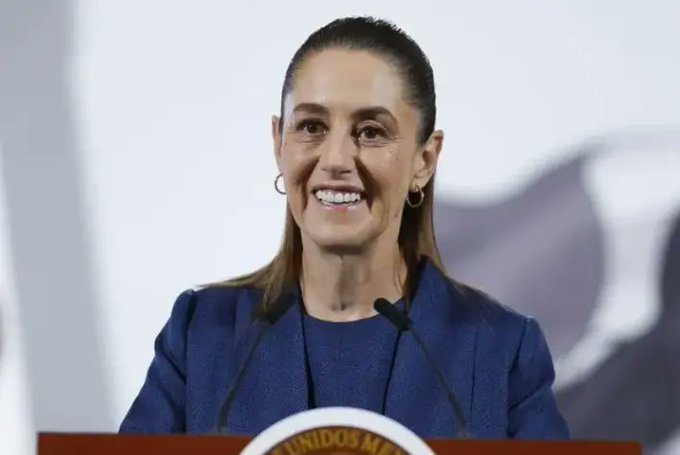
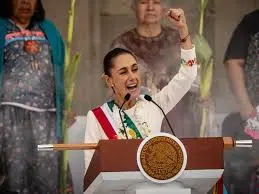
President Claudia Sheinbaum concluded her accountability tour across Mexico’s 32 federal entities with a mass assembly in the Zócalo, where she presented social, healthcare, infrastructure, and sovereignty policies.
September 27, 2026 Hour: 3:23 pm
🔗 Comparte este artículo
Sheinbaum Zócalo accountability tour ends before 70,000 people as Mexico’s president highlights social programs, sovereignty, health and infrastructure projects.
Related: Mexico To Unveil New Ayotzinapa Investigation Findings
Sheinbaum Zócalo Accountability Tour Ends Before 70,000 People
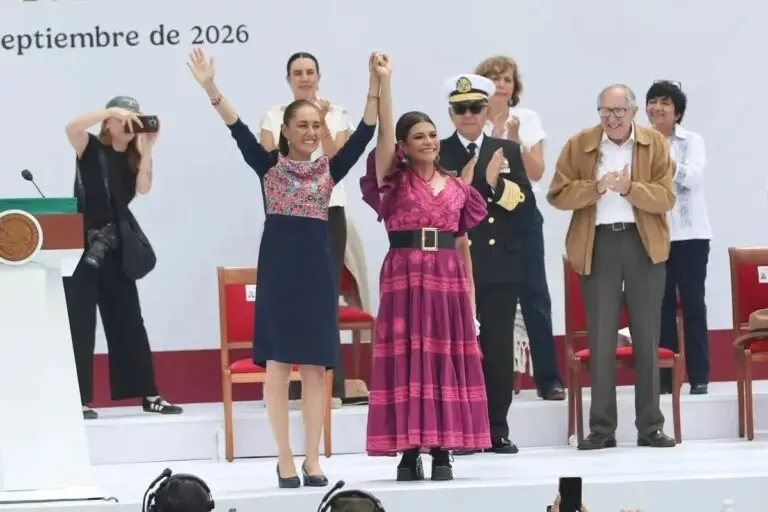
The Sheinbaum Zócalo accountability tour concluded on Sunday, September 27, before a crowd of more than 70,000 people in Mexico City’s Plaza de la Constitución.
The mass assembly marked the end of President Claudia Sheinbaum’s national accountability tour, launched after she presented her constitutional Second Government Report on September 1.
Over the course of several weeks, Sheinbaum visited Mexico’s 32 federal entities to present regional assessments of her administration and maintain direct contact with citizens.
The final event in the capital focused primarily on the government’s work in Mexico City, including social programs, healthcare, public transportation, infrastructure, water management, and housing.
The Zócalo filled from early morning, while surrounding avenues became crowded with supporters carrying flags, banners, and symbols associated with Sheinbaum’s government and the Morena party.
Local authorities reported that more than 70,000 people were gathered in the square by 8:30 a.m. Continuous flows of people also filled the main roads leading to the Historic Center.
The assembly was officially presented as an accountability event rather than a national political mobilization.
Sheinbaum said the meeting was designed to report on the capital’s achievements and challenges after completing public assemblies in every state.
The event was organized under the slogan “Honesty and Results,” which the president used throughout the national tour.
Unlike a traditional government report delivered in the capital, the tour took the administration’s message directly to local communities.
The president presented regional projects and programs while emphasizing the connection between her administration and the people.
The tour also sought to strengthen support for the Fourth Transformation, the political project associated with Morena and the governments of Andrés Manuel López Obrador and Sheinbaum.
The Zócalo assembly gave Sheinbaum an opportunity to demonstrate public support after two years in office.
The crowd included residents of Mexico City, government supporters, social-program beneficiaries, Morena activists, public-sector workers, and visitors from other parts of the country.
The event also reinforced the symbolic importance of the Zócalo as a space for major political gatherings in Mexico.
The historic square has been used by successive governments and political movements to communicate directly with the public.
Sheinbaum’s decision to close the tour there connected the regional accountability process with the national political identity of her administration.[cronica.com][abcnoticias]
Sheinbaum Zócalo Accountability Tour Highlights Social Reforms
Read the official TSE-style information about Sheinbaum’s national accountability tour.
During the Sheinbaum Zócalo accountability tour, the president highlighted reforms that have changed the Mexican Constitution and expanded the legal recognition of social rights.
Sheinbaum said education, universal scholarships, public healthcare, housing, and a 40-hour workweek had been elevated as rights or national priorities through constitutional and legislative reforms.
She also discussed constitutional changes prohibiting political nepotism and consecutive reelection beginning in 2030.
The proposals seek to prevent public offices from being passed between relatives and limit the ability of elected officials to remain in the same position through consecutive terms.
Sheinbaum also defended a proposal requiring public officials and candidates for elected office to hold Mexican citizenship.
Another major issue was judicial reform. Sheinbaum emphasized the popular election of members of the judiciary as part of a broader effort to transform Mexico’s political institutions.
Supporters argue that elections can make judges more accountable to the public. Critics warn that popular voting could increase political pressure on the judiciary and weaken judicial independence.
Sheinbaum also highlighted the recovery of Petróleos Mexicanos (Pemex) and the Federal Electricity Commission, known as CFE, as public companies.
The government has sought to strengthen state control over energy production and electricity generation after decades of policies that expanded private-sector participation.
Sheinbaum said public companies are essential to national sovereignty and energy security.
She also referred to constitutional changes recognizing water as a national asset.
The policy aims to strengthen federal control over water resources and prevent what the government describes as excessive privatization or unequal access.
The president placed those reforms within a wider argument about sovereignty.
She emphasized Article 40 of the Constitution and condemned foreign interference or violations of Mexican territory by foreign agents.
“National sovereignty is a fundamental pillar of our democracy,” Sheinbaum said.
She added that “no foreign power or economic elite has the right to dictate Mexico’s destiny.”
The message carries particular significance as Mexico manages relations with the United States over trade, migration, security, energy, and industrial policy.
Sheinbaum has sought to defend Mexico’s autonomy while preserving economic relations with its largest trading partner.
The president also reviewed social programs implemented in coordination with Mexico City Head of Government Clara Brugada Molina.
For 2026, the administration allocated 70.258 billion pesos to support more than three million beneficiaries and pensioners in the capital.
The figures cited during the assembly included:
- 1,377,198 older adults receiving universal pensions.
- 321,684 women aged 60 to 64 enrolled in the Mujeres Bienestar program.
- 389,305 public high-school students receiving scholarships.
- 312,885 secondary-school students receiving the Rita Cetina scholarship.
- 387,867 children supported through the Beca para Empezar program.
- 255,000 people with disabilities incorporated into pension programs.
The government presented those figures as evidence of its social-policy priorities.
Sheinbaum said the programs are intended to reduce inequality, strengthen household incomes, and guarantee access to education and basic services.
Critics of the administration question the cost, sustainability, and long-term effectiveness of some programs.
They argue that social transfers must be combined with higher productivity, formal employment, improved schools, and stronger health services.
The government responds that welfare programs are rights rather than temporary charity.
The Sheinbaum Zócalo accountability tour therefore served both an informational and political purpose. It allowed the president to present the government’s achievements while reinforcing the ideological foundations of the Fourth Transformation.
Health, Mobility, and Infrastructure in Mexico City
External link: See reporting on Sheinbaum’s Zócalo assembly and the 70,000-person crowd.
The Sheinbaum Zócalo accountability tour also focused on healthcare infrastructure and transportation projects in Mexico City.
Sheinbaum highlighted the completion of the IMSS Regional Hospital No. 25 in Iztapalapa and the construction of a Women’s Oncology Hospital in Gustavo A. Madero.
She also cited the construction of the Gonzalo Castañeda General Hospital, operated by ISSSTE, and the remodeling of Ignacio Zaragoza Hospital.
The administration reported the expansion of the IMSS-Bienestar system through the creation of 804 clinics with their own pharmacies.
The government presented the projects as steps toward expanding access to public healthcare and reducing pressure on existing hospitals.
It also said the infrastructure program would improve care in areas with high population density and limited access to specialized services.
The president highlighted an investment of nearly 60 billion pesos in mobility and water infrastructure.
Among the main projects are the completion of Metro Line 12 to Observatorio and the rehabilitation of Line 2.
The administration also cited funding for Cablebús Line 4, the operation of the Tren Insurgente to Observatorio, and rail links with the Felipe Ángeles International Airport.
Other projects include the Mexico City-Pachuca and Mexico City-Querétaro railway routes.
The government said these rail projects would improve regional mobility, reduce road congestion, and create new connections between the capital and surrounding states.
Water infrastructure was another major concern. Sheinbaum said projects were underway to reduce flooding and improve water supplies, especially in eastern Mexico City.
The capital faces recurring water shortages, sinking ground, leaking pipelines, and severe flooding during the rainy season.
The administration’s infrastructure strategy combines transportation and water projects with a broader effort to modernize urban services.
However, major projects also face challenges involving financing, construction delays, environmental impacts, land acquisition, and public oversight.
The completion of Metro Line 12 remains politically sensitive because the line suffered a deadly structural collapse in 2021.
Rehabilitation and expansion projects require technical transparency and regular safety inspections.
Residents also want assurance that new infrastructure will serve communities equitably rather than primarily benefit wealthier areas or private developers.
The Sheinbaum Zócalo accountability tour presented the projects as evidence of government delivery. Opposition parties are likely to scrutinize their costs, construction schedules, and long-term operation.
The event concluded with Sheinbaum affirming her commitment to unity between the government and the people.
“Long live freedom and democracy; long live Mexico!” she declared.
Geopolitical Context: Mexico’s Sovereignty and Regional Role
The Sheinbaum Zócalo accountability tour has implications beyond Mexico City because it reflects the federal government’s broader political strategy and foreign-policy priorities.
Sheinbaum has emphasized national sovereignty at a time when Mexico faces pressure from the United States over trade, migration, organized crime, energy, and border security.
Her government wants to maintain economic integration with the United States and Canada through the USMCA trade agreement while preserving independent decision-making.
The emphasis on public control of Pemex, CFE, water resources, and strategic infrastructure reflects Mexico’s effort to protect national policy space.
The president’s support for public companies also connects Mexico to broader debates across Latin America over energy sovereignty and the role of the state in development.
Mexico remains one of the most important economies in the Global South. Its policies affect migration flows, manufacturing chains, energy markets, and relations between North and Latin America.
The Sheinbaum administration has sought a balance between social welfare and fiscal responsibility.
Its social programs strengthen support among older adults, students, women, people with disabilities, and lower-income households.
At the same time, the government must ensure that transfers are accompanied by economic growth, job creation, and public investment.
The reforms discussed at the Zócalo also affect Mexico’s democratic institutions.
The election of judges, the prohibition of nepotism, and limits on reelection are being presented as efforts to combat privilege and increase popular sovereignty.
Critics warn that institutional changes could concentrate power in the executive branch or weaken checks and balances.
The debate reflects a broader regional question: how can governments expand social rights while protecting judicial independence and democratic pluralism?
The massive attendance at the Zócalo suggested strong support for Sheinbaum and Morena, but public gatherings alone cannot measure every aspect of citizen opinion.
The administration will also be judged by economic performance, public security, inflation, employment, healthcare quality, and the implementation of infrastructure projects.
The conclusion of the national tour gives Sheinbaum a platform for the next phase of her government.
After visiting all 32 federal entities, she is expected to return to regular weekly reports and focus on supervising construction and public works.
The Sheinbaum Zócalo accountability tour therefore combined public communication, political mobilization, and institutional reporting.
It showed the government’s ability to organize large gatherings and communicate directly with supporters.
It also demonstrated the centrality of the Zócalo in Mexico’s political culture.
The challenge now is to convert the promises and figures presented before the crowd into measurable improvements in living conditions.
Author: JMVR
Source: Agencias