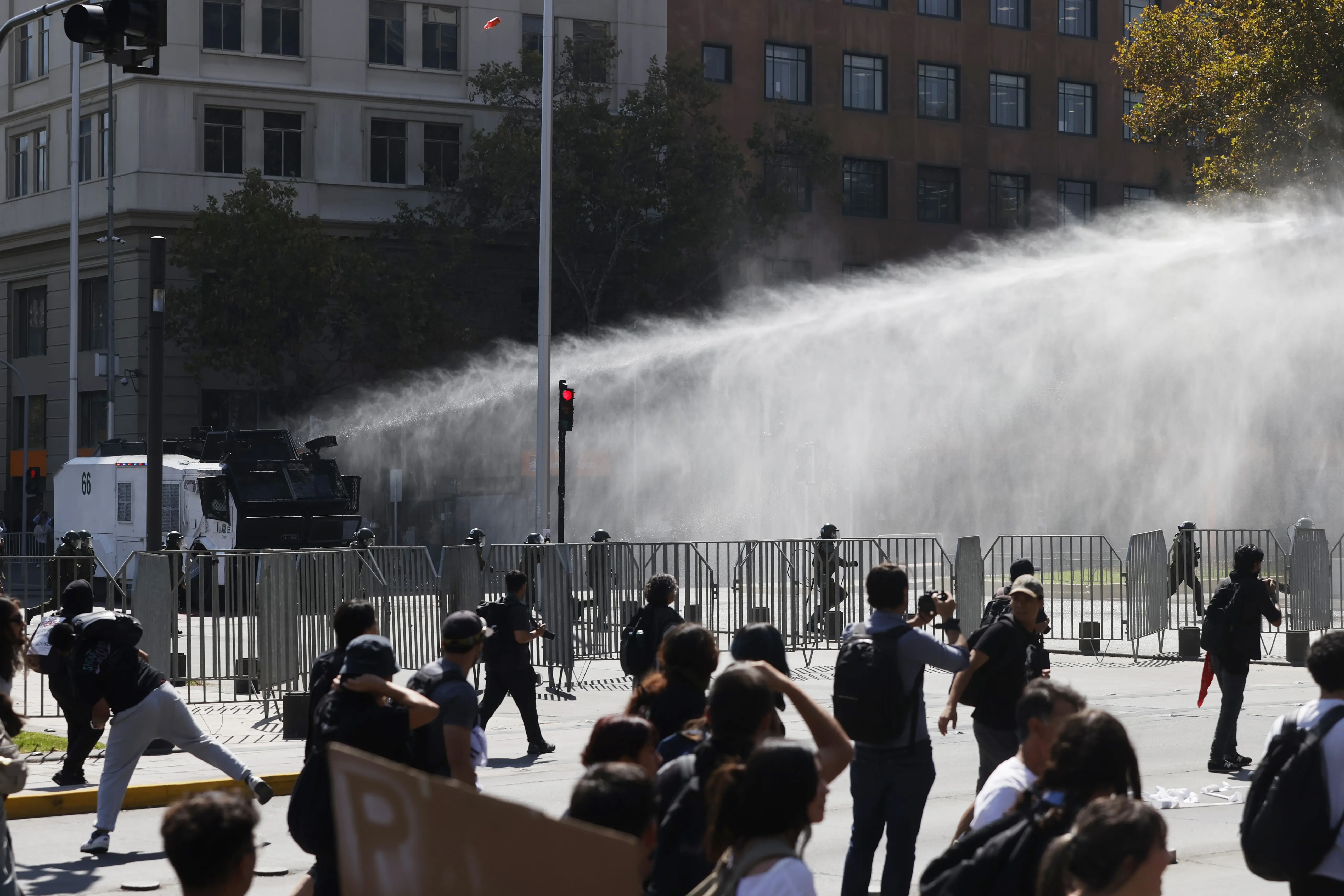



Security or Social Reform is the Dilemma Driving the Chilean 2025 Elections
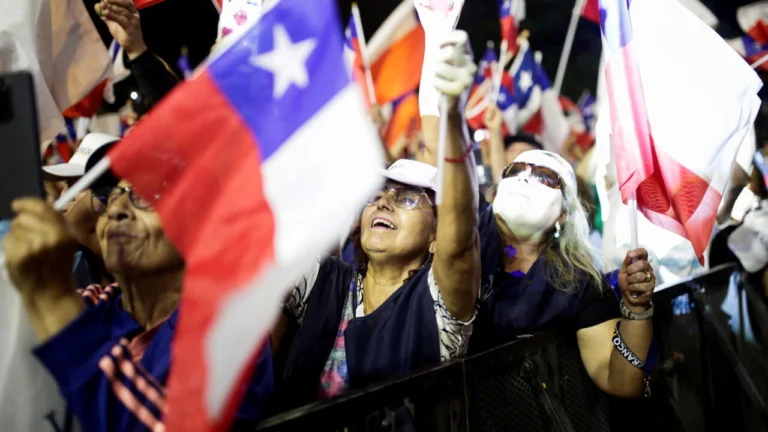
Campaign closing in Chile. Photo: France24
November 14, 2025 Hour: 2:52 pm
🔗 Comparte este artículo
On November 16, Chile will have presidential and congressional elections, a decisive moment shaped by shifting public priorities and rising political polarization.
The vote marks the first national contest under the reinstated system of compulsory voting, a reform that has significantly expanded the electorate and introduced new uncertainties around voter turnout and party performance.
This article explores the central themes driving the campaign, building on shifting electoral dynamics: widespread concerns about public security and organized crime, heated debates over immigration and border control, and the economic strain of high unemployment and persistent inflation.
It also assesses the high probability of a second-round runoff, sketching the competing political scenarios that could define Chile’s course over the next four years.
Unlike the 2021 cycle, dominated by historic debates on inequality and constitutional reform, the 2025 elections are centered on restoring order and security.
The constitution mandates a second-round vote on Dec. 14, if no candidate wins an absolute majority in the first round. The most likely runoff would pit the leading candidate from the left, former Labor Minister Jeannette Jara, against a strong conservative rival, either the far-right’s Jose Antonio Kast or the center-right’s Evelyn Matthei.
This matchup encapsulates Chile’s deepening polarization, offering voters a stark choice between continuing the progressive coalition’s reformist path or embracing a conservative turn centered on security and privatization.
Progressive Project: The Social Democratic Popular Front
The left is unified behind a figure who represents the ascendancy of the Communist Party and a pragmatic push for the welfare state.
Jeannette Jara
Jeannette Jara is the candidate of the ruling “Unity for Chile” coalition and the standard-bearer for the progressive camp. Her candidacy is a historical milestone, marking the first time a Communist Party (PC) militant has successfully united the progressive forces, from the Socialists to the Christian Democrats.
- Trajectory and Working-Class Anchor: An attorney and public administrator, Jara’s roots as a long-time union leader within the tax workers’ association (AFIICH) provide her with a crucial link to the working class. Her high-profile role as Minister of Labor under President Gabriel Boric, where she successfully led the charge for the 40-hour workweek law and comprehensive pension reform proposals, gives her tangible achievements to run on.
- Pragmatism vs. Principle: Her base program includes left-wing policies, such as resource nationalism (copper and lithium), higher minimum wages, and expanded social rights. Following the primaries, her strategy has been to broaden support through forming a “Popular Front.”
Far-Right Threat: Neoliberal Authoritarianism
The Chilean far right has successfully capitalized on voter anxiety over crime and migration, presenting a binary solution of ultra-neoliberal economics combined with authoritarian state control.
José Antonio Kast
José Antonio Kast, founder of the Republican Party, remains the leading opposition figure and the most likely challenger to Jara in a runoff. Kast is the unapologetic political heir to Pinochet, representing a long-standing, traditional political elite who has now weaponized the rhetoric of global populist radical-right movements.
- Pinochetism Unchained: Kast is a political veteran, having served four terms as a deputy for the UDI before breaking away to form his own party, dissatisfied with the mainstream right’s perceived moderation on the dictatorship’s legacy.
- The Reactionary Agenda: His proposals are starkly radical: an immediate $6 billion USD cut to public spending (which experts argue is unfeasible without gutting social programs), a strictly pro-investor agenda (including tax relief and streamlined permitting for mining), and severe authoritarian policies. These include militarizing borders, expedited mass expulsions of irregular migrants, and resorting to “states of exception” to handle security crises and Indigenous land conflicts.
Johannes Kaiser
Johannes Kaiser is the controversial lawmaker who has emerged as the digital face of the ultra-right. Rising to prominence through his inflammatory YouTube channel, “El Nacional Libertario,” Kaiser represents a splinter of the radical right that is even more dogmatic than Kast.
- Extreme Rhetoric: Kaiser’s campaign is fueled by paleolibertarian and nationalist ideals, seeking to dismantle the state. His most extreme proposals include advocating for amnesty or pardons for human rights violators from the dictatorship and the 2019 social unrest, and proposing controversial “migrant retention camps.”
- The Far-Right Divider: While his rhetoric is more extreme, Kaiser’s support often draws votes directly from Kast, potentially fracturing the right-wing vote in the first round. This tactical split may, ironically, be the best hope for the progressive camp to secure a spot in the runoff.
The Traditional Right: The Neoliberal Status Quo
Amid the ongoing libertarian surge, the traditional center-right forces have struggled to find a compelling narrative by offering governance but little hope for change.
Evelyn Matthei
Evelyn Matthei is the establishment candidate, a veteran politician whose career includes serving as a Senator, Minister, and long-time Mayor of the wealthy Providencia commune.
- Elite Pragmatism: Matthei is the voice of fiscal conservatism and stability, aiming to revitalize the old “Neoliberal Grand Coalition” of the center-right and traditional center. Her proposals focus on a pragmatic US$2 billion cut to public spending (less extreme than Kast), a corporate tax reduction, and a focus on “tough-on-crime” measures.
- The Pinochet Liability: Despite positioning herself as a moderate conservative, her family ties to the Pinochet military junta and controversial statements remain a permanent liability that prevents her from capturing the centrist, socially liberal vote she desperately needs.
The Fork in the Road
The 2025 election will hinge on who can best capture the vast, newly mobilized electorate concerned with security and economic uncertainty.
The far-right candidates (Kast and Kaiser) propose a fundamental shift toward an authoritarian state that will crush crime and migration while doubling down on the free-market principles that first defined Chile’s neoliberal model.
Jeannette Jara’s challenge is formidable. She must convincingly demonstrate that the Social Democratic Popular Front can deliver both progressive social gains and the stability and public order demanded by the anxious majority.
Chile is now at a juncture of historical definition. A Kast victory would align Chile with the global reactionary trend of democratic backsliding, while a Jara victory would secure and deepen the democratic opening started in 2019, albeit within a pragmatic framework.
Author: Silvana Solano
Source: teleSUR