







President Díaz-Canel Says Cubans Would Die Defending Nation
President Díaz-Canel says Cubans would “die” defending the island while rejecting resignation and warning against U.S. action.
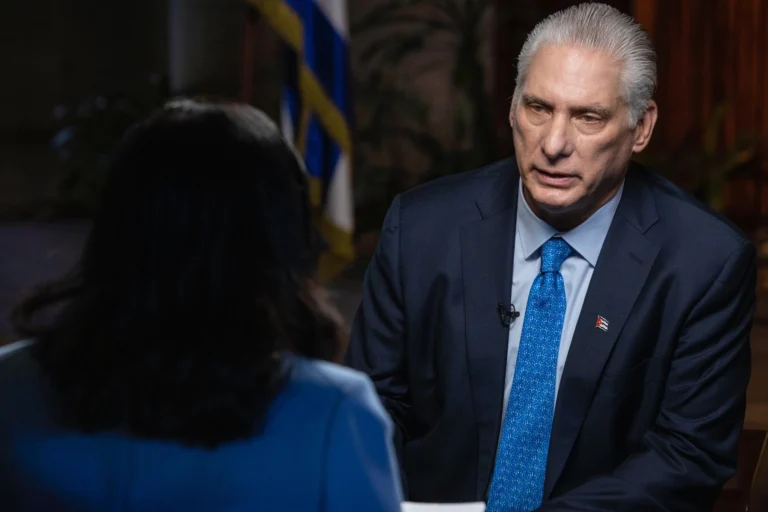
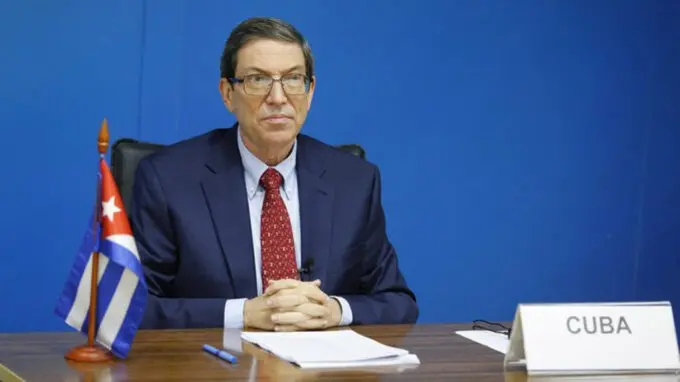
Cuban President Miguel Díaz-Canel speaks during an interview on U.S.-Cuba tensions. Photo: Presidencia Cuba
April 13, 2026 Hour: 3:37 am
🔗 Comparte este artículo
Cuban president rejects resignation and warns against U.S. military action amid tensions and ongoing talks.
Cuban President Miguel Díaz-Canel said in an interview aired Sunday that Cubans would be prepared to “die” in defense of the country in the event of a United States invasion, while rejecting calls to step down under external pressure.
Speaking to NBC’s Meet The Press, Díaz-Canel stated: “If that happens there will be combat, there will be struggle, we will defend ourselves, and if we have to die, we will die, because as our national anthem says: ‘To die for the homeland is to live.’”
The interview, recorded in Havana with a translator, marked his first with a U.S. television network. NBC had released a preview earlier in the week before broadcasting the full exchange on Sunday.
Díaz-Canel also dismissed the possibility of resignation. “Resigning is not part of our vocabulary,” he said, responding to a question from interviewer Kristen Welker. He added that he found the question inappropriate, asking whether a similar question would be posed to U.S. President Donald Trump or if it reflected guidance from the State Department.
Addressing bilateral tensions, Díaz-Canel said there would be no justification for U.S. military action against Cuba, including what he described as a “surgical operation” or the “kidnapping of a president.”
Text Reads: President Miguel Díaz-Canel Bermúdez on Meet the Press: “And that sense of responsibility includes the conviction that we are willing to give our lives for the Revolution, for the cause we defend. Therefore, for me, that is not a concern.”
Relations between Havana and Washington have combined pressure and dialogue in recent months. Following the capture of Venezuelan President Nicolás Maduro in January, the Trump administration imposed an energy blockade on Cuba, worsening an ongoing energy and social crisis on the island.
Last month, Trump said he was considering “a friendly takeover or not” of Cuba, while Secretary of State Marco Rubio described the Cuban economic system as failed.
Despite this context, both governments have announced negotiations aimed at addressing their differences. In March, Washington allowed a tanker shipment to reach Cuba, easing fuel shortages.
The situation reflects heightened tensions alongside limited cooperation, with both sides maintaining opposing positions while keeping diplomatic channels open.
Author: MK
Source: EFE