







Peru Requests UNESCO to Declare the Marinera an Intangible Cultural Heritage
Peru is promoting international recognition of the marinera dance before UNESCO as part of its strategy to preserve intangible cultural heritage.
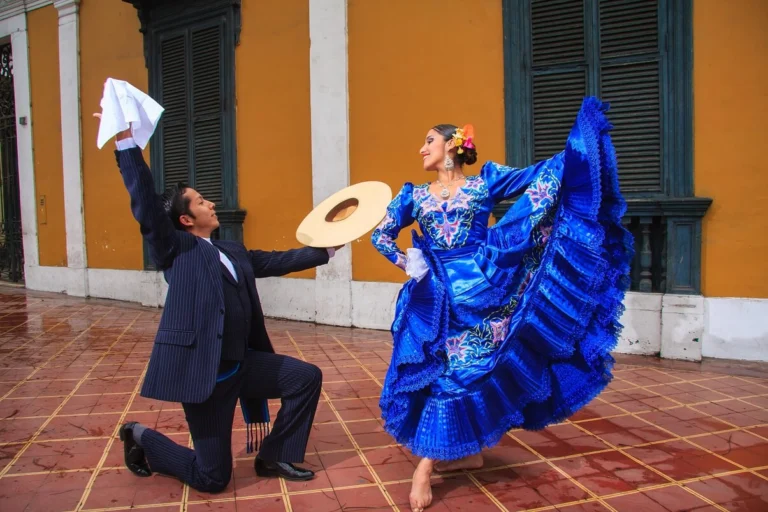
Marinera dancers during the annual festival on the Peruvian coast. Photo: turismocity
April 2, 2026 Hour: 8:59 am
🔗 Comparte este artículo
The Peruvian Ministry of Foreign Affairs submitted the dossier to UNESCO to include the marinera, a traditional dance from the Peruvian coast with more than two centuries of history, on the Representative List of the Intangible Cultural Heritage of Humanity.
RELATED:
Peru Approves Legislative Initiatives to Protect Cultural and Natural Heritage
The evaluation process will conclude in 2027, after analysis by the Intergovernmental Committee for the Safeguarding of the Intangible Cultural Heritage.
Peru’s Permanent Representative to the United Nations Educational, Scientific and Cultural Organization (UNESCO), Carlos Herrera, delivered the dossier entitled ‘Marinera: Traditional Regional Forms of Dance, Music and Song’ to Fumiko Ohinata, Secretary of the 2003 Convention.
Herrera emphasized that this artistic expression contributes to the construction and reaffirmation of Peruvian identity, and underlined that the marinera is practiced not only in the Andean country, but also in various parts of the world by Peruvian communities abroad.
The text reads, “Peru has formally submitted a request to UNESCO to have the marinera dance inscribed as an Intangible Cultural Heritage of Humanity. The dossier, titled “Marinera: Traditional Regional Forms of Dance, Music and Song,” was delivered by our Permanent Representative to the United Nations Educational, Scientific and Cultural Organization.”
The marinera is a mestizo cultural expression resulting from the interaction of indigenous, African, and European traditions, practiced in Peru for over two centuries. It represents, through dance, the courtship of a man and a woman.
Recognized as a Cultural Heritage of the Nation since 1986, this dance remains alive in various regions of the country and reflects the cultural diversity and creativity of its practitioners, contributing to social cohesion and cultural development, the Ministry of Foreign Affairs stated.
The performance of the marinera, one of the main expressions of Creole music, reaches its peak at the annual festival where the best dancers are awarded prizes in various age categories, both individual and group.
The dossier will be evaluated during the period 2026–2027 and could eventually be inscribed on the Representative List of the Intangible Cultural Heritage of Humanity in December 2027.
Currently, Peru has 15 elements inscribed on the lists of Intangible Cultural Heritage, reflecting its active policy of safeguarding and promoting living heritage, the Ministry of Foreign Affairs added.
Author: HGV/JF
Source: UNESCO