







Peru Prepares for Climate Impact, Declares Emergency for 796 Districts
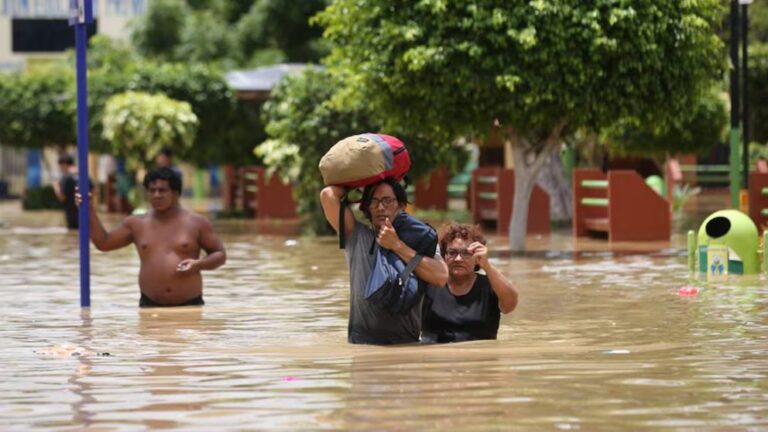
(FILE) The government emphasizes preparedness given the historical destructive capacity of El Niño. Photo: Getty images.
July 2, 2026 Hour: 4:14 pm
🔗 Comparte este artículo
The Peru’s Government has declared a nationwide state of emergency across 796 districts in 22 regions, preparing for severe rains, floods and landslides.
The Government of Peru formally declared this Thursday a state of emergency in 796 districts across 22 of the country’s 24 regions, addressing the imminent threat of El Niño climatic phenomenon.
The measure, formalized through a supreme decree, encompasses localities in 147 of the 196 provinces nationwide, simultaneously affecting populations in coastal, Andean, and Amazonian regions. This declaration highlights the extensive geographic reach of the anticipated climatic impacts.
RELATED: Keiko Fujimori Wins Peruvian Presidency by Slim Margin Amid Fraud Denounces
The decree stipulates that the state of emergency will extend for a period of 60 days, with the possibility of renewal. The central objective of this measure is to coordinate and execute immediate actions for the reduction of very high existing risk, as well as to prepare rapid response plans and infrastructure rehabilitation. This proactive approach seeks to mitigate the potential devastation and protect vulnerable communities across the diverse Peruvian landscape.
These priority tasks will fall under the direct responsibility of regional and municipal Governments, operating with the technical advice and guidance of the National Civil Defense Institute (Indeci, in Spanish). Active participation is also expected from various ministries and State agencies, ensuring a comprehensive and multi-sectoral response.
Text reads: “Declaration of emergency published in the Official Journal by El Niño. Supreme Decree Number 097-2026-PCM declares a state of emergency in several districts of some provinces of the departments of Amazonas, Áncash, Apurímac, Arequipa, Ayacucho, Cajamarca, Huancavelica, Huánuco, Ica, Junín, La Libertad, Lambayeque, Lima, Loreto, Madre de Dios, Moquegua, Pasco, Piura, San Martín, Tacna, Tumbes, Ucayali and the Constitutional Province of Callao, due to imminent danger due to heavy rainfall associated with the El Niño phenomenon 2026 – 2027. A significant part of the territory of Peru…”
Widespread Impact
The magnitude of this environmental contingency emerges just weeks before the country undergoes a political transition. The severity of the crisis and its foreseeable socioeconomic impacts will constitute one of the most urgent priorities for the incoming administration, set to assume power on July 28. This makes the impending El Niño phenomenon the first major challenge on its immediate agenda, testing the new government’s capacity for crisis management and national coordination.
The climate phenomenon, caused by the anomalous warming of the Pacific Ocean waters, historically unleashes asymmetric and destructive scenarios across Peruvian geography, which includes torrential rains in the northern coast, severe droughts in the southern Andes, and floods in the jungle basin. Experts in the field have repeatedly warned that structural damages are often amplified due to the historical lack of long-term prevention works in the country.
Beyond civil infrastructure, the climatic alteration is expected to directly impact strategic sectors of the Peruvian economy. Particularly affected will be fishing, agriculture and the textile industry, which rank among the nation’s most important economic activities after mining. These sectors are highly susceptible to changes in weather patterns and ocean temperatures, potentially leading to significant economic losses and disruptions in livelihoods for thousands of Peruvians.
For its part, the National Meteorology and Hydrology Service (Senamhi, in Spanish) has predicted that the presence of El Niño will atypically prolong high temperatures across all Peruvian territory. This forecast suggests that the winter season, which normally governs the southern hemisphere between June and September, will be virtually nullified. This extended period of heat could exacerbate drought conditions in some areas while intensifying rainfall in others, creating a complex and challenging environmental scenario.
The effects of this global warming have already begun to manifest dramatically in the marine ecosystem. In recent days, there have been mass reports of dead or severely malnourished marine birds appearing on Peruvian beaches. Scientists explained that the high temperatures of the sea surface have forced fish banks, the primary food source for local fauna, to dive to greater depths or migrate south in search of colder currents, leaving the birds without sustenance.
While this phenomenon traditionally presented itself in its moderate or weak version at intervals of two to five years, its strong or extraordinary expression, like the one currently projected, used to occur every 10 or 15 years. The increased frequency and intensity of such events pose an unprecedented challenge for Peru, demanding a robust and sustained national effort to protect its population, environment and economy from the escalating impacts of climate change.
Author: Laura V. Mor
Source: Agencies