




Alawites in Syria: Killings Continue as the Street Is Mobilized to Demand Protection
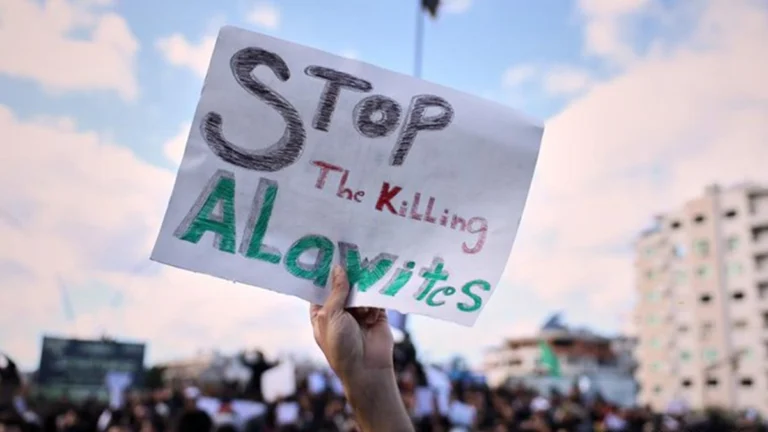
X/ @MultifaithAid
By: Adonis Qabbani
December 30, 2025 Hour: 1:47 pm
🔗 Comparte este artículo
Protesters demanded federalism and the right to self-determination.
The violations facing Syria’s Alawite community have become a recurring and systematic pattern rather than isolated incidents or collateral effects of the post-regime transition. This pattern includes killings, kidnappings, forced displacement, and security harassment, in the absence of effective protection or accountability mechanisms
RELATED:
Hezbollah Resistance Movement Calls Out Terrorist Attacks Targeting Alawites in Syria
As these abuses escalate and spread geographically, the issue has moved from enforced silence into the public sphere, with open calls for peaceful protest and the demand for basic rights.
On Sunday, thousands of Alawite Syrians took to the streets in coastal cities, as well as in Homs and Hama, responding to a call by Sheikh Ghazal Ghazal, head of the Supreme Alawite Islamic Council in Syria and the diaspora.
Protesters demanded federalism and the right to self-determination, framed as political mechanisms to ensure protection and curb ongoing bloodshed.
These demonstrations came just two days after a bombing targeted a mosque frequented by Alawites in Homs, killing eight people, part of a broader pattern of violence against the minority since the fall of former president Bashar al-Assad in December 2024.
The Syrian Observatory for Human Rights reported that peaceful demonstrations occurred in Latakia, with participants raising slogans demanding federalism and political and civil rights amid heavy security deployment, checkpoints, and strict searches.
In Baniyas, authorities imposed severe movement restrictions, nearly paralyzing daily life in predominantly Alawite neighborhoods to prevent protests, while pro-government gatherings were allowed under security protection, raising concerns about unequal treatment of peaceful assembly.
Testimonies reveal a profound sense of being targeted based on identity. Latakia-based trader Namir Ramadan asked: “Why the killing? Why the abductions? Why these random acts with no deterrence or accountability? Assad is gone; we are not with him. He left and will not return—so why does the killing continue?”
Housewife Hadeel Salha (40) emphasized that federalism is being demanded to prevent further bloodshed: “Alawite blood is not cheap, and Syrian blood in general is not cheap. We are being targeted because we are Alawites.”
Since the collapse of the former regime, the Syrian Observatory and residents of Homs have documented numerous killings and kidnappings targeting Alawites, alongside waves of sectarian violence, most notably in March when coastal areas were hit by deadly attacks.
A national investigative committee reported at least 1,426 Alawite deaths, while the Observatory estimates over 1,700 fatalities. Authorities also carried out wide-scale arrests in predominantly Alawite areas, many former Assad strongholds. Protesters demanded the release of detainees and an end to collective punishment based on sectarian identity.
On 28 December 2025, the Supreme Alawite Islamic Council in Syria and the diaspora issued an official statement condemning the violent crackdown against peaceful Alawite protesters, including killings, shootings, run-overs, arrests, and intimidation.
The Council described these violations as a flagrant breach of humanitarian law and international conventions, holding the international community morally and legally accountable for its silence.
The statement called on community members to preserve their safety and return home while upholding their legitimate rights, emphasizing that these demands represent a legitimate claim for protection and equal citizenship, not a passing protest.
Events escalated further as AFP reported via the Observatory that two people were killed during the dispersal of peaceful protests in the Syrian coast, highlighting the ongoing use of excessive force against Alawite civilians.
The official statement underscores the community’s position and places clear responsibilities on authorities to protect civilians, guarantee freedom of expression and peaceful assembly, hold violators accountable, and prevent sectarian incitement and violence.
Amid continued killings, kidnappings, and impunity, the Alawite street has moved from silent victimhood to openly demanding fundamental rights. Whether the authorities will treat these demands as an early warning requiring serious political and rights-based engagement—or continue ignoring them at the risk of renewed violence and fragmentation—remains an urgent question.
Author: Adonis Qabbani
Source: teleSUR
The opinions expressed in this section do not necessarily represent those of teleSUR