


5 Explosive Revelations: Olmert Admits Israel’s Ethnic Cleansing in West Bank Under Netanyahu
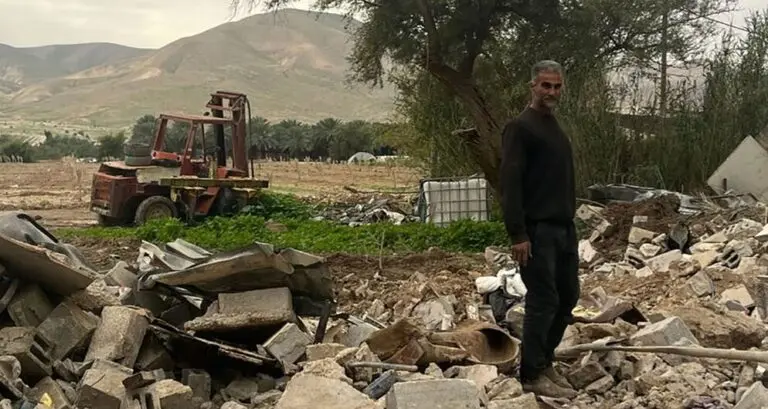
On February 6, 2026, ex-Prime Minister Ehud Olmert accused the Netanyahu government of enabling ethnic cleansing in the occupied West Bank.
February 7, 2026 Hour: 11:57 am
🔗 Comparte este artículo
Olmert admits Israel’s ethnic cleansing in West Bank, denouncing state-backed settler violence and calling for international action against crimes against humanity.
Related: OHCHR Raises Alarm on Israeli Toxic Spraying in South Lebanon
5 Explosive Revelations: Olmert Admits Israel’s Ethnic Cleansing in West Bank Under Netanyahu
Olmert admits Israel’s ethnic cleansing in West Bank in a searing public indictment that has sent shockwaves through Israel’s political establishment. In an op-ed published in Haaretz on February 6, 2026, former Prime Minister Ehud Olmert (2006–2009) declared that the current government is orchestrating a “violent and criminal campaign of ethnic cleansing” against Palestinians in the occupied territories—a policy he says is actively supported by police, soldiers, and state officials.
“The violence of settlers aims to forcibly displace Palestinians from their homes,” Olmert wrote, detailing how armed extremist groups burn olive fields, ransack houses, attack residents, and even steal livestock—all with the goal of clearing land for Jewish settlement expansion and eventual annexation. “This is not spontaneous vigilantism—it is state policy,” he asserted, accusing Israeli security forces of systematically ignoring crimes while arresting Palestinian victims instead of settler perpetrators.
His remarks come amid escalating violence: since October 2023, over 1,112 Palestinians have been killed and nearly 11,500 injured in the West Bank, according to UN data. More than 21,000 have been detained, and nearly 700 displaced from nine communities in early 2026 alone due to settler raids. The UN Office for the Coordination of Humanitarian Affairs (OCHA) has labeled the situation “unprecedented violence”—a crisis Olmert says is not only tolerated but “sponsored, protected, supported, and backed” by Prime Minister Benjamin Netanyahu’s far-right coalition.
Olmert Admits Israel’s Ethnic Cleansing in West Bank as State-Sanctioned Policy
Olmert’s article—titled “Police, Army, and Shabak: Partners in the Ethnic Cleansing Perpetrated by Jewish Rioters in the Territories”—leaves no room for ambiguity. He accuses Israeli authorities of implementing a “deliberate policy” of non-intervention, allowing settlers to operate as de facto militias under state protection. “In many cases, victims of criminal acts become targets of law enforcement,” he wrote. “Palestinians are arrested—not Jewish terrorists.”
He specifically named ministers like Bezalel Smotrich and Itamar Ben-Gvir—architects of the current government’s annexation agenda—as enablers who provide settlers with legal cover, funding, and impunity. Smotrich, who oversees West Bank civilian affairs, has openly called for the “voluntary transfer” of Palestinians; Ben-Gvir, as National Security Minister, has slashed budgets for investigating settler violence while boosting those for outposts.
This systemic complicity aligns with findings from Human Rights Watch, which has documented how Israeli authorities enforce a two-tier justice system: one for settlers, another for Palestinians. The International Court of Justice (ICJ) reinforced this view in 2024, ruling that all Israeli settlements in the West Bank and East Jerusalem are illegal and ordering their removal—a decision Tel Aviv has ignored.
Olmert urged the international community to act, warning that without consequences, Israel’s actions constitute “crimes against humanity.” He called for sanctions, arms embargoes, and accountability mechanisms to halt what he describes as a “demographic engineering project” aimed at erasing Palestinian presence from historic Palestine.
Geopolitical Context: Annexation and the Death of the Two-State Solution
Olmert’s admission carries profound global implications. As Israel accelerates settlement expansion—with over 13,000 new housing units approved in 2025 alone—the prospect of a viable Palestinian state evaporates. The U.S., despite rhetorical support for two states, continues to veto UN resolutions and supply $3.8 billion in annual military aid, effectively shielding Israel from accountability.
Regionally, the crisis fuels anti-Israel sentiment across the Arab world, undermining recent normalization deals like the Abraham Accords. Even signatories like the UAE and Bahrain face domestic pressure to suspend ties as images of burned villages and demolished homes circulate widely.
Globally, the situation tests the credibility of international law. The ICJ’s 2024 ruling was clear: prolonged occupation is illegal, and settlements must end. Yet enforcement remains absent. This vacuum allows Israel to treat international norms as optional—emboldening not just Tel Aviv, but other regimes contemplating territorial conquest.
Moreover, Olmert’s testimony shatters the myth of Israeli democracy as a moderating force. When a former prime minister—one who once championed peace talks—now accuses his own state of ethnic cleansing, it signals a moral rupture within Zionism itself. His words validate decades of Palestinian testimony and human rights documentation, shifting the narrative from “conflict” to systematic dispossession.
A Nation Complicit: From Silence to Complicity
Olmert did not absolve himself or past governments. He acknowledged that previous administrations enabled settlement growth—but stressed that Netanyahu’s coalition has crossed a red line by institutionalizing expulsion as policy. “We are witnessing the final stage of the occupation: not control, but erasure,” he warned.
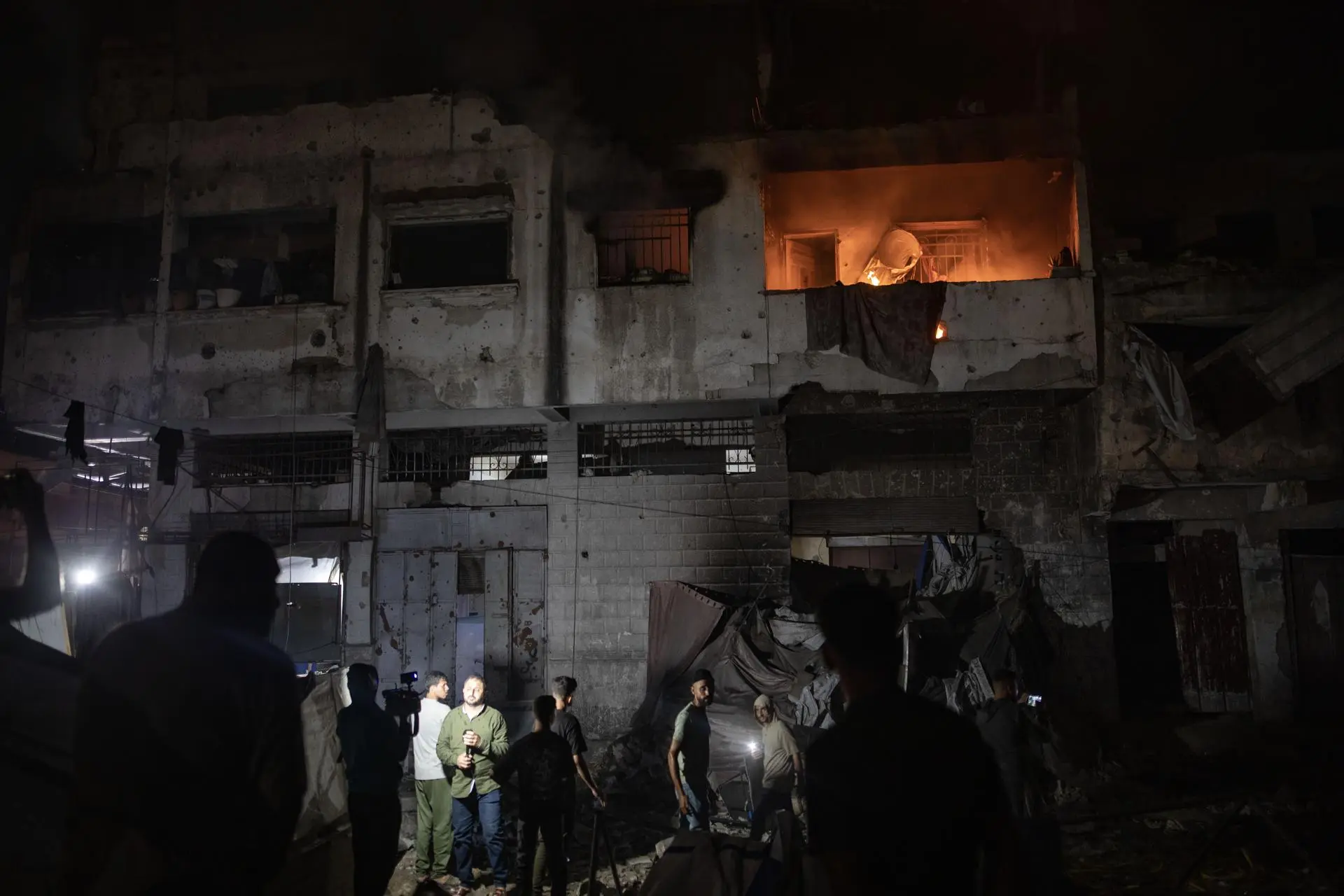
Recent actions confirm this shift. Since January 12, 2026, Israeli forces have conducted mass raids in East Jerusalem, demolishing 70 Palestinian structures in Kafr Aqab and Qalandiya, confiscating vehicles, and issuing eviction orders for 22 homes in Silwan and the Old City. These measures, coupled with settler violence, aim to create facts on the ground that make Palestinian statehood impossible.
The UN Human Rights Office has repeatedly stated that forced displacement under occupation is a war crime—and under certain conditions, a crime against humanity. Yet accountability remains elusive. No Israeli official has faced prosecution for settlement expansion, despite overwhelming evidence.
For Palestinians, the message is clear: their existence is the obstacle. As one elder in Masafer Yatta told reporters: “They don’t want our land—they want us gone.”
Conclusion: A Moral Reckoning from Within
Olmert admits Israel’s ethnic cleansing in West Bank not as a political maneuver, but as a cry of conscience from within the Israeli establishment. His words carry the weight of someone who once held power—and now sees where it has led.
In naming the crime, he challenges the world to act. Silence is no longer neutrality—it is complicity. And as bulldozers advance and olive trees burn, the choice becomes stark: uphold international law, or watch apartheid deepen in real time.
As Olmert concludes: “If we do not stop this now, there will be nothing left to save.”
Author: JMVR
Source: Agencias